


Here are proven tools with widening applications. Main barriers are financing, farmer education and management skills.
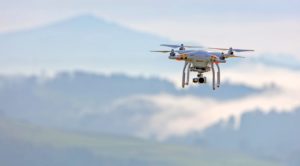
Drones
A flying farmhand. So accurately focuses spraying that it cuts water use by 30-50% and chemicals by 90%. Planting costs decreased by as much as 90% and weeding time sped up by a factor of 5 with labor savings cut by a factor of 10.
Sensors
Core to the internet of Things: individual functionality. Optical (measure soil properties), Electrochemical (pH, soil nutrients, chemical levels), Airflow, Weather. Easily located, work in real-time. Provide data input for other applications, especially mapping and forecasting software
Related story
Displays
New aerial mappings: heat imaging that can spot plant disease early even though the symptoms are invisible to the naked eye. The images can be linked to remote data bases and made the base for machine learning AI models via a combination of satellite, cellular, cloud and, in remote rural areas, wideband TV services.
DNA fingerprinting
Uses a snippet of an organism’s DNA as a genetic marker that uniquely identifies it as belonging to a variety within a species. For tea, it distinguishes right down to country of origin, regional differences, presence in databases of approved ingredients, and unlisted plant materials.
Studies report a consistent 99%+ accuracy in classifying 40 or more very different teas, from just a leaf fragment. A Taiwanese study picked out domestic versus imported (and hence counterfeit) whole leaf teas out of a population of more than 60 varieties.
Blockchain
Like a mini-Internet that enables companies to collaborate in transactions, information-sharing, and payments. The technology underlying bitcoin, the cryptocurrency. Security via encryption, decentralization with no one party or computer able to control the blockchain, “peer-to-peer” transactions with no reliance on such intermediaries as banks, a permanent, non-alterable, time-stamped guarantee of records, and “smart contracts” that establish relationships, authorization and identification. Often described as a “ledger” containing the entire history and records generated via the blockchain.
AI Machine learning
Machine vision algorithms provide farmers with a digital heatmap of crop health and ground moisture. Uses multiple AI techniques to fuse aerial imagery from drones with ground sensor data, while also leveraging deep learning and machine vision on video streams to identify pests, diseases, and nutritional deficiencies in crops.
One AI system can determine the exact varietal origin of a batch of harvest from a single leaf: 100% accuracy in distinguishing 14 different premium teas from each other and fakes, including Bo Li Chun, Yunnan puer, Assam, and Taiwan oolong.
Alternative Energy
Mokomboki factory in Kenya initiated a program that shows the scale of direct energy savings by replacing firewood with briquettes made of biomass waste. Its energy expenses fell from $542,000 to $295,000. Has eliminated the use of timber.
Robots and machine harvesting: Not yet
Robots are used in Japan, due to its very high labor costs. Elsewhere, they are unlikely to spread fast; challenge of slopes, complexity of bud and leaf selection. Machine harvesting historically has lowered quality.



2 Comments
Leave a Comment
You must be logged in to post a comment.
Hi, I wonder about the information regarding drones. I watched one spraying pesticide on a field, and I saw the pesticide drifting in the breeze. It seemed like a tremendous waste of pesticide plus an environmental hazard for the creatures living on the edge of the targeted area. Another time, I was riding my bicycle to work when I felt moisture on my face. It was a pesticide that a drone was spraying in a field that was quite a distance from me. Maybe drones can accurately deliver pesticides in controlled conditions, but much depends on weather conditions and human control. Lots of inexperienced users will make mistakes.
Sensibly used, drones entirely avoid spraying and deliver a minimal and targeted jet right to the root – precision ag