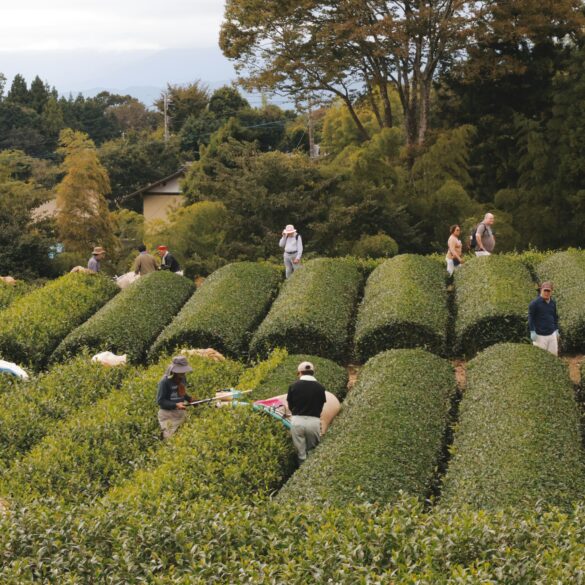


In the global imagination, matcha is inseparable from Japan: misty hills in Uji, careful shade-growing, and centuries-old tea ceremonies. But over the past decade, matcha production has gone global. Farmers across the world are now cultivating and processing matcha-style green tea in places far beyond Japan’s traditional growing regions.
The result is a diverse and evolving landscape of matcha production – one that is expanding both the flavor spectrum and the conversation around what matcha can be.
What defines “matcha”
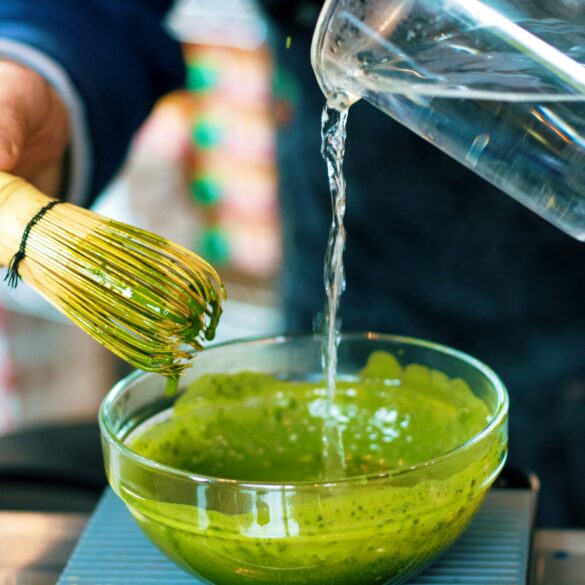
At its core, matcha is defined more by process than by geography. The key elements are shade-grown tea plants, careful harvesting, steaming to prevent oxidation, and grinding the dried leaves (tencha) into a fine powder.
Replicating this process outside Japan, however, is no small feat. It requires specific climate conditions, infrastructure for shading and milling, and a deep understanding of tea cultivation. And yet, producers in countries as varied as China, Kenya, Taiwan, and even the United States are rising to the challenge.
Matcha Production – a finicky process
Technology has played a significant role in the expansion of matcha beyond Japan. Producing high-quality matcha demands specialized equipment, from shading systems that carefully control light exposure to granite stone mills capable of grinding tencha into an ultra-fine, consistent powder without overheating it.
In Japan, these processes are the result of generations of refinement. However, producers in newer regions are slowly but surely gaining access to similar tools and expertise. Some farms import Japanese milling equipment or consult with experienced “tea masters,” while others experiment with modern adaptations, such as mechanized shading structures or alternative grinding methods that can scale more efficiently.
At the same time, information about cultivation techniques is more accessible than ever, thanks to global trade networks and digital communication. This blending of traditional knowledge with contemporary innovation is accelerating the learning curve for emerging producers.
While it may take years (if not decades) for newer regions to fully replicate the depth and consistency of Japan’s matcha, the gap is narrowing, and the category as a whole is benefiting from a wave of experimentation and shared expertise.
China
China is perhaps the most significant player in matcha production outside Japan. While green tea has been cultivated there for thousands of years, modern matcha-style production is a relatively recent development, driven largely by global demand.
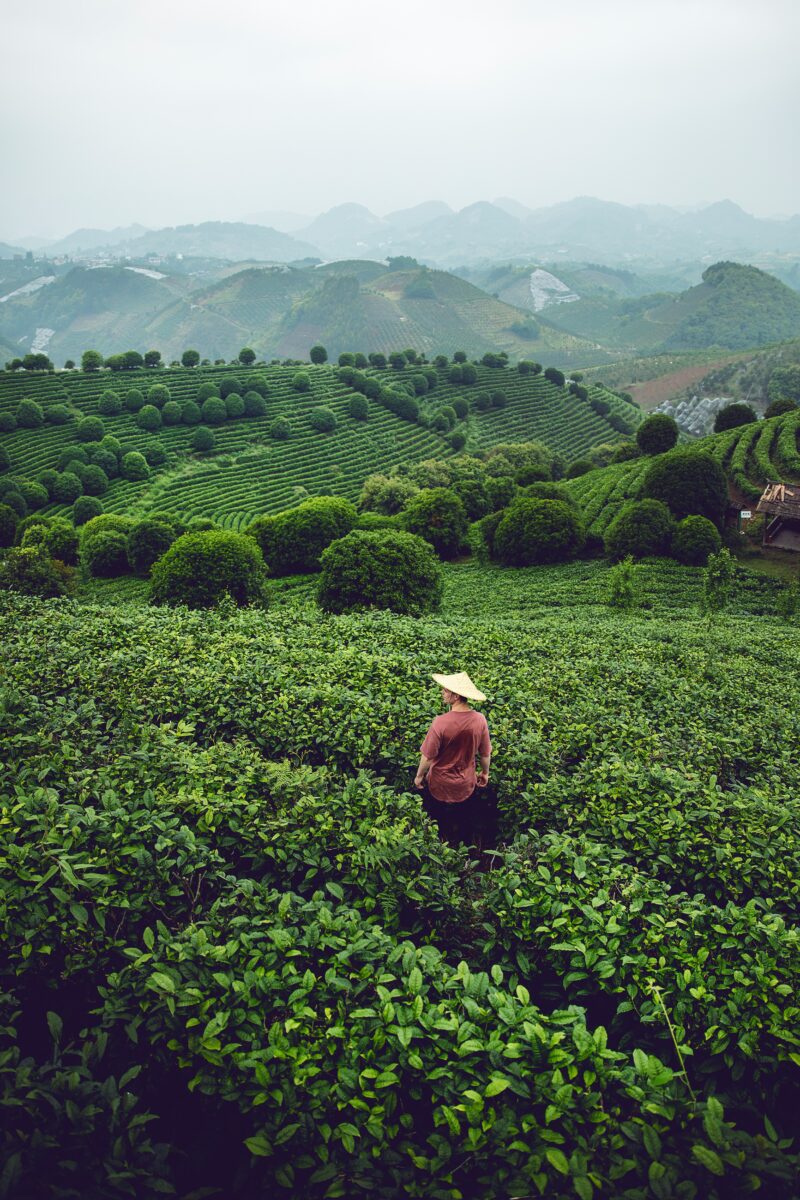
Regions like Zhejiang and Guizhou Province have invested heavily in shaded tea farming and industrial-scale processing, with Guizhou being the main hub. Chinese matcha often serves as a more affordable alternative in the global market, especially for culinary-grade powders used in lattes, baking, and packaged foods.
While critics sometimes point to differences in flavor – often described as more bitter or less umami-rich than Japanese matcha, with less vibrant color – quality varies widely, and some producers are narrowing the gap with increasingly refined techniques.
Kenya
Further west, Kenya offers a fascinating case study in adaptation. Known primarily for its robust black teas (the East African country holds the title for world’s largest exporter of black tea), Kenya has begun experimenting with green tea and matcha production in high-altitude regions with volcanic soil, specifically in the Kericho, Bomet, Nandi Hills, and Kiambu (Limuru) regions. The equatorial climate, with its consistent rainfall and year-round growing season, provides an ideal environment for tea cultivation.
Kenyan matcha tends to have a vegetative, light, creamy, and smooth profile—typically less grassy than Japanese counterparts. Kenya is also known for producing black tea matcha: made from high-quality black tea leaves and stone-ground with traditional Japanese techniques, producing a stronger, bolder cup.
Taiwan
Turning our sights back to Asia, Taiwan, long celebrated for its oolong teas, is also entering the matcha conversation. Taiwanese producers bring a meticulous approach to tea cultivation, and their experience with high-quality processing is evident in their matcha-style products.
Some farms are experimenting with shading techniques and cultivars traditionally used in Japan, while others are adapting local varieties. The result is often a smoother, more aromatic powder, with floral or creamy notes that echo Taiwan’s oolong heritage. For cafes and consumers seeking something distinctive, Taiwanese matcha can offer an intriguing alternative. It offers a buttery sweetness and less umami than Japan-grown matcha.
United States
Even in the United States, matcha production is taking root. It is not yet a large-scale commercial industry. However, small-scale tea farms in states like Oregon, Hawai’i, South Carolina, and Alabama are experimenting with shade-grown tea and stone milling. These operations are often driven by a desire for local, transparent sourcing, as well as a curiosity about how terroir influences flavor.
American-grown matcha is still a niche product, and production volumes are tiny compared to Asian counterparts. But the movement speaks to a broader shift in specialty beverage culture. There is a growing interest in origin, craftsmanship, and the story behind the cup.
Preserving authenticity
Of course, the rise of non-Japanese matcha raises important questions about labeling and authenticity. In Japan, matcha is not just a product but a cultural artifact, deeply tied to history, ritual, and place. Some argue that the term “matcha” should be reserved exclusively for Japanese production. Others see it as a method that can be adapted globally.
For coffee professionals and tea enthusiasts alike, this debate echoes similar conversations around terms like “espresso” or “champagne.” Ultimately, clarity and transparency are key. Knowing where and how matcha is produced allows buyers to make informed decisions and appreciate the nuances of different origins.
Working with matcha of different origins
From a café perspective, the expanding world of matcha offers both opportunities and challenges. On one hand, a wider range of price points and flavor profiles makes matcha more accessible and versatile. On the other hand, quality can vary dramatically, and sourcing requires careful consideration.
Baristas may find that a brighter, more assertive Kenyan matcha works well in a sweetened latte, while a delicate Taiwanese powder shines in a traditional preparation. Understanding these differences can elevate matcha from a trendy add-on to a thoughtfully curated menu item.
As global production continues to grow, one thing is clear. Matcha is no longer confined to a single country or tradition. Japan continues to remain the “gold standard” of matcha production. However, the emergence of new regions is enriching the category in unexpected ways. And for those willing to explore, the world of matcha now offers a broader palette of flavors, stories, and possibilities, one vibrant green cup at a time.