Experience authentic Chaozhou tea culture through traditional gongfu brewing, exploring ancient teahouses, dancong oolong production, and the meditative ritual that connects communities over small cups.
Read More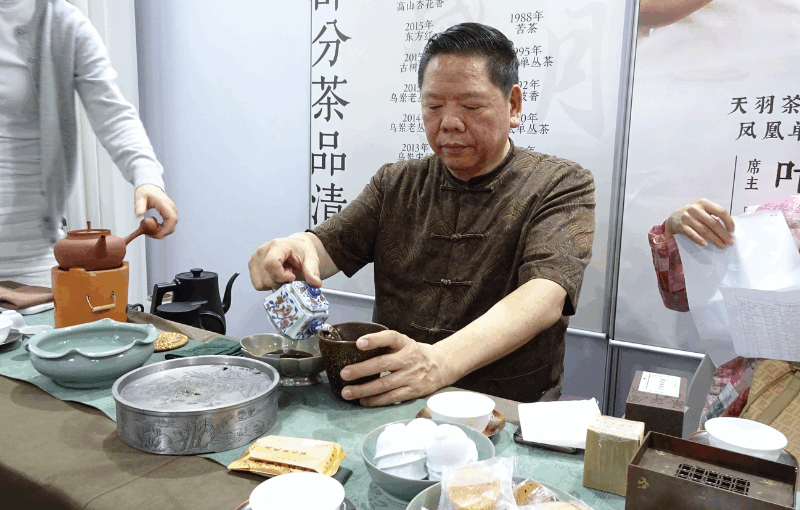



Experience authentic Chaozhou tea culture through traditional gongfu brewing, exploring ancient teahouses, dancong oolong production, and the meditative ritual that connects communities over small cups.
Read More
Chaozhou is the epicentre of Phoenix Dan Cong (Fenghuang Shan), a diversely aromatic oolong. Discover how Yujian Cai, with his family history in pottery, is shaping the future of Chaozhou tea traditions and culture, taking them forward into the new era.
Read More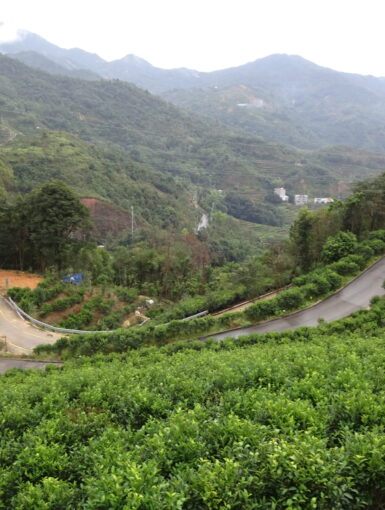
In the Phoenix Mountains in China, the Dancong Oolong reigns. We meet 33 year old Huang Huan who chose to return home to take over his family tea farm. He has made it his mission to produce only organic oolong from his 10,000 trees.
Read More
John Smagula stopped for tea at the Nan Yuan tea store in Shanghai. He chatted with Zhou Yin and learned about the changing dynamics for tea sellers.
Read More
Ichō or ichoucha is withered tea. The first process in producing Japanese green tea is steaming the leaves as soon as they are picked to stop oxidation and keep their strong green color. However, by withering them first, the leaves undergo a slight oxidation between harvest and steaming, bringing out the floral notes.
Read More
The Butsuryu-ji Temple grounds are a treasure trove of historic tea memorabilia that includes statues of the famous Japanese Buddhist monk Kukai and his disciple Kenne and artifacts so significant to Japanese heritage that the national and local governments registered them as cultural properties.
Read More
Farmers and other locals run the five-hour tea-making workshop near Japan’s Yamazoe Village. Tea Journey contributor Greg Goodmacher attended to learn from teacher Kenichi Ikawa Sensei how to select, pan-fire, and hand roll freshly picked raw leaves transforming them into sencha tea using centuries-old techniques.
Read More
Misako Lelong-Nohsoh shows us that Japanese green tea is nothing to fear. She takes away the formality of the Japanese tea ceremony and introduces us to Japanese green tea as she wants us to experience it: as a beverage like wine, coffee, or black tea that is woven into the everyday fabric of our lives. This is the delightful story of her journey from Japan to France and from violist to Japanese Green Tea Ambassador.
Read More
Hosen-in is not just a gorgeous place to enjoy tea. The gardens are a marvel of meticulous care and attention to detail. The Buddhist temple, part of a group of temples on a hillside overlooking the village of Ohara, was founded 800 years ago. Hosen-in has stood the test of time.
Read More
Spring begins a romance as jasmine flowers meet the newly plucked tea. Spring green tea and summer jasmine flowers are mixed at a strictly-calculated ratio. Hundreds of processes exist to make the miracle tea. The bitterness of tea and the sweetness of flowers are a perfect compliment. Jasmine grown in Hengzhou meets the high expectations of famous brands at home and abroad.
Read More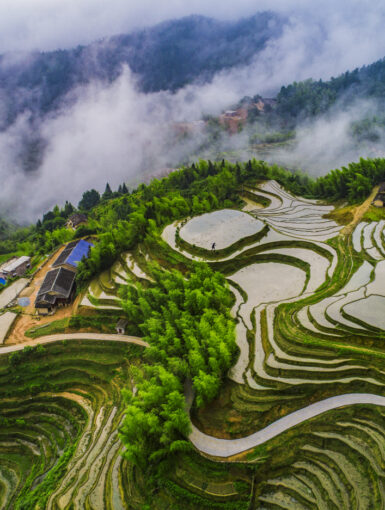
Mountainous Suichuan county in Jiangxi Province offers an incomparable microclimate for local cultivars, producing an exceptionally tender leaf. Gou Gu Nao Green Tea is highly prized. The processing method is quite complicated. It is refined through eight processes. The shape of Gou Gu Nao Tea is tight and rolled to a slight curl. The color is bright green, the aroma is fresh and elegant, and the taste is fresh and thick with a sweet and long aftertaste.
Read More
Meitan Cuiya is an early spring green tea oxidized for a few hours in the shade before processing. It is made from high-quality fresh and tender tea leaves and undergoes 20 complex processes, including spreading, fixing, shaping, and drying. The leaves appear straight and flat. The aroma is long-lasting above a bright green liquor. The tea has a fresh taste with abundant amino acids, polyphenols, and vitamins.
Read More
For centuries, in southwest Anhui, Huangshan Mountain has endeared itself to scenic seekers, poets, and tea lovers. During the Five Dynasties, Shezhou Dafang tea was a tribute tea favored by the imperial family. In the Song Dynasty, at the onset of commercial trade, the acreage under tea expanded continuously and a variety of famous teas emerged.
Read More
Growers in Anhua county invented the dark tea processing technology before 1524, which led to the rise of dark tea production and marketing. The compact and easily transported tea was very popular locally and in 1595, Anhua dark tea was formally designated as the “Official Tea” of the Ming dynasty government making it a regulated form of currency.
Read More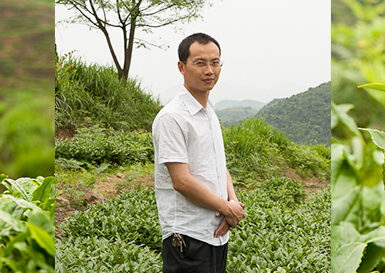
Tie Guan Yin oolong, the quintessential “slow tea of China,” is time-consuming to produce and meant to be savored slowly. In Anxi, Fujian, the birthplace of Tie Guan Yi, the locals, like organic tea grower Rong Feng Wang, are fiercely proud of their oolongs. Here’s Wang’s tea journey.
Read More
Tanyang Gongfu tea is experiencing notoriety as well as increased demand that dates to the 1980s when local growers collectively raised their production standard, earning a reputation for quality hongcha (red tea). The tea is grown in Fu’an which takes its name from a poem in which a Song dynasty emperor bestowed five blessings: “Lucky Heaven, Lucky Earth, Lucky Mountain, Lucky Water, and Lucky Tea.”
Read More
The currents of Japanese tea culture are flowing outward to Europe. In the past 50 years, Europeans have been diving and delving into the green waters. What is it about Japanese tea that attracts Europeans, and how is it pouring into European culture?
Read More
Modern Songyang integrates the essence of mountain and river, the taste of the countryside, and the beauty of folk art and local customs. The terraced hillsides are typical of traditional tea-producing regions, but Songyang is also a model county for national tea industry development. Plantations cover 20,403 acres of plants used in making 76,000 metric tons of Yinhou and Xiang green tea.
Read More
At age 6, on his way to school, Roy Fong would linger at a Hong Kong food stand where day laborers were making gongfu cha. Sometimes someone would offer him a cup, and he never forgot the wonderful aroma and taste.
Read More
The originators of the Japanese tea ceremony believed that the simple activity of sharing tea with a friend was like the path of a falling cherry blossom. It is a fleeting encounter on a path that can never be exactly repeated.
Read More
What would rhyme have to do with a tea’s aftertaste? To understand the many layers of this play on words, it is important to know that Chinese singing and by extension Chinese poetry have a Yang (masculine) and Yin (feminine) rhyme system.
Read More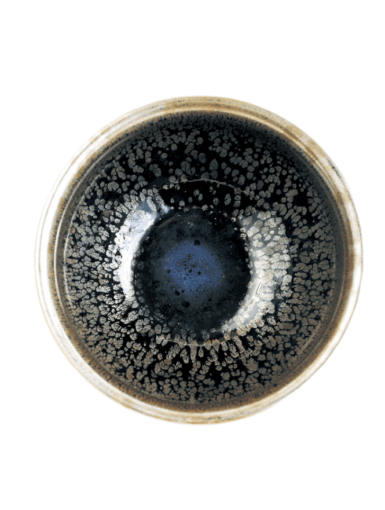
Jian Zhan teaware inspires poetic praise among its ardent lovers and devotees. Those who gain a genuine appreciation of Jian Zhan teaware find it impossible to shed their fascination with the history, science, art, and economics of these enchanting cups.
Read More
Tea farmer, seller, event coordinator, gourmet, and nationally certified tea appraiser, Yasuhiko Kiya radiates love for his tea-growing neighborhood, Japanese tea, and his son, who will become the fourth generation to run the family business.
Read More
Hoshino villagers have experimented with growing, processing, and savoring tea for more than 600 years. The village’s Tea Culture Museum offers visitors a first-hand experience preparing artisan tea amid displays of ancient crafts.
Read More
China’s National Tea Museum, established in Hangzhou in 1991, is considered the epicenter of knowledge and appreciation of China’s most treasured beverage. Whilst there are small tea museums sprinkled across China
Read More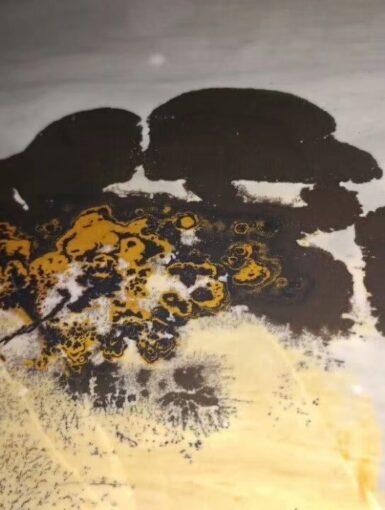
Consider owning a 470 million-year-old work of Mother Nature’s art, appropriately priced well over $500.
Read More
Kakuzo Okakura first described Japanese tea culture to a readership in the U.S. in The Book of Tea in 1906. Since then, his book, his ideas, and Japanese tea culture have traveled across the world.
Read More
The Nine Bend River (Jiuqu Xi) is a masterpiece one hundred million years in the making, cutting through China’s oolong tea capital.
Read More
Daniel Hong’s whimsical online profile picture has him adorning a Charlie Chaplin hat with an oversized black cardboard moustache.Chinese millennials don’t usually do whimsical, so I thought I might soon be meeting an over-the-top eccentric…
Read More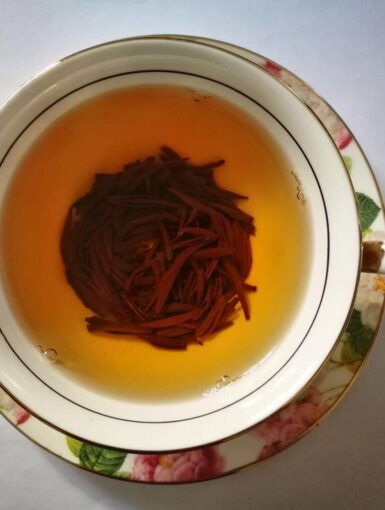
Red teas in China are experiencing a Renaissance. One of the most sought after of the high-end red teas is Jin Jun Mei – a fully oxidized tea created in 2006. It is made wholly of tea buds picked in early spring…
Read More
Eons of evolution in the ancient tea forests of China has established a complex and delicate biomass. The gnarled, pale-grey and green trunks of the oldest trees are home to myriad adaptations of spiders, lichen, and the tree parasite known to locals as crab pincer, a tea mistletoe.
Read More
The concept of terroir is still in flux, though trending toward a more widely accepted framework for an all-encompassing set of synergistic influences.
Read More
KYOTO, Japan — This time-lapse video captures the beautiful birth of this year’s shincha harvest. A special video camera, positioned at the Nakakubo Tea Farm, advanced a few frames every 5 minutes for about 30 days last month to show us the dance of the new leaves. The digital […]
Read More
Vietnam in 2017 ranked as the world’s seventh-largest producer of tea and fifth in exports. It has 124,000 hectares under production in around half its provinces, including the subtropical North and tropical South. This is roughly the same as Indonesia and three times the tea-growing acreage in Japan. Exports in […]
Read More
Stephen Carroll is one of 42 Tea Journey tasters reporting on the 2016 harvest. Look for his posts on South Korea as the season progresses. The Republic of South Korea certainly keeps its tea and tea culture a secret. So secret that not even many South Koreans are familiar with […]
Read More
I began visiting tea markets to find companies selling interesting teas. I spent countless hours sipping teas at tea shops trying to find genuine wild tea. It proved to be difficult. Some marketers would claim to have authentic wild tea, but when I asked to see the mountain where the trees […]
Read More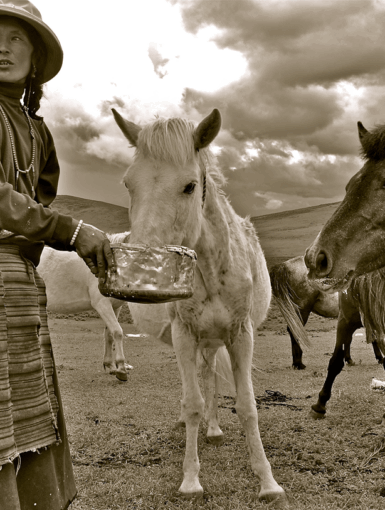
Tea once traveled the most daunting journey of any plant on the planet. Few tea drinkers know the story of how tea spread to every nation from its origin in the mountains of China. Traders for 13 centuries loaded tea on the backs of yaks, mules, horses, sheep, and man. […]
Read More
KITSUKI, Japan Small family-owned tea gardens are inseparable from the economic and social past of historical places such as Kitsuki, a scenic coastal city and authentic samurai town, home to a castle that dates to 1394. Tea permeates the culture here, having entered the fabric of Japanese society beginning in […]
Read More
In the foothills of Mt. Fuji lies the village of Higashiyama where Chagusaba agriculture, a UN-designated Globally Important World Agricultural Heritage System, is a way of life for tea farmers.
Read More
At a very young age, Cotterman developed a passion for pottery, making pinch pots in the rocky Texas dirt of her yard. By the age of 12, she had her first formal experience with a throwing wheel during a summer camp class.
Read More
Long into the night tea grower Yihua Luo keeps a watchful eye over the new harvest roast. It is the critical final stage of the most intricate processing technique of any tea. He hasn’t slept in 32 hours.
Read More
In the households of Yixing, home of the celebrated purple clay teapots, ordinary potters are crafting something extraordinary.
Read More
Every tea taster dreams of discovering a remote, virtually inaccessible growing region producing exceptional tea. The discovery of Tai Ping Hou Kui was just such an experience for us.
Read More
The 45-day pile-fermentation process involves moistening large stacks of sun-dried crude tea leaves. The leaves are piled high and carefully monitored to produce a dark composted tea known as Shou Puer.
Read More
The Chinese tea industry, responsible for a third of global tea production, will remember 2016 mainly for the challenge of recovering from severe spring frost. Early spring tea was hit hard but the late spring harvest made up somewhat for the early losses. It has added up to overall lower sales compared to 2015, especially for the higher grades.
Read More
Meet Yongzhong Xie: born into tea, raised by tea and to a great extent, defined by his tea. A tea master and a task master, Mr. Xie demonstrates the art of manufacturing fine Keemun tea.
Read More
It’s never a bad year for tea in Southern China, home of Anxi and Wuyi wulongs and many more outstanding varieties. But a wet spring dampened this year’s harvest, especially in early May when heavy rain brought tragedy to the region. Recommendations from the region this year include two Dancong oolongs from Guangdong province, Rougui from Wuyi, and jasmine.
Read More
Jiangnan (literally means River South, refers to the area south of the Yangtze River in eastern China) region is the biggest tea producing region in China. With low hills, abundant rainfall, distinct four seasons, this region represents two-thirds of the total production of the nation. Interestingly, a handful of high […]
Read More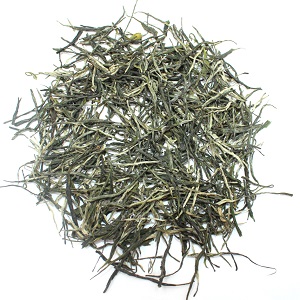
Photographs by Huiling Liang Jiangbei (literally means River North, refers to the area north of the Yangtze River in eastern China) region’s teas are little known outside of China. This region is located at 32 degrees north latitude, which globally speaking, is quite far from most tea producing regions. It […]
Read More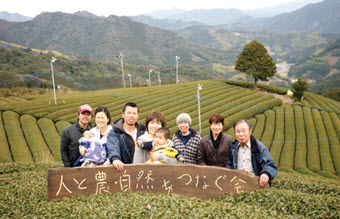
Tamiko Kinezuka: “We make tea with great effort, and hope you will drink our passion with your tea. As my father says, ‘Please taste the tea in one half of your cup, and the heart of its farmer on the other.’ “
Read More