
Spring begins a romance as jasmine flowers meet the newly plucked tea. Spring green tea and summer jasmine flowers are mixed at a strictly-calculated ratio. Hundreds of processes exist to make the miracle tea. The bitterness of tea and the sweetness of flowers are a perfect compliment. Jasmine grown in Hengzhou meets the high expectations of famous brands at home and abroad.
Read MoreAuthor: Sia Yu
China’s Gou Gu Nao “Dog’s Head” Mountain Tea
Mountainous Suichuan county in Jiangxi Province offers an incomparable microclimate for local cultivars, producing an exceptionally tender leaf. Gou Gu Nao Green Tea is highly prized. The processing method is quite complicated. It is refined through eight processes. The shape of Gou Gu Nao Tea is tight and rolled to a slight curl. The color is bright green, the aroma is fresh and elegant, and the taste is fresh and thick with a sweet and long aftertaste.
Read MoreTea from the Clouded Mist of Huangshan
For centuries, in southwest Anhui, Huangshan Mountain has endeared itself to scenic seekers, poets, and tea lovers. During the Five Dynasties, Shezhou Dafang tea was a tribute tea favored by the imperial family. In the Song Dynasty, at the onset of commercial trade, the acreage under tea expanded continuously and a variety of famous teas emerged.
Read MoreA Heritage Tea for Modern Times
Tanyang Gongfu tea is experiencing notoriety as well as increased demand that dates to the 1980s when local growers collectively raised their production standard, earning a reputation for quality hongcha (red tea). The tea is grown in Fu’an which takes its name from a poem in which a Song dynasty emperor bestowed five blessings: “Lucky Heaven, Lucky Earth, Lucky Mountain, Lucky Water, and Lucky Tea.”
Read MoreDestination Songyang China
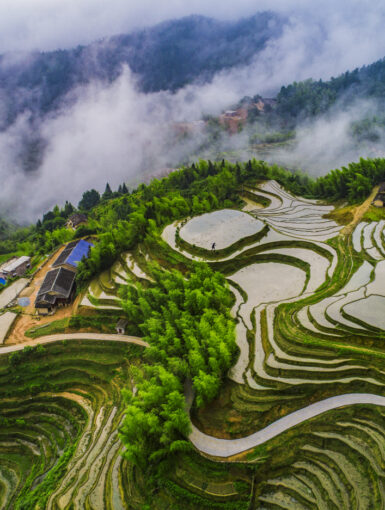
Modern Songyang integrates the essence of mountain and river, the taste of the countryside, and the beauty of folk art and local customs. The terraced hillsides are typical of traditional tea-producing regions, but Songyang is also a model county for national tea industry development. Plantations cover 20,403 acres of plants used in making 76,000 metric tons of Yinhou and Xiang green tea.
Read More