
Explore the fascinating juxtaposition of India’s hot chai culture with the burgeoning trend of iced teas and cold brews, and delve into how traditional Indian tea consumption is adapting to modern preferences for cold beverages, especially among the younger generation.
Read More• South Asia
Taster’s Profile: Niraj de Mel
You need to taste and taste because there are many similarities. When you keep on tasting, you will begin to identify the differences, and that’s how you broaden your horizons.
Read MoreWhen In Colombo… Make Time For Tea
Colombo’s quiet residential neighborhoods are a world apart from its crowded main streets, full of honking tuk-tuks and spicy street food hawkers. Enchanting areas like Cinnamon Gardens feature picturesque tree-lined avenues and colonial architecture, housing boutique tea shops and hidden garden cafes serving specialty teas from the country’s finest producers. […]
Read MoreResplendent and Indulgent Ceylon: Q&A with Malik Fernando
Malik Fernando, of Resplendent Ceylon, and a legacy in tea, speaks about what drew him to hospitality and why tea lovers must visit Sri Lanka.
Read MoreSinna Dorais Bungalows Balance Comfort and Old World Charm
If you drive 250 kilometers west of Bangalore, India, you reach Sakleshpur, where the coffee country begins. And sitting here amongst the coffee estates is a tea garden called Kadamane. And that itself seemed reason enough to book a stay.
Read MoreTeahouse Treks: Of Himalayan Hospitality and Tranquility
Taking a steaming cup of tea in my hands, I stepped out onto the Palmo’s teahouse porch. And there it was, a rainbow stretching across the vast expanse of the Langtang mountain range. The vibrant colors contrasted against the backdrop of the rugged terrain. I stood there, in awe but […]
Read MoreOn A Chai Trail: Laal Saah in Assam
“Right from the tea workers who pluck the bud at the crack of dawn to the manager of the tea estates who still live in a time-warp in their colonial bungalows, laal saah rules the roost from morning to sunset. But don’t be fooled by its outwardly egalitarian existence, it is only a ruse. If one is inclined to look hard, then the differences unravel themselves…”
Read MoreKumaon Adds New Chapter To An Old Tea Story
Kumaon was where a lot of British tea experiments took place. It’s land-locked location led to its losing out on what Darjeeling or even Kangra saw. In the last decade there has been a revival taking place led by Raj Vable in the US and Desmond Birkbeck in Kumaon.
Read MoreWhen Tea Became Chai
If you imagined that Chai was part of the traditional Indian kitchens and comes with a long history, you’ll be surprised to know that chai is very much a 20th-century creation. This week, India celebrates Independence Day, and seeing how many celebrations feature Chai as a cultural motif, I thought it was a good time to talk about chai and how tea became Chai.
Read MoreTea Discovery: Lumbini Tea Valley White Tea
In the lower elevation gardens of the Lumbini tea estate, bordering the pristine Sinharaja Forest, a decade-long pursuit has led to a special white tea range, produced in small batches for discerning tea seekers.
Read MoreJourneying on the Darjeeling Train
In 1881 when it was completed, the Darjeeling Himalayan Railway was the only option to commute. Anyone who missed the train boarded a bullock cart on a much longer journey. There was no concept of a “Toy Train” back then. In the decades since it was constructed the commuter railway with its 55 miles of zig-zags and loops has established itself as a tourist attraction. It was a welcome change for those who prefer a closer look at the Hills instead of just check-boxing! Among those who came were authors, filmmakers, poets, scholars, and artists. When the Buddhist monks traveled on regular passenger trains, they also had opportunities to interact with residents, which brought them closer to the realities of daily life at the hills.
Read MoreOn a Chai Trail: The Bengali and their Cha
That the Bengali love tea is now legendary. And in Kolkata, the capital of West Bengal, tea is part of the social and cultural fabric. Our Chai Trail series takes readers up close and personal to the tea culture across India, and this story is a peek into the Bengali homes and the place that tea has in their lives.
Read MoreWho’s Cooking Badaga Food?
Badaga food from the tea-growing Nilgiri mountains is distinctive from all other Indian tea-inspired cuisines. Tourists drawn to South India are fascinated by the stories of this indigenous tribe that has lived in the Blue Mountains for centuries.
Read MoreAnything for Tea: Budget Backpacking in Nilgiris
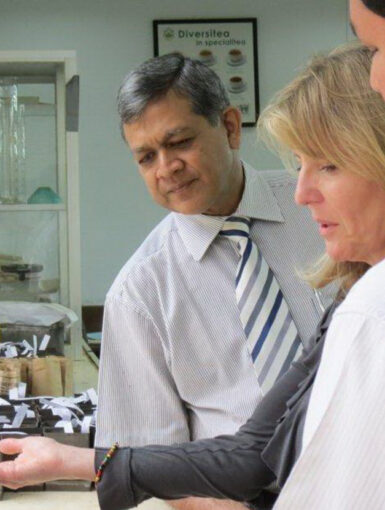
Buddies Cafe in Ooty. This cafe is the largest tea room in India, which features over 220 varieties of tea: artisanal and hand-crafted single-origin teas, orthodox blends, tisanes, and CTC dust. When I first entered the cafe, Nirmal Raj stood next to a wall of transparent glass tea canisters and opened them enthusiastically to allow customers to inhale as he spoke animatedly about each tea. After leaving my non-heated hostel, I chanced upon the cafe, searching for a warmer place to write from. As a shoestring budget backpacker, I had traveled to the Nilgiris tea-growing region on an overnight bus from Bengaluru, India, and soon found myself returning daily to Buddies Cafe.
Read MoreTaster Profile: Chandra Bhushan Subba
“My decision to embark on the path of professional tea-making and tasting was deeply rooted in my upbringing. Surrounded by the intricate dance of tea artisans and the fragrance of freshly plucked leaves, my fascination with tea began at a tender age. I’ve been living with tea for over three decades now.”
Read MoreOn a Chai Trail – The Parsi Choi
Parsis call tea choi, not chai, cha, or tea, but choi. Choi was never, ever consumed on its own. There were always Bhakras, the soft cookies made with dough fermented using palm toddy, or chaapat, a flat, mildly sweet pancake. For special occasions, ghaari – thick dough discs filled with a mixture of bananas cooked in ghee, dates cooked till gooey, or a sweet dal paste were served.
Read MoreBeyond the Brew: Immersive Tea Tours
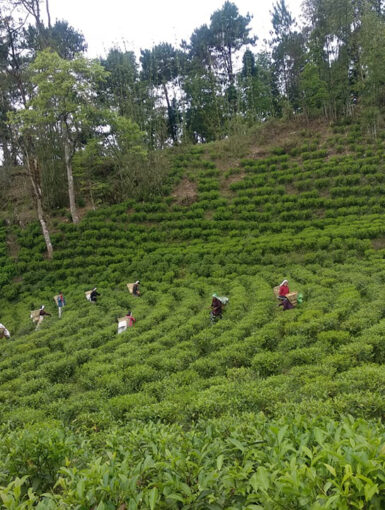
Immersive tours are a remarkable equalizer, bridging the gap between seasoned tea connoisseurs and novices. Through shared experiences of plucking tea leaves alongside local farmers, crafting their blends, and witnessing the alchemy of leaf to cup, they forge bonds that go beyond language and cultural barriers.
Read MoreTea Discovery: Indian Chai
Masala chai is like a mini meal, as it not only includes the well-documented health benefits of tea but also has protein and calcium from milk, anti-inflammatory properties from ginger, and superfood benefits from spices.
Read MoreCocooned in Darjeeling: The Mayfair Manor, Jungpana
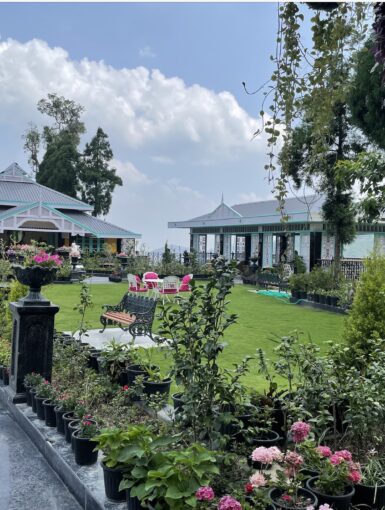
Stay in a restored bungalow originally built in 1910 and once the residence of the Nepali royal family. It offers 12 exquisitely decorated and spacious suites, each named for an historical figure attached to the estate.
Read MoreTea Tourism Offers Panacea for Darjeeling’s Woes
Experience a holiday in the tea gardens and hotels near Darjeeling where lodging is an indulgence, with old-world charm and gorgeous vistas.
Read MoreArtisanal Tea Maker Utilizes Rare Roseate Cultivar
Rose reserve tea is not just a mark of the enchanting flavors fostered by Nepal’s unique high-altitude micro-climates and terroir but also an embodiment of the keen talent of a new generation of tea-makers.
Read MoreMai Tea Estate Breathes Life Into Nepal Community
Mai Tea Estate Breathes Life Into Nepal Community | Ritu Rajbanshi | The Mai Tea factory, located in Mai Pokhari wetlands near Ilam, Nepal, has been a boon to the 180 local farmers who earn a stable income from producing high-quality teas. Tea maker Thribikram Subba honed his tea-making skills for nearly two decades, slowly gaining opportunities to work with experts from India who came to the factory as consultants. Over the last two years, he has started making his own tea without supervision. “I feel like I have finally mastered the language of tea,” he says.
Read MoreReinventing Darjeeling Tea
Planter Rishi Saria is reinventing tea production in the fabled Darjeeling hills. “It has been over a hundred fifty years since the British brought Chinese tea to Darjeeling and over three-quarters of a century since they left,” he says, “yet we Indians continue to process tea the same way the British did rather than learning from our fellow Asians.”
Read MoreA Tale of Two Kathmandu Tea Shops
Bhairab Risal, a veteran journalist with a sharp memory at 94, speaks with ease and zeal of his memories of the early days of Kathmandu’s tea culture. In 1948, at the age of 20, he recalled his first cup of tea at Tilauri Mailako Pasal, one of Kathmandu’s earliest and best-known tea shops. In this article, Kathmandu journalist Prawash Gautam shares tales of two storied tea houses.
Read MoreNepal’s Specialty Tea Evolution
The Barbote tea farm is nestled in the steep hills of Ilam, Nepal, planted by his grandfather and tended by his father but grower Narendra Kumar Gurung spent most of his working years with the Japan International Cooperation Agency. Like most of Nepal’s new-generation farmers, specialty tea is a new endeavor built on a century-old foundation of commodity production.
Read MoreA Remarkable Quest Reveals Untold Chapter in Tea History
From Hwuy-Chow Foo, a tea-growing district in Anhui, China to Pauri, India, the Nilgiris, Munnar, and Chennai … the Ajoo family story traverses an untold chapter in the history of Indian tea, a road James Ajoo is trying to retrace, “to say I landed my feet where my ancestor had walked.”
Read MoreMusic Video: Railgadi Jhumur
“The indentured migrant laborer community of the tea plantations in Assam and North Bengal in India, has always intrigued,” writes Dr. Sunayana Sarkar. “Their history has also appalled, at times,” adds Sarkar, a professor of structural geology and geotechnics and a gifted musician. Sarkar, the daughter of a tea researcher […]
Read MoreRemote Farming During a Pandemic
The pandemic was the worst thing to happen to Nepal’s Kanchanjangha Tea Estate, but there is a silver lining. “It radically changed how we work,” says Nishchal Banskota, who manages operations via Zoom calls between Long Island, New York, and his family’s tea estate. It’s early morning for me and the end of the day for my father, but after nine months, he says, “I have more confidence that I can manage a farm remotely.”
Read MoreSri Lanka’s Artisan Tea Collective
Sri Lanka celebrates diversity in tea. A new generation of Ceylon tea growers recently established an artisan tea collective to showcase exceptional teas produced to interest a niche domestic market and equally, the international market.
Read MoreAdvocating Artisan Tea for Smallholders in Assam
The Tea Leaf Theory team is very lean, choosing to remain independent, bootstrapped, refusing certifications, they represent a new kind of startup, modern yet rooted in something traditional, ancient even. There’s the social impact but Tea Leaf Theory is not an NGO working for small farmers. “We want to make them entrepreneurs, not beneficiaries,” say co-founders Upamanyu Borkakoty and Anshuman Bharali.
Read MoreSikkim’s Temi Tea
Sikkim’s Temi Tea has protected and sustained its legacy. But it also made this legacy a part of its brand story, one that complements its topnotch tea.
Read MoreForest Pick Wild Tea from Manipur
Three sisters from Manipur, India, and their brother launched Forest Pick Wild Tea about two years ago. Together they organized villagers to harvest tall-grown tea trees on a schedule, arriving with portable processing equipment to make artisan oolong, black, green and white teas. “Irrespective of the market size or market opportunity, Forest Pick Wild Tea is not another start-up, but an eco-system we are creating in which all the villagers participating will benefit.” — Julie Gangte
Read MoreThe Gentleman Planter of Craigmore
Given that the Indian tea industry is struggling, Craigmore Tea Estate’s profitability offers important insights. The estate produces orthodox green and black tea, with the former exported and the latter sent to the auctions. Over the years, the balance has tilted to favor more green tea production to meet the demand.
Read MoreThe Studio: Muskan Khanna
Tea Studio celebrated its second birthday in August 2019. What it offers is a new model for processing tea in India. Small has not meant few teas. Nearly 90% of Tea Studio’s teas are exported to Canada, United States, Japan, and Australia. Teas are made to order, production is a modest 20 kilos a day.
Read MoreIndia’s Oldest Manager in Tea
KOOMTAI, Assam – Forty years ago executives of Goodricke Group, which had just split from Duncan Brothers & Company Ltd., sent one of their best estate managers to Koomtai Tea Estate, a company-owned garden in Assam’s Golaghat district. His mission was to assess whether to sell off the unproductive property […]
Read MoreHarvest Review: Assam’s Smallholders Inherit the Land
Jorhat, Assam The vast Brahmaputra Valley holds the world’s greatest concentration of tea. Commercial production began 180 years ago in a region that has 800 of the largest plantations in the world; employs 686,000 tea workers daily and is vast enough to harbor ancient tea forests that have flourished for […]
Read MoreOrigin India: Rimpocha the Legacy of Makaibari
Siliguri, West Bengal During his 47-year stewardship of Makaibari Tea Estate, one of India’s oldest and most celebrated tea habitats, Rajah Banerjee, 70, instituted innovations that continue to reverberate globally. The 1,100-hectare estate was both laboratory and classroom. “I was never an owner, just a steward in passing,” he says. […]
Read MoreOrigin India: Discovering The Wild Tea Forest of Assam
Pradip Baruah was born curious. He spends much of his time in the office and lab as chief advisory officer at the Tocklai Tea Research Institute (TRI) in Jorhat, Assam, but loves an adventure whenever the opportunity arises. In January he fulfilled one of his long held dreams on […]
Read MoreOrigin India: Kangra Valley
A scant 2,000 kilometers west of Darjeeling, on the opposite side of the Indian subcontinent, lays a scenic valley of the Indian state of Himachal Pradesh, a place steeped in Hindu mythology.
Read MoreOrigin India: Tamil Nadu and Kerala
The Western Ghats, South India Backbone of South India The six-hour drive south from Balanoor Tea Estate in Karnataka to the storied Nilgiri District of Tamil Nadu skirts Mysore city, engages with endless hills of shade-grown tea and coffee, then climbs to a plateau studded with charming agricultural villages producing […]
Read MoreOrigin India: The Deep South
Balanoor Tea Estate, Karnataka Piece of Cake His birthday was celebrated in a leafy residential section of Bangalore, one of India’s more modern, connected cities. Thirty members of the prosperous Kuriyan clan milled about the cavernous apartment in the condominium complex they erected 15 years ago. Venerable tea and […]
Read MoreTasting Notes: A Taste of Winter in South India
There is a revolution going on in South India, right under our noses. Up until the late 1980s perhaps, South Indian tea – from Karnataka, Tamil Nadu, and Kerala – was predominantly comprised of mid-grade CTC (cut, tear, curl) produced for the local market. In addition, there was a range […]
Read MoreOrigins: Historic Ceylon
From the vibrant colors and culture of Colombo to the peaceful hillsides of Kandy, Sri Lanka is both a tea lover’s and traveler’s paradise. Formally known as Ceylon, this South Asian Island in the Indian Ocean is located 20 miles (32 kilometers) southeast of India. Its stunning beaches, exotic wildlife, […]
Read MoreOrigin India: Garden by the River
It took ten years for Rajiv Lochan to acquire and consolidate various plots into a single garden known as Doke Tea, an organic farm along the south bank of the Doke River in Bihar, India.
Read MoreOrigins: Kanchanjangha Organic Nepal Tea
RANITAR, Nepal Tea was a gift fit for their king that the humble people of Nepal have cherished since its arrival. Long before marketers labeled it organic, Nepal tea was grown with care. It was always the province of smallholders clinging to the mountain side like the trees they nurtured. […]
Read MoreSri Lanka’s Artisan Tea Collective
Sri Lanka celebrates diversity in tea. A new generation of Ceylon tea growers recently established an artisan tea collective to showcase exceptional teas produced to interest a niche domestic market and equally, the international market.
Read MoreSri Lanka’s Tea Sesquicentennial
Sri Lanka celebrated its 150th anniversary of tea beginning in 2016 and culminating in the International Tea Convention and Expo in Colombo in August 2017.
Read MoreKanchenjunga: Five Treasures of the Great Snow Mountain
Parts of Nepal, Tibet, India and Bhutan are within view of Mt. Kanchenujunga a majestic icon whose five peaks look down on famous tea gardens in Darjeeling, Sikkim, Kalimpong, Pedong, Ilam, Hile and Taplejung.
Read MorePurnima Rai’s Nepal Garden
Smallholders are the backbone of the tea industry, especially in underdeveloped Nepal. Here’s the story of one Nepali smallholder: a widowed grandmother who has spent a lifetime in tea, nature, faith and family.
Read MoreNepali Tea Opportunity
A lack of infrastructure, a lack of capital, natural disasters, a pandemic, and a very tough competitor at the border – these are the challenges faced by Nepal growers.
Read More