
Tamiko Kinezuka: “We make tea with great effort, and hope you will drink our passion with your tea. As my father says, ‘Please taste the tea in one half of your cup, and the heart of its farmer on the other.’ “
Read More• East Asia
Tasting Notes: big-tree raw puer from Yiwu region, Yunnan
Yiwu big tree puer has coarse stems and apparent long black strips. These big, slow-growing trees grow with minimal human intervention on the terroir of Yiwu Mountain in China’s Yunnan province, which boasts rich biodiversity. Fine white hair found on tea stems are an indication of its long domestication. The dry […]
Read MoreTaiwan: Off the Beaten Path
With Taiwan’s compact size and its modern transport and communication infrastructure, one can easily visit a tea grower anywhere on the island in less than a day’s journey by car, rail, plane or bus. Sophie Lin, operator of the Wisteria Teahouse in Taipei organized a press tour in July 2016 […]
Read MoreDestination: The Wisteria Teahouse, a Cultural Treasure
Taiwan has teahouses of every sort, from Laoren (old man’s) style where common tea leaves are steeped in ordinary drinking glasses, to quiet Daoist establishments, to modern shops where scanning social media sites on mobile phones and laptops is OK.
Read MoreDestinations: Flagstaff House Teaware Museum
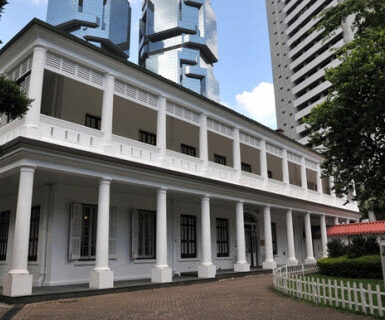
Nestled inside Hong Kong Park, the Flagstaff House Museum of Tea Ware, formerly known as Flagstaff House, was built in the 1840s. It is the oldest colonial building in Hong Kong still standing in its original spot. As a branch museum of the Hong Kong Museum of Art, it was […]
Read MoreThe Aroma of Pu’er
Originating in Yunnan’s large-leaf species, pu’er tea can be stored for many years. Its aroma diminishes gradually. A latent note is uncovered as volatile aromatic compounds with a low boiling point dissipate. A quality piece of new raw pu’er cake with proper storage will develop a clean and robust grassy aroma and then flower, fruit, honey, plum, almond, and woody aroma, finally expressing the epitomic vintage notes.
Read MoreHarvest Review: Southwestern China
China’s southwestern region includes Tibet, Yunnan, Guizhou, Sichuan, and Chongqing. The southwestern region is the oldest tea producing region in China and the birthplace of Camellia sinensis. It is also called “the plateau” tea region. The majority of teas are grown at an altitude of 1,500 feet or higher. Many […]
Read MoreHarvest Review: South Korea Ujeon-Sejak (Early Season)
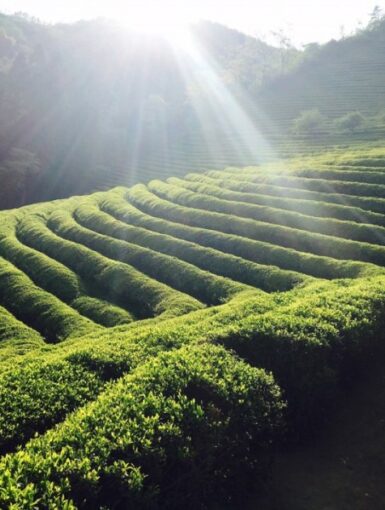
Many tea connoisseurs wait for this first harvest each year, which is usually only available in very small quantities, and will most likely be gone within the first few months or even weeks of its harvest.
Read More