



By Dan Bolton
Japan’s largest tencha-producing prefecture is investing $16.5 million in a new processing facility that will produce 300 metric tonnes of matcha annually, starting in December 2027.
The project increases the cooperative’s processing capacity thirtyfold, allowing more matcha to be finished near the farms that grow the leaf.
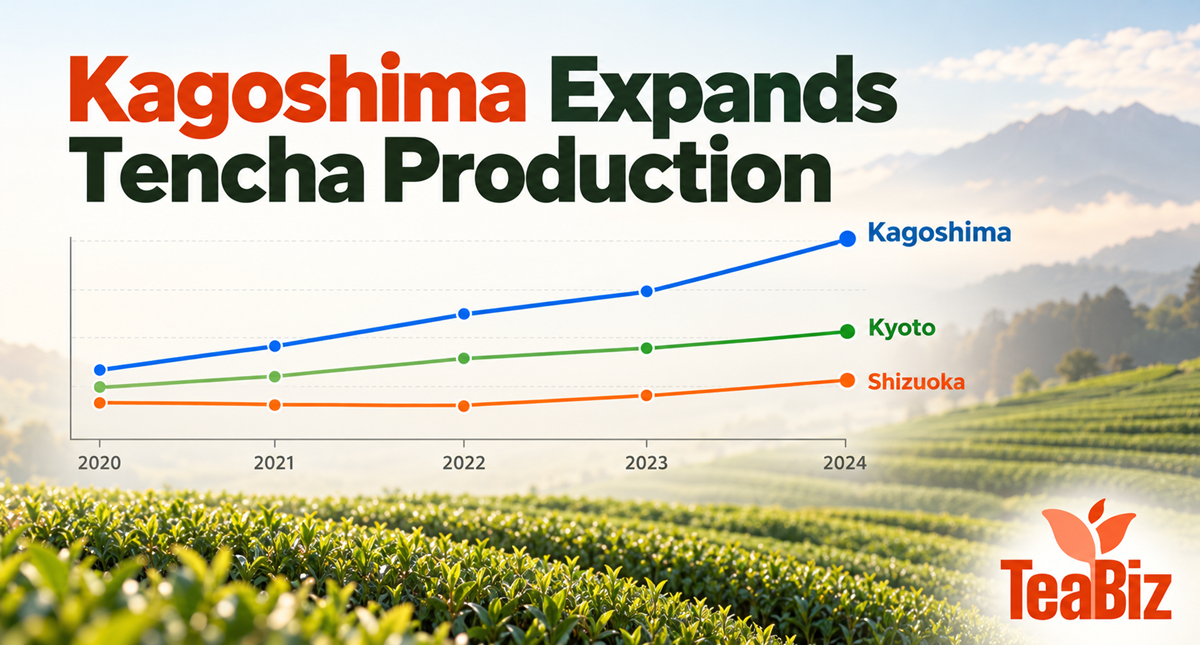
Kagoshima is already reshaping Japan’s production landscape. Between 2020 and 2024, tencha output increased 169% to 2,150 tonnes, twice Kyoto’s production and more than three times Shizuoka’s.
Yet approximately 90% of Kagoshima’s tencha has been processed elsewhere, leaving much of the finishing and marketing value outside the prefecture.
Meanwhile, China has emerged as the world’s largest matcha producer, with industry estimates placing 2025 output above 12,000 tonnes. Japan retains its premium market reputation but faces growing pressure to substantiate claims concerning quality, origin and grading.
BIZ INSIGHT | Processing investments can help Japanese growers capture more value, but maintaining premium prices will increasingly require verifiable origin, consistent product specifications and credible quality assessment.

PG Tips Puts More Tea in the Bag to Win Back Britain
PG Tips is increasing the amount of tea in its Original tea bags by nearly 8%, improving its blend and investing £1.5 million, approximately US$2 million, in marketing.
Recommended retail prices will remain unchanged.
The relaunch follows a difficult year. According to NielsenIQ data reported by The Grocer, PG Tips’ annual sales value declined about 7%, while sales volume fell 2%.
Consumer testing involving more than 1,000 participants suggests the new blend could help. Lipton Teas & Infusions reports a 13-percentage-point improvement in preference and purchase intent compared with the existing product.
Competitor Yorkshire Tea offers a revealing contrast. It captured a reported 42.3% share of British black tea sales value in its financial year ending October 2025.
Conventional black tea still accounts for roughly 80% of tea sold by weight in the measured UK retail market. PG Tips is betting that improving the everyday product can rebuild loyalty in a mature category.
BIZ INSIGHT | More tea per bag at an unchanged recommended price challenges conventional margin-protection strategies. The test is whether better taste drives repeat purchases, higher volume, and sustainable returns for retailers.

Government Initiatives Encourage Experimentation
Kenya is expanding beyond conventional CTC black tea, which accounts for approximately 99% of national production.
Government initiatives are encouraging producers to develop purple, green, yellow, oolong, and whole-leaf orthodox teas for higher-value markets.
The goal is ambitious: increase installed orthodox tea-processing capacity from 15 million kilograms in 2024 to 200 million kilograms by 2030.
A dedicated Mombasa orthodox tea auction launched in September 2025, while the Tea Board of Kenya plans to increase licensed orthodox factories from 22 to 42 by 2027.
One promising example is the Japanese-supported sencha initiative at Kangaita. A 360-million-shilling processing facility will allow smallholders to produce Japanese-style steamed green tea.
The price opportunity illustrates the attraction. Japan’s non-powdered green tea exports averaged approximately $20 per kilogram in 2025, compared with $2.25 per kilogram for conventional CTC tea at a recent Mombasa auction. These are different products and markets, not directly equivalent producer returns.
Kenya’s challenge is to convert processing capacity into consistent quality, reliable distribution, and repeat orders that deliver higher returns to farmers.
Episode 248
Click to listen to the full episode