
Issue: Discover Nepal

Discover Authentic Nepal

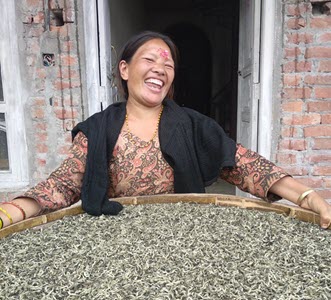
Nepal’s altitude, seasonality, soil, and various microclimates combine to establish a remarkably well-suited terroir for growing tea. The country’s finest teas are delicate with subtle aromas; Handmade teas are an expression of the tea maker’s art, inspired by new demand for delicate whites, oolongs, and airy black teas sold directly to retailers in Europe, Asia, and North America.

Read More

Sustainable Tourism: Nepal Tea Collective

Nepal Tea Collective, based in the US, offers a unique ten-day tour that allows visitors to experience Nepali tea gardens from various perspectives. They offer their guests a chance to peek into the trade secrets, meet amazing tea farmers and producers, and taste unlimited delicious teas directly from the organic gardens lapped on the Himalayan foothills.

Read More

A Tale of Two Kathmandu Tea Shops

Bhairab Risal, a veteran journalist with a sharp memory at 94, speaks with ease and zeal of his memories of the early days of Kathmandu’s tea culture. In 1948, at the age of 20, he recalled his first cup of tea at Tilauri Mailako Pasal, one of Kathmandu’s earliest and best-known tea shops. In this article, Kathmandu journalist Prawash Gautam shares tales of two storied tea houses.

Read More
Nepal Kanchenjenga

Nepali Tea Opportunity

A lack of infrastructure, a lack of capital, natural disasters, a pandemic, and a very tough competitor at the border – are the challenges faced by Nepal growers. The Nepal Tea and Coffee Development Board report that very few (3,244) of the three million employed in Nepal’s tea industry work full-time. Seventy-four percent of temporary workers are women, according to the Central Bureau of Statistics. There are 18,180 small farm owners, in stark contrast to India’s vast tea plantations and the social complexity of such systems. The farmers can either process the tea themselves or sell the raw leaves to factories.

Read More

Marketing Nepal Tea

The Nepal tea industry has the potential to grow and prosper. However, for this to happen, effective marketing strategies must promote Nepali tea domestically and internationally. Nepal is investing in marketing its tea globally through NISTEP (Nepal Increased Sustainability Tea Exports Project). NISTEP funded this marketing plan, customized to meet the goals of the Ministry of Industry, Commerce, and Supplies.

Read More
Barbote Tea Farm, Nepal

Nepal’s Specialty Tea Evolution

The Barbote tea farm is nestled in the steep hills of Ilam, Nepal. It was planted by Narendra Kumar Gurung’s grandfather and tended by his father. Narendra spent most of his working years with the Japan International Cooperation Agency. Like most of Nepal’s new-generation farmers, specialty tea is a new endeavor built on a century-old foundation of commodity production.

Read More
Sorting tea Kanchanjangha Tea estate

Remote Farming During a Pandemic

The pandemic was the worst thing to happen to Nepal’s Kanchanjangha Tea Estate, but there is a silver lining. It radically changed how we work, says Nishchal Banskota, who manages operations via Zoom calls between Long Island, New York, and his family’s tea estate. It’s early morning for me and the end of the day for him, but after nine months, he says, “I have more confidence that I can manage a farm remotely.”

Read More