

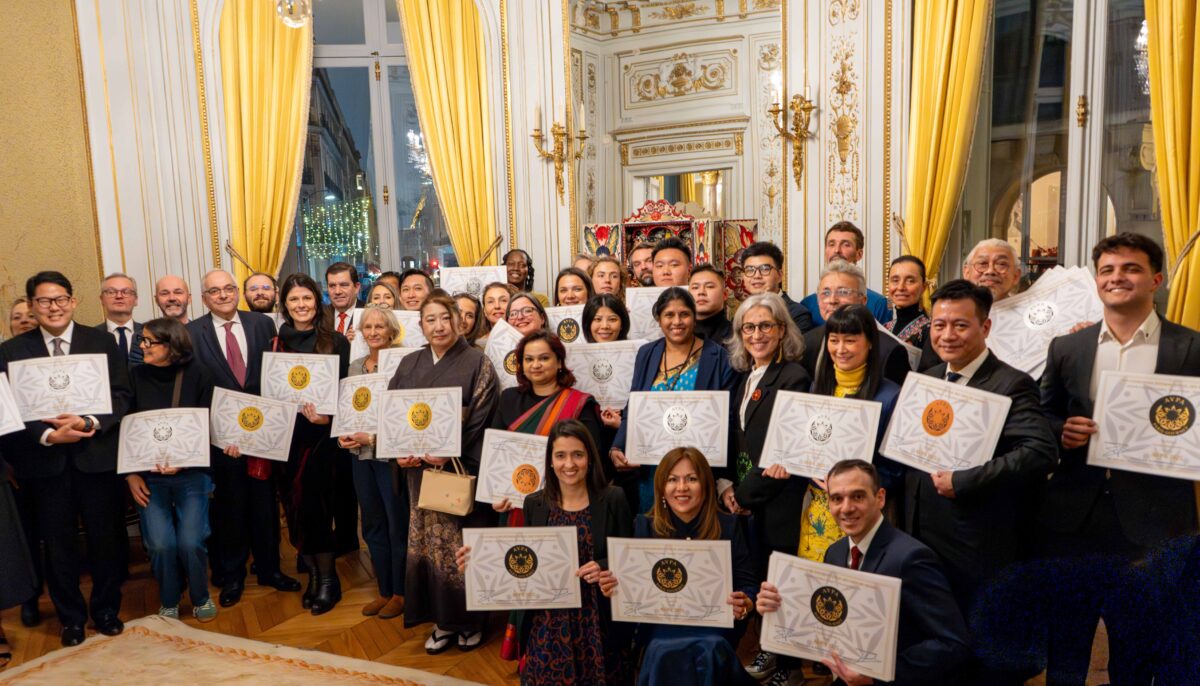
The eighth edition of the AVPA International World Teas Competition 2025was held in Paris at the Embassy of Peru, in the presence of numerous diplomatic representatives from the participating countries. Taiwan dominated the global tea competition, winning 34% of all medals, with small specialist producers excelling in oolong teas across all oxidation levels. France distinguished itself through value-added blends, scented teas, and premium curation, while India maintained strong credibility in Darjeeling and orthodox blacks.
Overall, oolong teas emerged as the most awarded category, highlighting technical mastery as the key driver of global tea excellence.
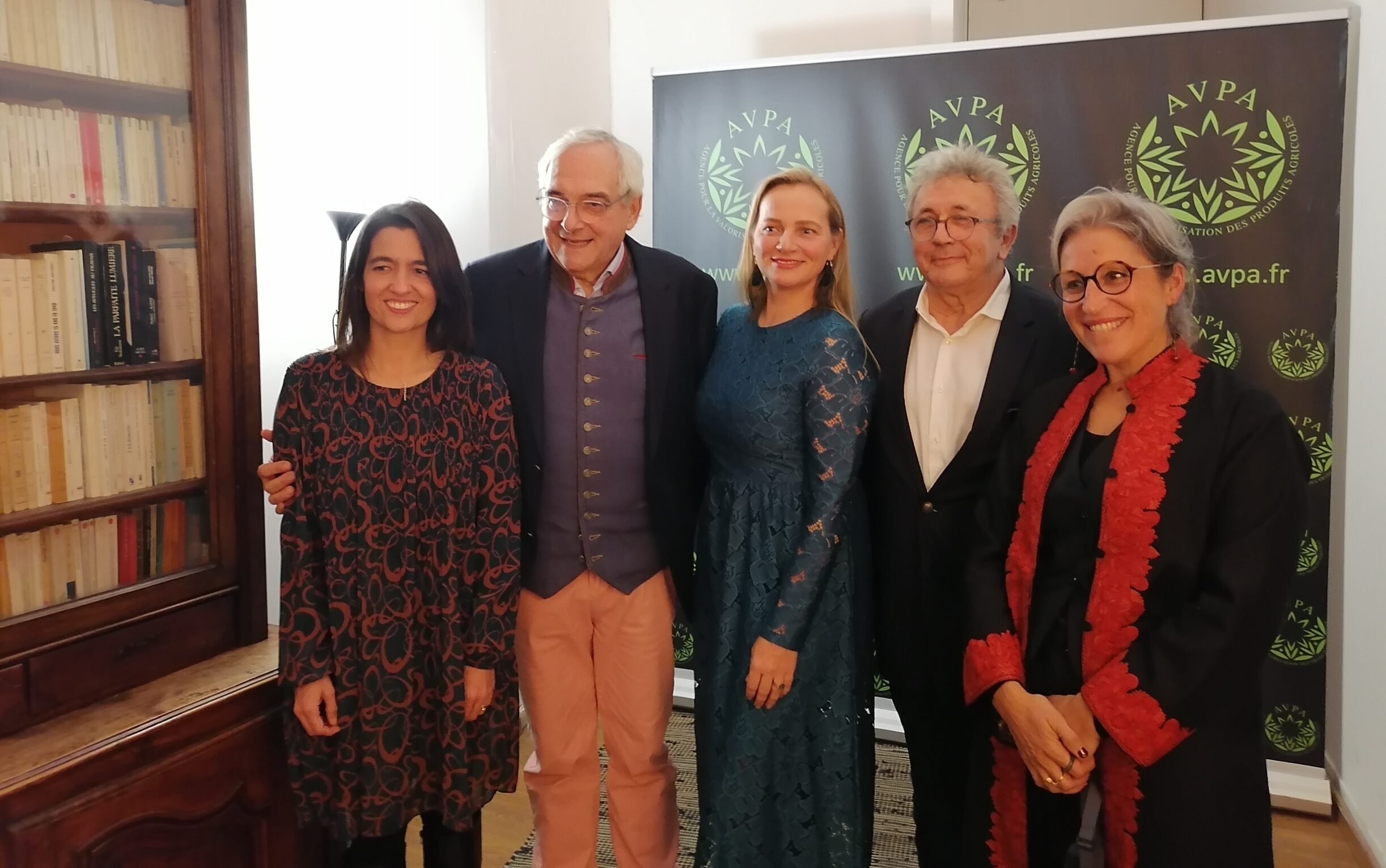
But where does this competition come from? Let’s hear from Philippe Juglar, the President and founder of AVPA, in conversation with Tea Journey’s Senior Correspondent in Europe, Anne-Frédérique Dayraut.
Anne: Could you briefly outline your career path before joining AVPA?
Philippe Juglar: Initially, I was a coffee trader working with high-quality coffees, especially those from Colombia. However, back then, being a trader meant pushing containers of coffee. When a farmer put in effort, the coffee was shipped in a container, but it often got lost in the bulk. My work with Colombian coffees ended during the many coffee crises in the 2000s when our Colombian partner faced difficulties. I then transitioned to consulting. I learned from Colombian coffee that it was possible to turn a raw commodity into a valuable product. This involved adding intangible value to a simple raw material. This concept, which the French excel at with their wines, was clear to us. Outside of France, however, it wasn’t as obvious. So, I started a consulting firm. My company helps producers increase the value of their products beyond just technical and production methods. We focus on commercial strategies, from identifying the best distribution networks to creating value through a collective image, a personal identity, and branding the product. Today, for food products, the brand is crucial, which is the core idea behind collective brands and geographical indications.
The initial dream was to organize a global competition and have an international jury. – Philippe Juglar
Anne: What led you to organize the first international competition?
Philippe: My company was coincidentally called upon to organize an event within a fair called the “Salon des Terroirs du Monde” (World Terroirs Fair). It was a friend who was organizing it, and he was thinking about coffee tastings. At that time, people were not interested; they just stared at the cream on the coffee! Instead, I proposed to organize something about oil. So, completely by chance, we launched the first olive oil competition, and it was an immediate success. We were fortunate that the Spanish needed us to improve their image, so they participated widely. Another stroke of luck was that the director of the Olive Institute in Aix-en-Provence, France, immediately agreed to preside over our jury. What fascinated him was the opportunity to taste oils other than French olive oils, so we opened up a range of tastings for him, and we have been working with him for 20 years. Thus, we learned our trade as competition organisers, particularly with olive oils.
Anne: What is the first challenge one faces when organizing this type of competition?
Philippe: Organizing a competition is not easy. The initial dream was to organize a global competition and have an international jury. However, it seemed impossible for two reasons. Firstly, there is the language barrier. The pleasure of tasting comes from exchanging opinions. If you cannot exchange in a language you master well, you lose a lot of pleasure, and it becomes a somewhat thankless exercise. Secondly, and even more importantly, gastronomic culture varies significantly from one country to another. I tried to have a jury for olive oil with an Italian, a Spaniard, an Englishman, a Frenchman, a German, etc., but the results were uninteresting. The president seeks consensus, but it’s impossible because they don’t share the same objectives. So, you end up with the oil most acceptable to everyone, and it’s not necessarily the most interesting.
However, since 2024, the AVPA international contest has included an honorary jury, invited for one day. This initiative aims to enrich the event through international exchanges. Last year, the honorary jury was the Taiwanese delegation from TBRS – Tea and Beverage Research Station. The exchange was very fruitful, and the AVPA representatives were invited to their Tea Maker competition. They served as honorary jurors for our competition.
In 2025, the honorary jury included Kurush Bharucha, who served on the technical jury team for one day. He tasted several teas, but independently, as the honorary jury does not influence the official scoring. The honorary jury grants only a “coup de cœur” (special mention), which does not affect the technical jury’s scores. The 2025 special mention was given in the “Thé noir de France” category.
Since the initiative has proven very positive, AVPA plans to continue including an honorary jury to strengthen the competition’s international dimension and encourage valuable exchanges.
Anne: Any other challenge?
Philippe: The most complex thing is to create reasonably homogeneous categories so that judging can be done within each category. In tea, it is relatively easy because of an established tradition. In coffee, it was much more complex. You have to compare what’s comparable. And that requires a lot of flexibility from the jury because they will be tasting products they might not necessarily like. That is why, in the jury, you always have to ensure a balance between generations because taste changes a lot. The president must be modest enough to listen to everyone and not impose his taste.
Tea came very late because I had a complex. When you look at coffee, the science of coffee has developed more in Europe. The only country that has been producing and tasting coffee for two millennia is Ethiopia. But they did not export their culture outside of Ethiopia. Coffee arrives in Europe, and we develop a coffee culture, especially in Italy, France, and Spain. While coffee or chocolate may involve European expertise, this is not the case with tea. I made my first trip to China around tea a while back. It is a fabulous world where everyone receiving me had a university degree in tea, somewhat like our French oenologists. They are people who have devoted their lives to tea and have ten years of tea studies.
Anne: What are the objectives of the “World Teas” international competition?
Philippe: The tea competition has several objectives. The first is to bring the art of aromatic tasting. This is something that hasn’t yet arrived in China, and they appreciate our “nose” with the aromas in France.
The second objective is to give new tea-producing countries a chance. Distributors act as filters and have no desire to expand their product ranges. Quality can only come from producers’ own efforts. We are primarily interested in small producers and regional collectives. I always emphasize that AVPA is a nonprofit association, and we are completely open to receiving producers who would like to participate in the AVPA competition under economically reasonable conditions. We present the competition results to as many distributors in France as possible, so that they have the opportunity to find new sources. The AVPA competition is primarily designed to give a producer recognition coming from Paris, confirming that what the producer is doing is an exciting job. It is not necessarily easy to be a prophet in your own country. But if you have a jury from a country considered gastronomic saying, “Yes, this tea is a gourmet product,” it strengthens you in the eyes of local authorities, your suppliers, and collaborators. You will also reinforce your message to your clientele.
And the third objective, albeit the most distant, is to enter the French market. This is the most challenging because you can give all the medals you want, but you have all the obstacles of the French distribution. Finding retail chains that will take a sufficient volume to make exportation worthwhile is not at all evident. So, it is primarily about visibility. The best example I had was a Mexican coffee producer who won a gold medal. He did not sell in France, but it boosted his sales locally in Mexico, Japan, and California. In Osaka, having a Gourmet Paris medal carries weight.
Anne: Could you say a few words about this eighth edition of the International Tea Competition that has just concluded?
Philippe: As President of AVPA, I am particularly proud of the success of the 8th International “Teas of the World” Contest. Year after year, we observe remarkable, continuous improvement in the overall quality of the teas presented to the jury. This edition once again confirmed the high level of expertise, craftsmanship, and innovation demonstrated by producers. At the same time, the number of participating countries continues to grow, reflecting the increasing international recognition of this competition and its role as a trusted reference for excellence in tea.
We are especially pleased to welcome both the great historic tea-producing countries and a growing number of new tea-producing regions, which are investing with ambition and passion in the development of high-quality teas. The dynamic emergence of producers from Latin America, among others, illustrates the global evolution of the tea world and the diversity of terroirs now capable of expressing outstanding quality. This diversity enriches the competition and reinforces AVPA’s mission: to promote excellence, authenticity, and sustainable development in agricultural products worldwide.