


The early 20th-century roadside stops that brewed freedom and community
In the early decades of the 20th century, a small but significant institution bloomed across the American landscape: the rural tea room. Not quite a restaurant, and definitely not a cocktail lounge, these casual, quirky spaces became a meaningful, and surprisingly feminist, cottage industry. Sometimes tucked away inside a home, discovered along a stretch of scenic roadway, they offered women new opportunities both as consumers and as entrepreneurs.
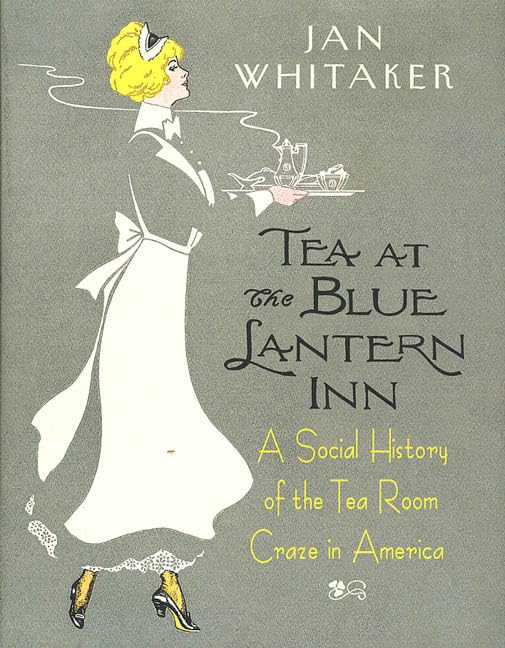
Jan Whitaker, consumer historian and author of Tea at the Blue Lantern Inn, has spent decades piecing together their story. Her entry point was a surprising one. “I started out collecting postcards,” she recalls. “I was fascinated by restaurants, inns, hotels—and the tea rooms really jumped out at me.” Each postcard, with its glimpses of interiors and menus, hinted at a broader cultural shift. “They told you about everyday history,” Whitaker says. “Not presidents and generals, but the lived experience of ordinary people.”

Women at the Table in Tea Rooms
At the heart of the tea room phenomenon was the changing role of women. Respectable women had long been discouraged from dining out, their presence in public eating spaces seen as suspect. “Women weren’t welcome in all restaurants,” Whitaker explains. “They always had to prove—especially if they were well-dressed or stylish or younger—that they weren’t sex workers.”
Tea rooms upended that norm. “They were run by women, for women,” she says. “You could meet a friend, you could travel with your children, and it was perfectly respectable.” In many ways, they embodied the spirit of the suffrage era: women carving out new spaces for themselves in public life. “It is really about this awakening of women and the changes to their role in society and culture, maybe their wishes to be freer, to express themselves, and to gather with other women,” she says.
Comfort, Chicken, and China Cups
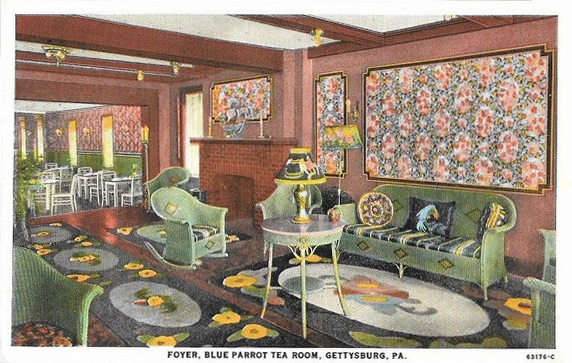
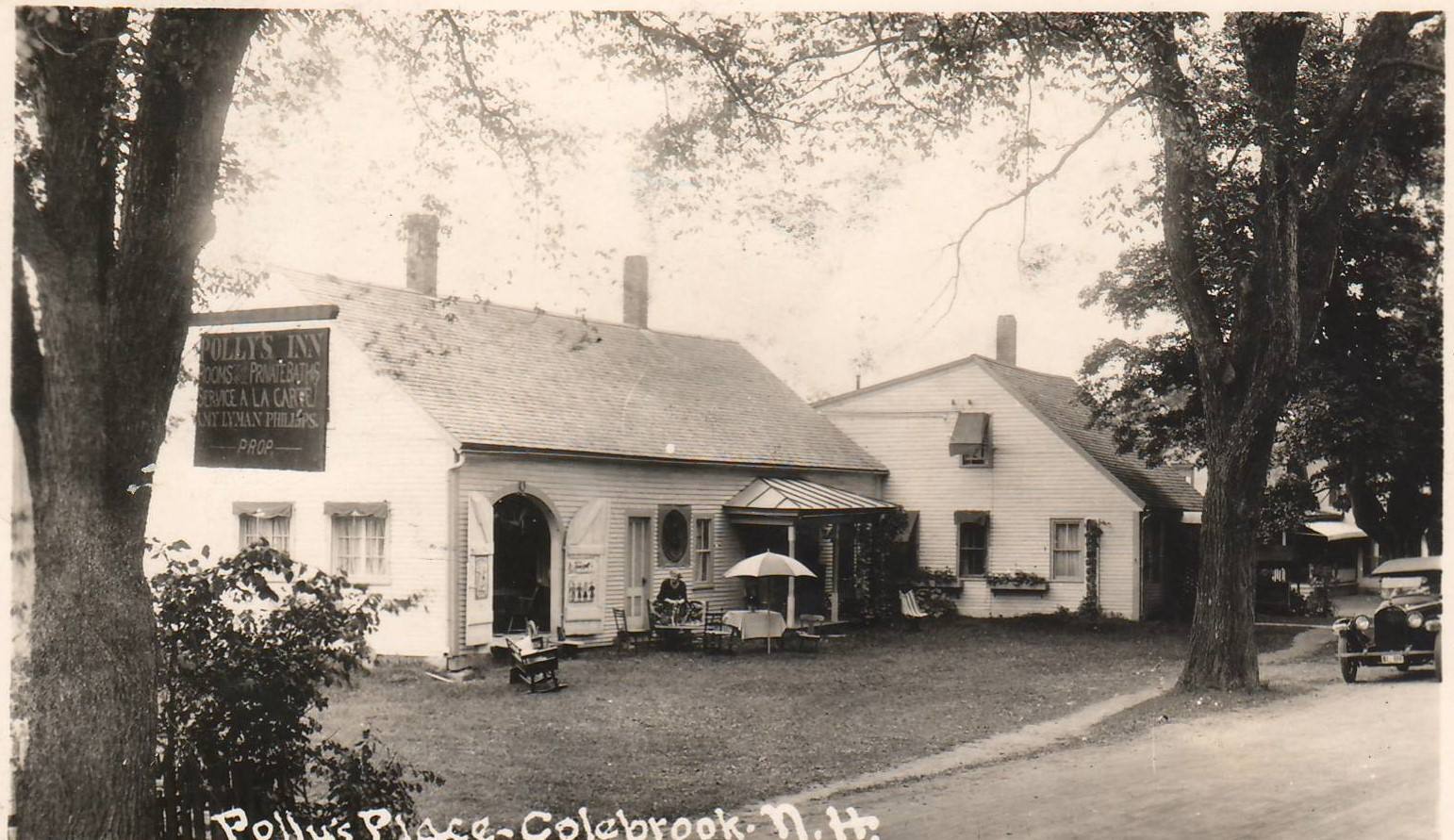
Although some tea rooms opened in cities and department stores, the rural roadside variety was among the most evocative of the era. “A lot of these were literally in someone’s home,” Whitaker says. “You would pull into the driveway and eat in the parlor. Maybe they would set up tables on the porch in the summer. Sometimes they would serve you out on the lawn.”
Menus leaned toward home cooking: chicken dinners, sandwiches, garden vegetables, and pie. “Chicken was huge,” she says. “In cities, chicken was expensive. Out in the country, families raised their own. So a Sunday chicken dinner in the country became this real draw.” As automobile ownership expanded, these establishments flourished. “The car opened up the countryside,” Whitaker says. “Suddenly, you could drive 20 or 30 miles for an outing, and the tea room became part of that experience.”
The Moral Cup: Tea During Prohibition
Their popularity coincided with Prohibition, when alcohol was outlawed and alternative beverages took on new cultural weight. Tea, in particular, became more than just a drink—it carried moral symbolism. “Tea got this kind of moral halo,” Whitaker explains. “It was wholesome, it was non-alcoholic, it was what middle-class Protestants were already drinking.”
Coffee, meanwhile, carried a different cultural association. “Coffee was masculine,” Whitaker explains. “It was tied to diners, to hard work, to the office. Tea became seen as feminine—refined, sociable, moral.” This feminization of tea had been building for decades, but Prohibition accelerated it.
In a culture suddenly stripped of taverns, cocktail hours, and barrooms, tea offered an alternative ritual: something light, social, and acceptable in mixed company, but especially coded as safe and proper for women. Interestingly, the tea itself wasn’t necessarily a huge factor in a tea room’s branding or ultimate success. “They didn’t usually brag about their blends,” Whitaker admits. “Tea rooms were about the food and the atmosphere more than the tea itself.”
Financial Independence Beyond Gender, Race, and Class
Modern Americans imagine tea rooms as frilly, doily-filled places, but the rural reality was less ornate. “They weren’t these Victorian, lace-curtain kinds of places,” Whitaker says. “A lot of them were very homemade—painted furniture, maybe some country touches, quirky décor, hand-painted murals, that kind of thing. The general idea was that they were welcoming and not intimidating.”
For many women, tea rooms were not just social spaces but economic lifelines. “Widows, women who needed income, women who had a house and some cooking skills—they could start a tea room without much capital,” Whitaker explains. “It was something you could do while still caring for children.”
At the same time, wealthier women also opened tea rooms as fashionable ventures, sometimes hiring decorators or catering to society’s clientele. Department stores soon caught on, installing their own tea rooms to attract shoppers. “Those lasted much longer,” Whitaker notes. “Some were around well into the mid-20th century.”
When Whitaker first published her book in the 1990s, she found little evidence of Black-owned tea rooms, but digitized newspaper archives have since revealed more. “There definitely were African American tea rooms,” she says. “They were community hubs, places where Black families could gather, hold events, and welcome visitors.”
This discovery underscored what tea rooms offered: spaces where marginalized groups, not just women, could participate in public and civic life.

The Enduring Story of Tea Rooms
The tea room boom peaked in the 1920s and carried into the Depression, when economic necessity pushed many into small-scale food service. But by mid-century, restaurants had become more accessible, and the distinct identity of the tea room faded. Later revivals reinvented them entirely. “In the ’80s and ’90s, you got this craze for ‘high tea,’ which was interpreted as being very fancy,” Whitaker says with a laugh. “The hats, the tiered trays—it was fun, but it wasn’t historically accurate.”
For Whitaker, the tea room’s enduring story is how the big changes we learned about in history books —like suffrage, Prohibition, and the automobile —played out in people’s everyday lives. “That everyday history is what fascinates me,” she shares. And while rural tea rooms may have been a short-lived trend, they reveal much about the America that produced them: a society opening up, seeking new opportunities, and increasingly on the move.
What the Future May Steep
Since the first tea leaf floated down into a curious emperor’s pot—or grew from ground fertilized by a monk’s eyelids, if you prefer that origin story—the way tea is grown, prepared, served, and enjoyed has shaped, and been shaped by, historical events and societal changes.
It is interesting to consider how future historians will analyze today’s interpretation of tea. Perhaps changing economic forces or shifting societal values will lead to a renaissance of the rural tea room, reimagined for a new generation but retaining its casual and cozy ethos. Or maybe some other, older tea trend or practice will resurface in a reinvented form. Whatever the future may hold, one thing seems certain: as it has for thousands of years, tea will continue to be part of the human story.
See Related
Tea Room Revolution: The Weapon of Women’s Rights and Entrepreneurship | Peter Keen
Tea and Buddhism: Té if by sea, Cha by land | Peter Keen
Drinking Tea History in Nara, Japan | Greg Goodmacher