

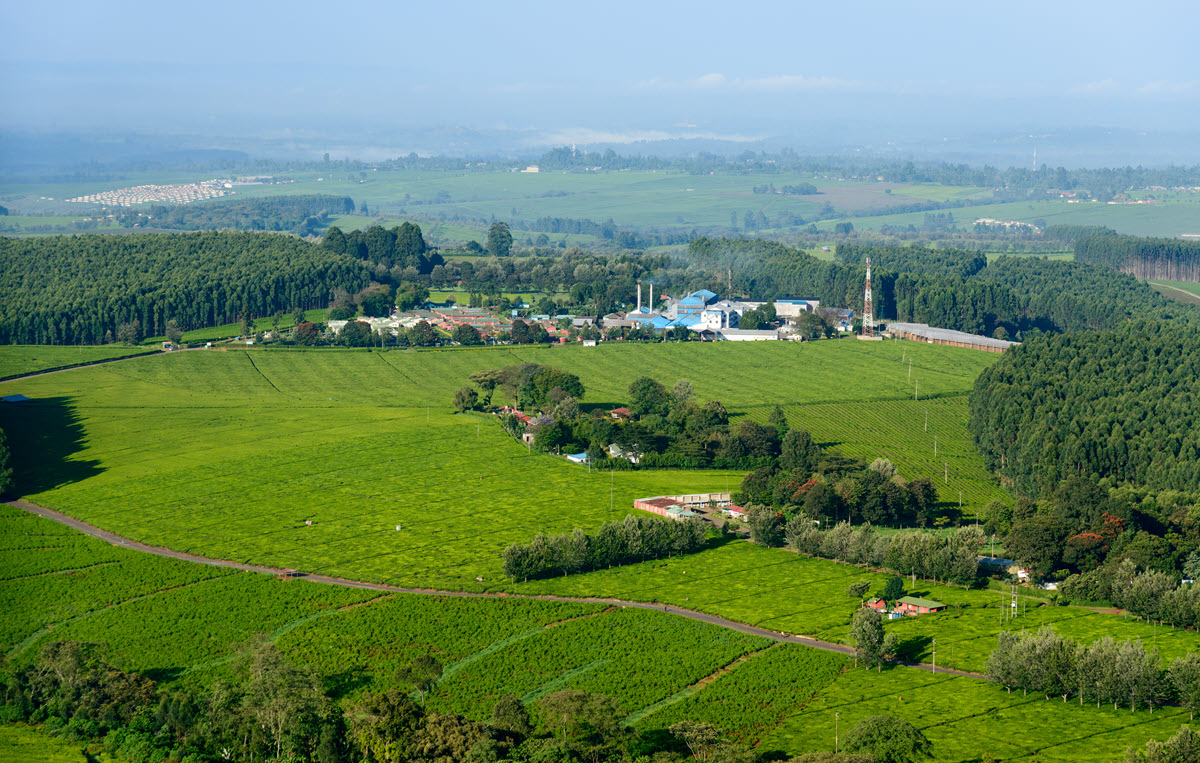
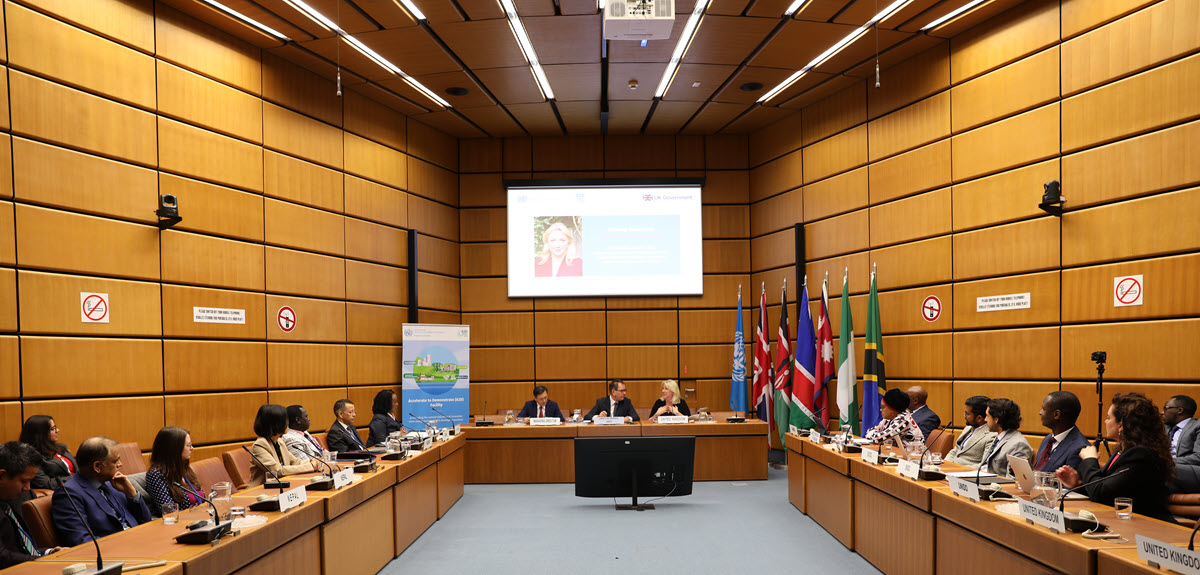
The United Nations Industrial Development Organization (UNIDO) selected Kenya’s Greener Tea project under the UK-funded Accelerate-to-Demonstrate Facility as the first of five ‘lighthouse’ pilots.” Biomass gasification is among the most promising options for tea, as it can reduce emissions, lower energy and cultivation costs, improve fertilizer efficiency, and increase productivity.
The Kenya project, led by Compact Syngas Solutions and supported by Co-REGEN-Supivaa and the International Institute of Tropical Agriculture, uses technology critical to greening the tea industry and documents a scalable path to industrial decarbonization.
Listen to the interview with Aarti Shah | Episode 212
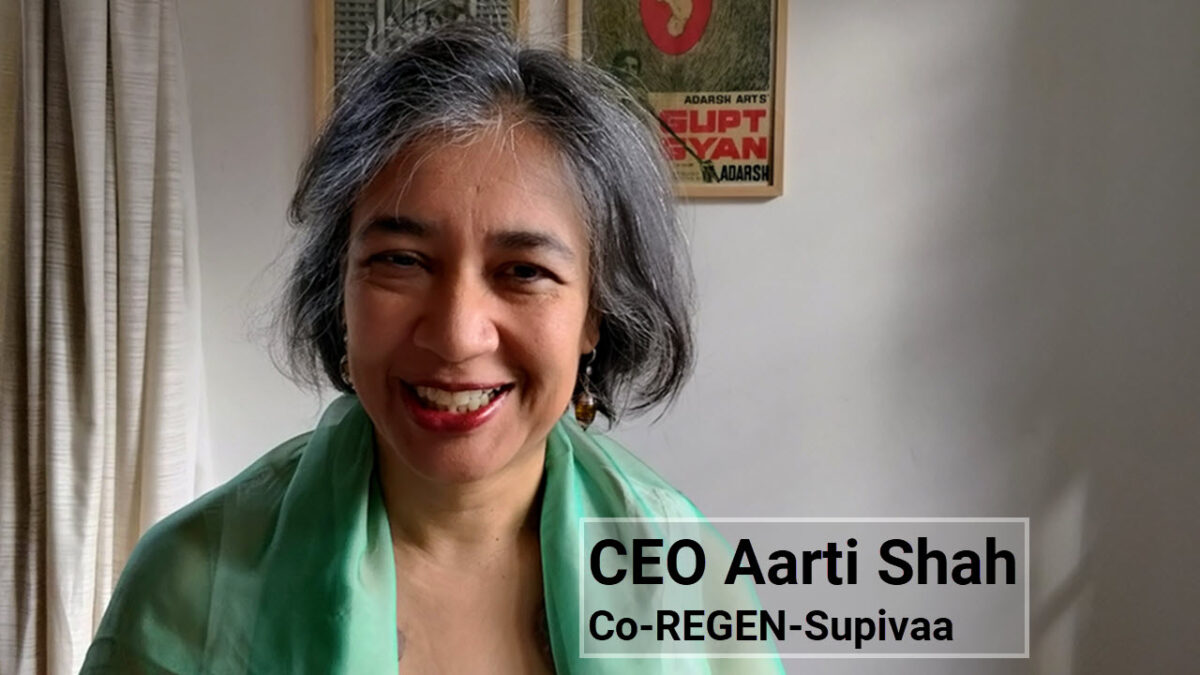
Aarti Shah advises businesses on environmental, climate, and social impact through circularity, regeneration, and frugal innovation. She likes to say that she does not shy away from complexity. As a former senior executive at Thomson Reuters, she oversaw operations in developed and emerging markets across the financial, professional, and scientific sectors, comingling her global experience and networks with deep local understanding to deliver solutions. She serves as the Board Chair of Third Horizon Earth and has previously consulted for the International Institute of Tropical Agriculture.
Somewhere Between Monoculture and Monopoly
Dan Bolton: The decolonization of tea is well advanced, but it is also clear that revenue from specialty tea is insufficient to sustain an industry comprised mainly of small and mid-sized farms. Somewhere between monoculture and monopoly, there must be a business model that allows the tea industry to profit while paying living wages with enough left over to invest in addressing serious threats, such as climate change. Will you offer listeners an overview from the ground up?
Aarti Shah: First, the most important message is that everything is up for negotiation. Everyone is a business, from the farmer to the fast-moving consumer goods (FMCG) company. We must move away from the attitude of “Yes, we hear you, but we still want to do things the same old way.” This requires systems thinking, not stakeholder resistance, and concessions.
There must be a spectrum, from a producer and a consumer perspective. Whether you want a reliable, homogeneous, any-time-of-day, high-volume product, or you want to have a specialty Camellia sinensis-based drink that is highly labour-intensive in how it is made, there is room for it all. In India, I learnt about how to introduce seasonality from Nalin Modha. He has brought a seasonal character into the cup in Sri Lanka. He could advise the Kenyans on field practices and machinery!
However, regardless of how it is produced and what the product is, we must address some fundamental issues. Everybody along the supply chain needs to question their own assumptions about what is working and recognise that we have modern technologies and policy levers waiting to be used.
If we start from the ground up, soils in Kenya are generally degraded. Specifically, where tea is concerned, especially where synthetic fertilizer has been used over time, we would be foolhardy if we didn’t go back to basics, to the roots, literally and figuratively, and ask: What does the soil need?
Then, in tea processing, I see a significant opportunity to rethink how power and heat are generated and used.
When the industry attempts one more time to make boilers more efficient, I push back to ask why, in the global south, we should continue to use incineration when Diageo is announcing that a Guinness brewery in Dublin will be migrating to heat pumps. I understand that power is still expensive and unreliable in many of these countries, but lower-cost ‘green’ electricity should be firmly part of their industrialisation roadmap, as should frictionless importing of equipment or intermediate goods, ethical buying, risk-based finance (actual, not perceived), and circularity. I may appear to be digressing, but these are all parts of systems thinking. Then you might, just possibly, be able to move the blending of globally sold teas to Kenya.
Back to moving tea producers away from incineration, use the carbon tax. One should always tax what is toxic!
Then, tea producers would be able to mitigate the other monoculture in Kenya (eucalyptus), and in northeast India move away from fossil fuels (coal and gas).
Tea is grown on slopes in many parts of the world, making it almost the last frontier of agricultural automation. Camellia sinensis is a plant that requires respect, not machines that move through the bushes and tear off leaves arbitrarily. It merits intelligent automation, also because, I am informed, the average age of a Kenyan tea farmer is 65. To attract young people to agriculture, we need to be intentional.
I’m not here to change what is agronomically the best practice; I am here to make that practice more efficient or effective. And, in the process, attract a new generation of farmers.
On a Kenyan tea farm, regardless of size, you may well see the owners or staff – often men – using a machete, or handheld motorized shears, to prune the bushes every three or four years. Whether it’s a single level of pruning, as I have typically seen in Kenya, or the three levels of pruning that you might have in Assam, we must think about how we use technology so that it creates multiple benefits, one of which is shared prosperity. As Erik Brynjolfsson at Stanford University points out[1], we are restructuring.
Agrobiotics and Biochar
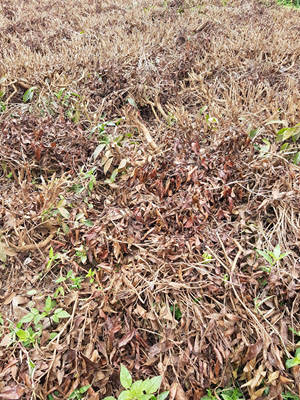
We’re working with a company in India to develop agrobotics for pruning and simultaneous biochar application while we have access to the soil. Robots will allow us to prune more quickly, in a more targeted way, at a lower cost, making prunings a viable biomass source for the gasifier. The same robot will apply biochar, what I call a super-food for the soil, in furrows before covering it with shredded prunings. We are making the most of all our natural resources, and it just so happens that a robot is doing it.
But there are still other tasks required to get the prunings to the factory and the biochar back to the field, and the robot will not do these. You use it to help with part of the supply chain, but not all.
Dan: I’m glad you brought up biochar; I’ve been championing it since the early 2000s. When discussing improving soil with modern technology, it begins with analyzing the soil to understand what has been depleted, enabling a determination of how to enrich it. I like biochar because it provides a home for organic diversity, giving little bugs and bacteria a place to live. But I don’t see widespread use of it in the tea lands. Why is there not as much biochar in tea as there could be?
Aarti: Generally, there seems to be less research in tea than other crops full stop. We took the Tea Research Institute at the Chinese Academy of Agricultural Sciences (CAAS), and their counterparts in Kenya, to a biochar application in Limuru, and have proposed systematic research on biochar in tea under a program called the Global Low Carbon Tea – Triangular Cooperation in Tea Value Chain in Kenya.
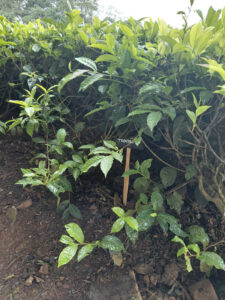
The Chinese are ahead of Kenya, for example, they have data on the pH impact, but many of our findings, such as more chlorophyll in the leaf, overlap. My point here is one that I keep emphasizing: the challenge of relying on other people’s funds to conduct meaningful research. It would not be unreasonable for both the public and private sectors in Kenya to acknowledge that tea is a critical part of the country’s economy and requires a strategic outlook.
That includes factoring in complex, global, long-term developments, such as climate change, urbanisation (an internal brain drain!), or digital transformation. Beyond external forces, there is horizon scanning. I am not going to unpack this in detail, but suffice to say that Kenyan policymakers and industry need to look for signals all the way through to what may be low-probability but high-impact events – and even science fiction! The Kenyan tea sector must be accountable for its strategy, not just entertain others.
This means Kenyans should fund their own research, because if you wait for overseas sources, as we have seen over the last few months, that pack of cards can fall over altogether, or it operates at its own pace if it is still there.
Of course, Kenya does not need to be on its own. We have a separate project in integrated pest management. Since the changing climate is already impacting productivity in Assam, we are pooling our knowledge – but let Kenya, a major global tea producer, take ownership and put some proverbial skin in the game.
Dan: Congratulations on getting the green light for your biomass gasification project.
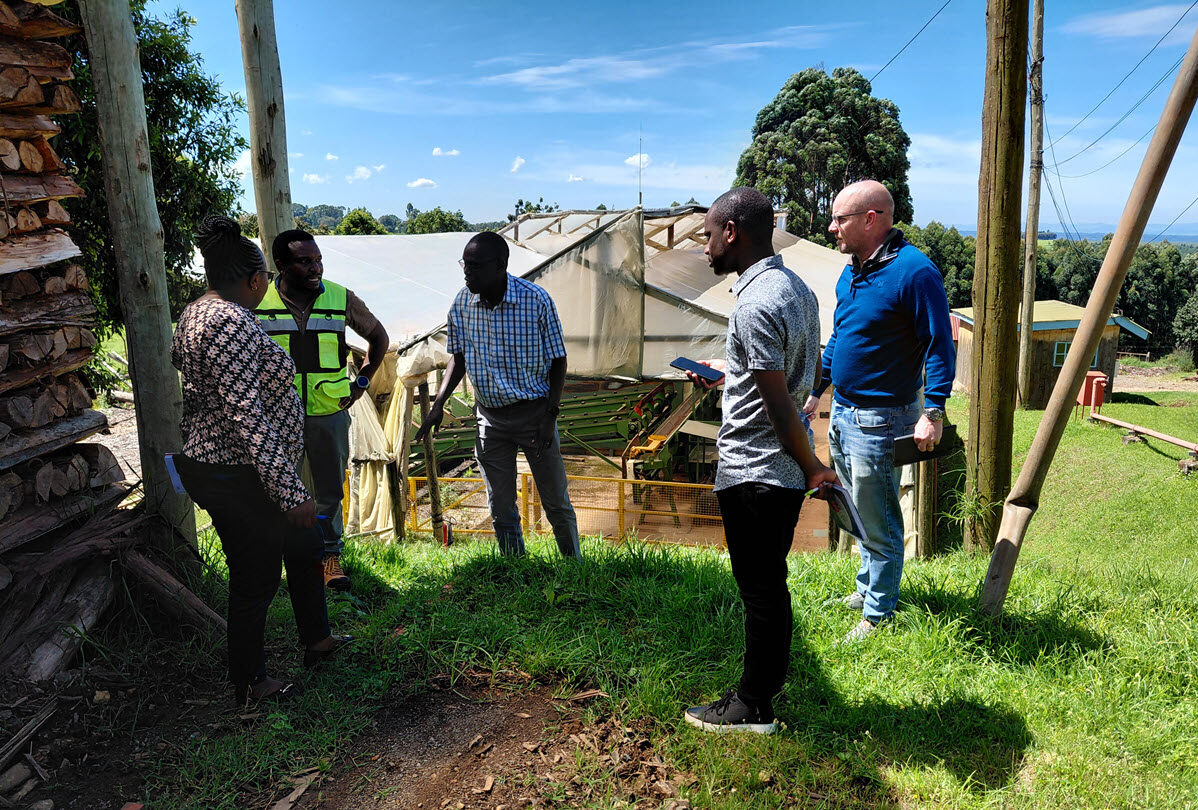
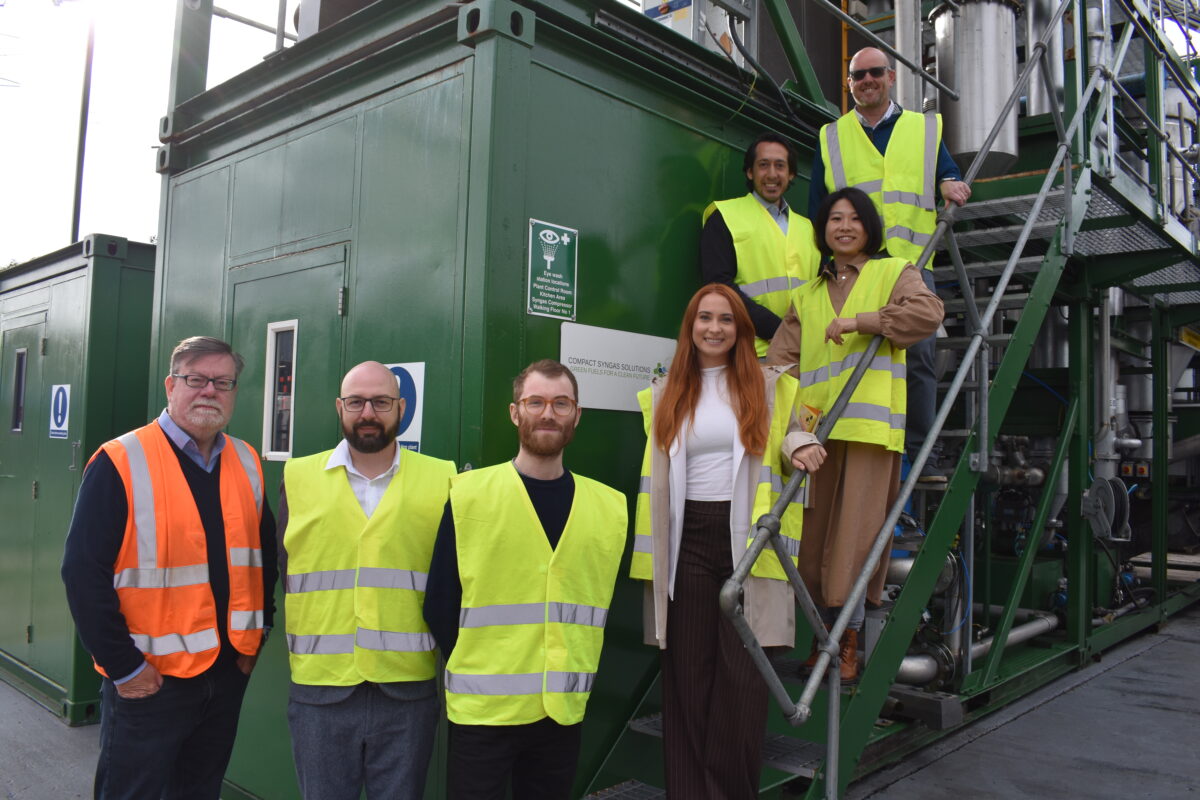
Aarti: We’re delighted to be installing the first Compact Syngas Solutions gasification plant at Browns Plantations Kenya Limited. It’s a three-year project funded through the Accelerate-to-Demonstrate Facility under UNIDO (the United Nations Industrial Development Organization) that will enable our consortium to establish a lighthouse pilot, inviting everyone to see it in action.
We approached Browns Plantations Kenya since they have been innovative for decades, continuously seeking out better technologies and processes. As an estate, growing and processing their own green leaf, they provided us with an ecosystem, deep engineering and agricultural knowledge, and pragmatism! I am particularly indebted to their technical director, Hugo Douglas-Dufresne, for collaborating with us.

Dan: So, how does it work?
Aarti: Gasification is a low-oxygen, thermal conversion.
Take tea prunings, and other high-carbon biomass, such as maize shanks, bamboo, and sugar cane bagasse. This biomass must be reasonably dense and dry, with a moisture content of about 15%. Unlike burning through full combustion with lots of air, the biomass is packed into a chamber with limited oxygen at high temperatures, around 850 degrees Celsius. From that, we obtain a synthesis gas (or syngas) that is cleaner and less polluting than natural gas.
The syngas is put through an engine, which generates both heat and power. In a CTC factory, 10-15% of the energy required is electrical, and the rest is thermal. A CSS 500 kWh gasifier will provide sufficient power for a minimum 2-line factory operating 24 hours a day, most of the year-round. It will not produce enough heat to replace the boilers entirely, but we should be able to reduce the dependency by at least 15%. The syngas could go directly to the boilers, or we could produce hot water at 90-95 degrees Celsius.
Gasification does not convert all the biomass to energy. The residual product is industrial biochar. For every ton of biomass, we will configure the system to produce 150 kilos of biomass, which will be returned to the soil in a closed loop.
Biochar also attracts carbon credits, another revenue stream.
In many ways, gasification is both an old technology and a newly improved one. CSS has been investing in research and development for almost two decades and has a clean, patented system. They use dry scrubbing. They want to deploy it in the so-called emerging markets, and that’s why we are partnering with them. CSS is currently building the plant for Browns Plantations Kenya in the UK, and it will be commissioned in Kericho in 2026.
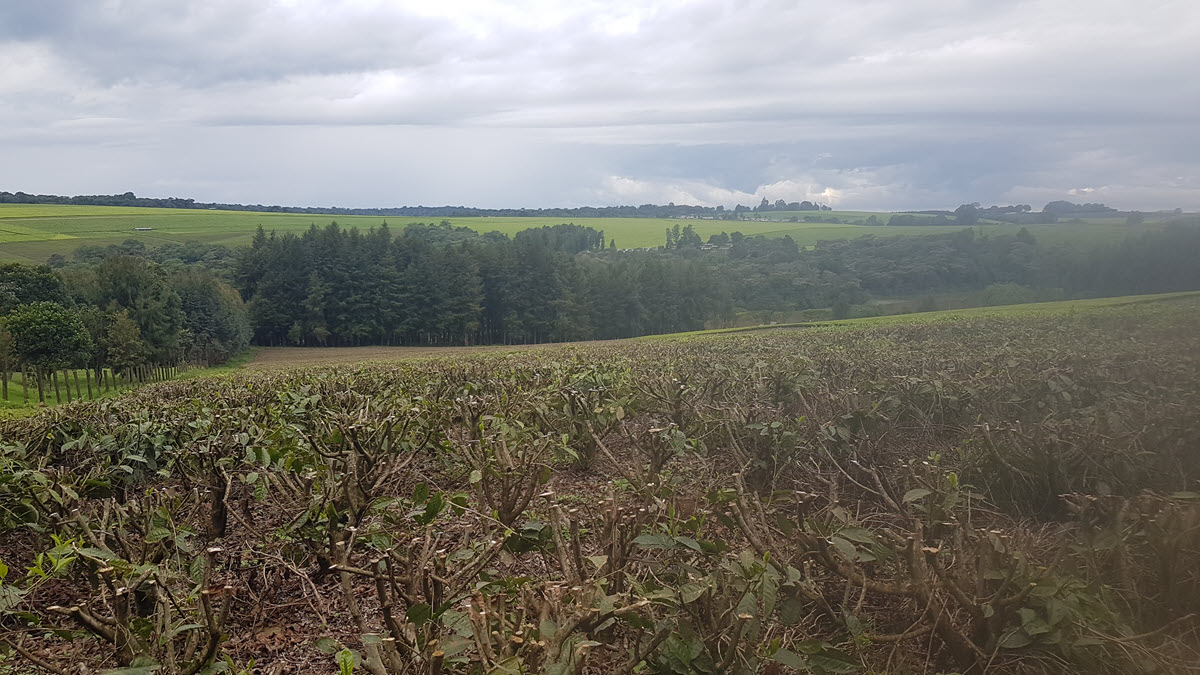
Dan: Tea plants in Kenya are spaced less than a meter apart. Farmers plant between 10,000 and 20,000 bushes per hectare, yielding an average of 2,000 kilos per hectare (with an all-time high of 3,739 per hectare in 2004). What is the optimal way to grow tea?
Aarti: Tea has been tightly packed because you must get the most out of that parcel of land. If you acknowledge that you are already overproducing CTC tea and use biochar to make fertilizer more efficient, thereby increasing yield, what does that mean? You can free up land.
Tea is grown in catchment areas around factories. In Kenya, the area may be 1,300, 1,800, or indeed 5,000 hectares. Take, for example, the KTDA model, where each factory is served by farmers who are shareholders.
We have an opportunity to examine the cultivation of tea from this perspective. Farmers can take a step back and ask, ‘What should we grow in our catchment area? Out of the 1,800 hectares, can we reduce the amount of tea overall to X?’
To reiterate, the decision about what to grow instead cannot be made at the individual farm level, especially when a smallholder farmer may have only a quarter, half, or one acre under their own management. The community must organize food production across its catchment area, and ultimately, up to the national level, so that we do not end up with an oversupply of whatever is being grown. The revenues and costs will be shared across the community.
Once farmers agree to this, they can ask themselves, ‘What is the optimal way to grow tea? How can we leverage all the nature-based solutions we have at our fingertips to make that happen?’
Let’s use intercropping and agroforestry for their agronomic benefits. Plant other crops, such as avocados – especially the huge, delicious ones that Kenya does not export! – or herbs, or whatever else is suitable for planting on newly available land. Bring about biodiversity and start moving away from synthetic fertilizers because you are fixing nitrogen. (Later on, we will be looking at alternative soil remineralisers. Watch this space!)
Dan: If the average yield per hectare of tea in Kenya is lowered, how do growers generate sufficient monthly income during the harvest and receive an annual bonus to sustain the farm?
Aarti: First, there has to be more distribution of value. Producers in Kenya may well consider themselves to be short-changed.
It goes back to my point at the start: buyers, blenders, and retailers are adamant that they’re doing everything they can. If that were the case, then why are we still talking about living wages and living income?
Consumers, wherever they are in the world, must accept that they need to pay more for tea, and for food generally. For a long time, food has been incredibly cheap as we haven’t put a value on nature, the environment, the soil, or water. Once you start pricing in all of this, and everything you expect producers to do “for free,” you might find that the cost of tea is much higher than you realized. It is an ongoing conversation that I am having with the likes of Dushanth Ratwatte, CEO of Browns Plantations Kenya.
The second is that Kenyan tea companies are not always making the best decisions for their own balance sheets. I have visited factories that have installed, but never used, a third or a fourth line for CTC processing, or someone will think ‘Orthodox is fashionable, so let’s put capital into that,’ without considering the demand.
I met with a senior decision-maker in the Kenyan tea-producing ecosystem. He questioned the need for crop diversification in the west of the Rift: ‘If we free up land and farmers start growing food crops, there are very few urban centers in western Kenya for them to sell to.’ Yet Kenya imports food!
Today, I hear people saying quite authoritatively, ‘We are going into XYZ,’ which could be avocados, blueberries, or some other bandwagon. Have they identified who will consume them? Kenya increased tea production by 50% in 2011-21. Had anyone identified who would be drinking it? Along with the distribution of value, we need a longer, more strategic conversation over which alternative crops to grow and where, which new products to produce, based on responding to or creating demand.
Going back to how you attract a new generation of people into the tea sector, getting them to appreciate specialty tea is also a device to use.
It can start in many different places. Take tourism, given that Kenya has a sizable sector for international and domestic markets. Hotels, lodges, and campsites would be fantastic places not just to serve tea at breakfast and lunch, but also to elevate the experience and introduce visitors to tea tasting. That shouldn’t be so very hard to do if you invest in having a sommelier who understands the tea that they are serving.
If we accept that there is room for it all, promoting and serving some of the best Kenyan teas should be encouraged, while also explaining, ‘The typical cup of tea in the highlands is light and milky. You throw some leaves in and make it very sweet, since farmers need energy. Here’s a shot of it, so that you understand what people drink in other parts of the country. When I first visited my in-laws in Ndakaini during a downpour, the tea was brewed on an open stove with rainwater harvested in a sufaria (pan), and the cow was milked in front of me; they laughed when they heard that I didn’t take sugar!
Secondly, government offices. The public sector is a significant employer in Kenya and again receives visitors from around the world. If you’re walking into any ministry, you should have the right to a decent cup of tea. It should be a right, not merely an expectation. When I go to the Tea Board of Kenya, or indeed any private-sector producer in Kenya, I look forward to drinking the tea, but that’s it.
Often when I attend an event or meeting in Kenya, I’m served from a Thermos of tea that is hardly bursting with flavour. Kenya hosts numerous global conferences, and they could have people serving tea and engaging with attendees during breaks. Again, that’s being an ambassador for the excellent produce Kenya has to offer.
Grace Koinange of Riara Teas, Tehmeena Manji from the Muthaiga Tea Company, and Sheena Patel of Stir Me are looking to change the narrative of how Kenyans themselves drink tea. They all happen to be women, which may have something to do with it!
Dan: In addition to traditional bulk sales at auction, Indian producers experimenting with B2C via marketplaces such as Amazon are earning $3 to $5 million in annual online sales. Is that an option in Kenya?
Aarti: There’s room for both. E-commerce removes many trade frictions. Digital trade can eliminate some historical inefficiencies. It is excellent that producers are seeing increased sales, as long as they are being fairly remunerated and that this is sustained. At the same time, not everybody necessarily wants – or needs – to receive their tea in two days, or to buy it from an anonymous mass consumer platform. There are still people who want to interact with a knowledgeable individual – maybe even a tea sommelier – who can explain the origin and flavours, and answer questions. They will seek out the old-fashioned tea shop, cafe, or specialty experience, whether in the producer country or closer to home.
[1] https://www.theatlantic.com/sponsored/google/the-jobs-equation-erik-brynjolfsson-qa/3872/

UNIDO’s Decades-Long Commitment to Green Energy in Kenya
Since its establishment in 1966 to promote industrialization in developing economies, the United Nations Industrial Development Organization (UNIDO) has progressively aligned its technical cooperation with environmental sustainability and the adoption of clean energy, especially in Africa and Kenya. UNIDO’s mandate expanded in 2013 to explicitly include inclusive and sustainable industrial development (ISID), embedding environmental stewardship into industrial policy frameworks worldwide.
In Kenya, UNIDO’s engagement in green energy and sustainable development dates back at least to the early 2000s, with field-level interventions that laid the groundwork for renewable and rural energy solutions. Notable early work includes the installation of an ultra-low-head micro-hydropower system in the Mwea Irrigation Scheme—a collaboration among UNIDO, local authorities, and international partners—to demonstrate clean energy for productive rural uses. In 2008, UNIDO further supported Kenya’s rural electrification by inaugurating a zero-emission community power center combining hydro and solar generation, signaling its commitment to decentralised clean energy models. Source: SDG Knowledge Hub
Beyond project interventions, UNIDO’s energy programme has historically emphasised capacity building, technology transfer, policy support, and standards development to mainstream renewable energy and energy efficiency across industry sectors. Its Renewable and Rural Energy Unit targeted both industrial and community uptake of renewable technologies, framing energy access as central to inclusive development and climate mitigation.
The Greener Tea project is supported by the United Nations Industrial Development Organization UNIDO) through the Accelerate to Demonstrate (A2D) Facility. The views expressed herein do not necessarily reflect the views of UNIDO, its Member States, or its partners.
Sharing is caring: Please forward this post to a friend in tea
Sign Up to Receive the Weekly Tea Biz Blog | Podcast