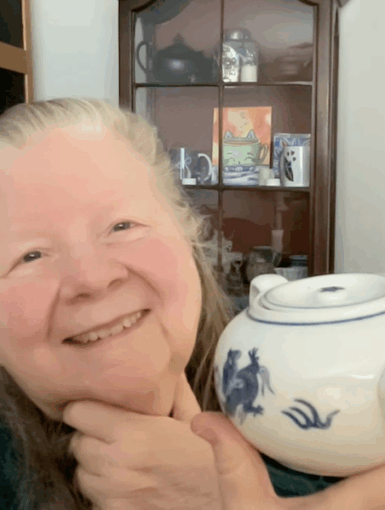

This book is a sensual delight: in it, you learn to explore tea using your senses, including sight, smell, taste, and even sound.Β Dr. Lovelace describes experiments you can try at home with tea using budget-friendly materials. This is a fascinating journey into the science of tea you can take without leaving home.
Read MoreTag: Tea Chemistry
The Tea Scientist: In Tea He Trusts
He speaks of tea as one would about a real person, as a friend. Thatβs true love, if it can be called anything.
Read MoreWhy Tea Leaves are Plucked in the Morning
We donβt yet fully understand why time of day matters when plucking tea leaves. At dawn leaves wet with dew may take longer for drought responses to set in. Differences at mid-day may arise because of the circadian rhythm of aroma volatile production. Master tea makers know these patterns and […]
Read MoreHow Leaves of Different Ages Provide Flavor in Your Cup
A growing body of studies of leaf chemical composition is beginning to support the experienced tea makerβs choices. A striking difference is found in chemical composition as you go from the shoot to lower leaves. We often hear that the best loose-leaf teas come from buds or shoots, the […]
Read MoreTea Aroma: The Intimate Journey
Tea offers adventures unlike those of any other beverage. We can all invoke our own special and intimate adventure in our minds and senses as we sip our cup. The first step begins with our eyes. We anticipate the adventure as we look into the cup, even before the teaβs aroma wafts to our nose.
Read MoreTea Has Lots of Chemistry
Tea lovers know itβs a delicious drink. Theyβre used to hearing claims that itβs good for you, too. But how is that, exactly? After years of study, Tufts University Professor Jeffrey Blumberg, PhD, compares drinking tea to eating your fruits and vegetables. βTea is a healthy drink,β Blumberg confirms. βIt […]
Read MoreThe Aroma of Pu’er
Originating in Yunnan’s large-leaf species, pu’er tea can be stored for many years. Its aroma diminishes gradually.Β A latent note is uncovered as volatile aromatic compounds with a low boiling point dissipate. A quality piece of new raw pu’er cake with proper storage will develop a clean and robust grassy aroma and then flower, fruit, honey, plum, almond, and woody aroma, finally expressing the epitomic vintage notes.
Read More