


“My decision to embark on the path of professional tea-making and tasting was deeply rooted in my upbringing. Surrounded by the intricate dance of tea artisans and the fragrance of freshly plucked leaves, my fascination with tea began at a tender age. I’ve been living with tea for over three decades now.”
Read More
Immersive tours are a remarkable equalizer, bridging the gap between seasoned tea connoisseurs and novices. Through shared experiences of plucking tea leaves alongside local farmers, crafting their blends, and witnessing the alchemy of leaf to cup, they forge bonds that go beyond language and cultural barriers.
Read More
Rose reserve tea is not just a mark of the enchanting flavors fostered by Nepal’s unique high-altitude micro-climates and terroir but also an embodiment of the keen talent of a new generation of tea-makers.
Read More
Bhairab Risal, a veteran journalist with a sharp memory at 94, speaks with ease and zeal of his memories of the early days of Kathmandu’s tea culture. In 1948, at the age of 20, he recalled his first cup of tea at Tilauri Mailako Pasal, one of Kathmandu’s earliest and best-known tea shops. In this article, Kathmandu journalist Prawash Gautam shares tales of two storied tea houses.
Read More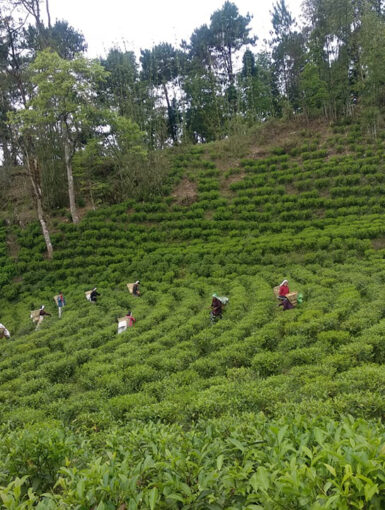
The Barbote tea farm is nestled in the steep hills of Ilam, Nepal, planted by his grandfather and tended by his father but grower Narendra Kumar Gurung spent most of his working years with the Japan International Cooperation Agency. Like most of Nepal’s new-generation farmers, specialty tea is a new endeavor built on a century-old foundation of commodity production.
Read More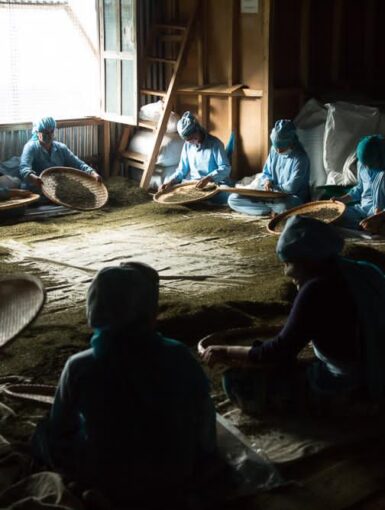
The pandemic was the worst thing to happen to Nepal’s Kanchanjangha Tea Estate, but there is a silver lining. “It radically changed how we work,” says Nishchal Banskota, who manages operations via Zoom calls between Long Island, New York, and his family’s tea estate. It’s early morning for me and the end of the day for my father, but after nine months, he says, “I have more confidence that I can manage a farm remotely.”
Read More
RANITAR, Nepal Tea was a gift fit for their king that the humble people of Nepal have cherished since its arrival. Long before marketers labeled it organic, Nepal tea was grown with care. It was always the province of smallholders clinging to the mountain side like the trees they nurtured. […]
Read MoreDO NOT PUBLISH http://kathmandupost.ekantipur.com/printedition/news/2016-05-02/tea-exports-down-as-production-up.html May 2, 2016- Tea exports dropped 1.13 percent in the last fiscal year despite a significant growth in the plantation area and volume of production. Nepal exported tea worth Rs2 billion in 2014-15 compared to Rs2.02 billion in the previous year, according to National Tea and […]
Read More
A lack of infrastructure, a lack of capital, natural disasters, a pandemic, and a very tough competitor at the border – these are the challenges faced by Nepal growers.
Read More
Bhairab Risal, a veteran journalist with a sharp memory at 94, speaks with ease and zeal of his memories of the early days of Kathmandu’s tea culture. In 1948, at the age of 20, he recalled his first cup of tea at Tilauri Mailako Pasal, one of Kathmandu’s earliest and best-known tea shops. In this article, Kathmandu journalist Prawash Gautam shares tales of two storied tea houses.
Read More A lack of infrastructure, a lack of capital, natural disasters, a pandemic, and a very tough competitor at the border – are the challenges faced by Nepal growers. The Nepal Tea and Coffee Development Board report that very few (3,244) of the three million employed in Nepal’s tea industry work full-time. Seventy-four percent of temporary workers are women, according to the Central Bureau of Statistics. There are 18,180 small farm owners, in stark contrast to India’s vast tea plantations and the social complexity of such systems. The farmers can either process the tea themselves or sell the raw leaves to factories.
Read More
To get his fill of the best quality fresh tea leaves, Sharad Subba partners with 80 farmers in the neighborhood. This is one of the many ways Jasbire Tea Processing Center keeps the manufacturing of tea communal and delivers one of the finest Nepal teas. The quality tea made in Subba’s factory is consistent, distinctive, and truly representative of Jasbire.
Read More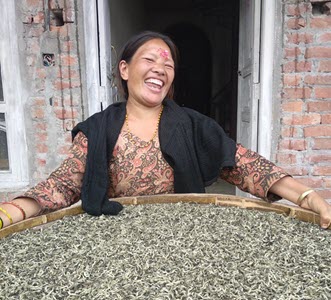
The Barbote tea farm is nestled in the steep hills of Ilam, Nepal. It was planted by Narendra Kumar Gurung’s grandfather and tended by his father. Narendra spent most of his working years with the Japan International Cooperation Agency. Like most of Nepal’s new-generation farmers, specialty tea is a new endeavor built on a century-old foundation of commodity production.
Read More
Nepal’s eastern tea-growing region leads the country’s tea trade, but the landscape is changing as rural entrepreneurs expand the tea terroir. Upcoming tea brands are establishing Nepal Tea as a global brand offering premium differentiated products with a compelling story that is authentic and modern.
Read More