


In an industry where sensory evaluation has long relied on subjective descriptions and inconsistent terminology, Australian Tea Masters has introduced a groundbreaking tool that promises to transform tea education, especially how tea professionals, students, and enthusiasts communicate about tea liquor appearance. The newly launched Tea Color Wheel represents a significant advancement in tea education, providing a standardized visual reference that addresses a fundamental challenge in tea tasting and assessment.
The tool fills a crucial gap in the tea industry’s educational resources. While flavor wheels have become commonplace across various beverage industries, comprehensive color wheels remain rare. This innovative resource offers tea learners and professionals a systematic approach to describing and documenting the visual characteristics of brewed tea, enhancing precision in tasting notes and strengthening communication across the global tea community. As the industry continues to expand, such standardized tools become increasingly essential for maintaining consistency and fostering deeper understanding among all stakeholders.

Addressing the Color Description Challenge
The genesis of this innovative tool emerged from direct observation of recurring difficulties in tea education. According to Sharyn Johnston, CEO and Director of Australian Tea Masters, “The tea wheel came about since so many tea students struggle to define liquor color when we are completing tasting notes in either Australian Tea Masters classes or in World Tea Academy.”
Johnston identified a pattern that hindered students’ progress and limited their descriptive vocabulary. “We found that when students submitted liquor color notes, it was the same few colors being used all the time. If you would suggest a color to a student, they would then often reuse that particular color over and over,” she explains. This repetitive cycle prevented learners from developing nuanced observational skills and restricted their ability to communicate subtle differences between teas.
The Color Wheel addresses this bottleneck by expanding the visual vocabulary organically. “The tea color wheel allows using more colors by opening the mind to color names and visuals combined, and relating them to the tea category,” Johnston notes. This approach combines nomenclature with visual representation, creating mental associations that enhance retention and practical application during tasting sessions.
Building on a Legacy of Innovation
Australian Tea Masters’ commitment to developing educational resources extends beyond the Color Wheel. Johnston reveals the company’s pioneering history in creating reference tools: “We first developed our tea flavor wheel about ten years ago, and at that stage, there was no flavor wheel for tea. I was working alongside the coffee industry, and they had a coffee flavor wheel, there was a wine wheel, and even a cheese wheel, but no tea flavor wheel that we could find.”
The success of their Flavor Wheel provided both validation and inspiration for the Color Wheel project. The Flavor Wheel has achieved remarkable global adoption, demonstrating the tea industry’s appetite for well-designed educational tools. Johnston shares, “Our tea flavor wheel has now been translated into seven languages and is used globally by large and small companies as well as students and the general public. We decided that the format worked so well, so why not develop a tea color wheel for the tea liquor?”
This iterative approach to tool development showcases the company’s responsive methodology, where proven concepts are adapted and expanded to address additional educational needs within the tea community.
Meticulous Development Process
Creating an accurate and useful Color Wheel required extensive research and refinement. Johnston describes the intensive development period: “It took us over a year of development, and it was a combination of our designer and me, lots of brewing and color matching, and especially trying to find colors that people could relate to. There are many color names out there which are very nice but hard to relate to when looking at tea; this was the hardest part.”
The technical challenges extended beyond simple color matching. Achieving accuracy across different tea categories demanded repeated calibration. “Getting the tones right to match the different brews was quite difficult, and we had to go over them many times,” Johnston explains. This dedication to precision ensures the wheel serves as a reliable reference rather than an approximate guide.
The research methodology considered the natural variations within tea categories. “The research chose color gradients associated with the different tea categories and then the different tea types. You have to say, a white tea category, but you can have a myriad of different colored white tea brews,” Johnston elaborates. Using oolong as an example, she illustrates the spectrum: “Take oolong, you can go from a pale green colored liquor through to golden, through to bronze and copper, and look at whether the brew would relate to the color. We then placed the color next to the brewed tea to try and make sure the colors matched.”

Empowering Multiple Stakeholders
The Color Wheel’s practical applications extend across various segments of the tea industry. For educators, it provides a consistent reference point that eliminates ambiguity when teaching sensory evaluation. Students benefit from having a visual anchor that accelerates their learning curve and builds confidence in their descriptive abilities. Tea businesses can leverage the tool for quality control, product development, and marketing communications.
Johnston emphasizes the tool’s marketing potential: “Liquor color is very useful in marketing tea and helping with sales, as well as helping people remember a tea and helping students to write tasting notes.” In commercial applications, accurate color descriptions help customers understand what to expect from a tea before purchasing, reducing disappointment and returns while enhancing customer satisfaction.
For tea professionals conducting cupping sessions or quality assessments, standardized color terminology facilitates clearer communication between buyers, sellers, and producers across different regions and languages. This consistency proves particularly valuable in international trade, where miscommunication about product characteristics can lead to costly disputes.
The wheel also serves researchers and product developers analyzing how processing methods, oxidation levels, and storage conditions affect tea appearance. By providing objective reference points, it enables a more systematic study of these variables and their impacts on the final product.
Commitment to Accessibility and Education
Australian Tea Masters has adopted a generous approach to distributing this valuable resource. Johnston states, “The primary audience is students of tea, young or old, and anyone teaching tea. Any business that would like to use it as a poster is also welcome to a high resolution for printing. Everyone is welcome to the color wheel for free.”
This open-access philosophy reflects the company’s educational mission, though it comes with one important condition. “The only thing we ask is that people don’t remove our name from the wheel image, as funnily enough, so many people have copied the tea wheel, changed the colors, and removed our name and replaced it with theirs,” Johnston explains. This request acknowledges the substantial investment required to develop such resources.
Johnston emphasizes the company’s motivation: “We put an enormous amount of work into developing innovative tea education tools, and we are excited to be recognized as leaders in this. We do not charge for either the tea wheel or color wheel; we feel proud that people use them and enjoy them, and so we welcome any enquiries from anyone who would like a copy.”
The response to the Color Wheel launch has been enthusiastic. “We are very dedicated to tea education, and we really hope this is a helpful tool to all. We love it and we hope everyone else does too,” Johnston shares.
Future of Tea Education Tools
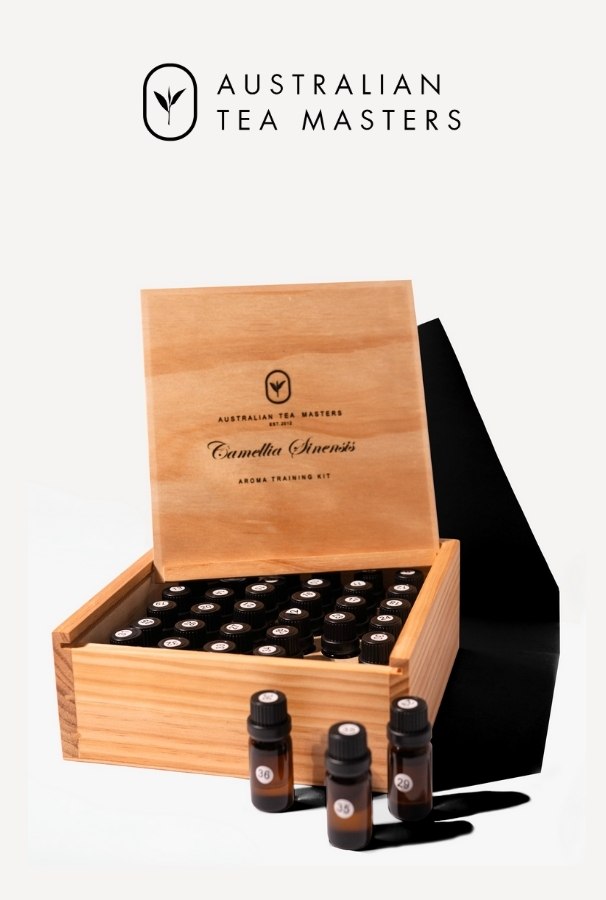
Australian Tea Masters continues expanding their educational resource portfolio. Johnston outlines their current offerings: “We now have our tea flavor wheel, tea color wheel, and tea aroma training kit, our tea sommelier book, and tea blending book, and we have a new book brewing. We think people will love a topic that has not been covered before, and it will be sure to be included in this.”
The company actively seeks community input for future development. “We would love to hear from people with any new suggestions for new tea education tools which could help with learning tea, and we will be pleased to try and help develop them,” Johnston invites.
Shaping Industry Standards
The Tea Color Wheel represents more than a convenient reference tool; it embodies a movement toward greater professionalization and standardization in tea education. As the global tea market continues expanding and consumer interest in specialty teas grows, the need for precise, accessible educational resources becomes increasingly critical. The Color Wheel addresses this need by democratizing knowledge that was once confined to experienced professionals with years of tasting experience.
By providing a free, comprehensive resource that serves students, educators, businesses, and enthusiasts equally, Australian Tea Masters has positioned itself at the forefront of tea education innovation. The overwhelming positive reception suggests the industry was ready for such a tool, and its adoption will likely influence how future generations learn about and communicate tea characteristics. As standardized terminology spreads through educational institutions and commercial operations worldwide, the Color Wheel may well become as indispensable to tea professionals as similar tools have become in the wine and coffee industries, ultimately elevating discourse and understanding across the entire tea community.
See Related
Oxygen Boost: The Science Behind Better Black Tea | Bhavi Patel
How Leaves of Different Ages Provide Flavor in Your Cup | Virginia Utermohlen


One Comment
Leave a Comment
You must be logged in to post a comment.
I enjoyed your information on the Tea Colour and Tasting Wheels very much.
I am not clear on how to order these teaching tools? Can you advise?
Thank you,
Donna Dexter