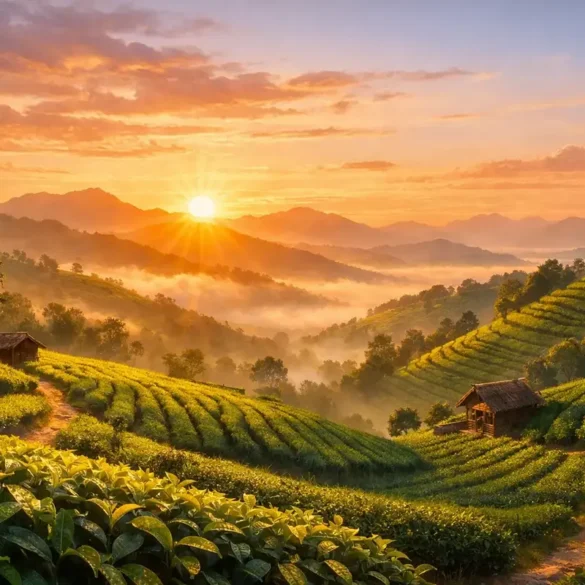


Hawai’i is a land of dramatic cliffs, lush valleys, and turquoise waters. Once dominated by sugarcane and pineapple farming, the islands have now diversified to produce Kona coffee, macadamia nuts, and tropical flowers. Hawaii’s Big Island, with four active volcanoes in various states of eruption, now hosts another crop on its ever-changing landscape: tea. Tea in Hawaii is slowly gaining ground, thanks to the pioneers who made it possible.
Tea Pioneers
Eva Lee and Chiu Leong, the visionary founders of Tea Hawaii & Company, introduced Hawaii tea to the world stage. Both artists by trade, they moved to Hawaii in the 1970s. Eva is a dancer and videographer from Connecticut, and Chiu is a potter and photographer from Hollywood. They settled in the town of Volcano, a vibrant arts community.
“I had to escape the rat race,” said Leong, recalling his previous life photographing celebrities, including the iconic cover of Frank Zappa’s Freak Out!. “I read the poetry of Han Shan to find peace,” referring to the reclusive Tang Dynasty poet who wrote on transcending worldly concerns on a figurative “Cold Mountain”. “Volcano became my Cold Mountain.”
Asian American Culture in Hawaii
Lee, drawn to Hawaii’s rich Asian American culture, left her New England roots. “My father was from Yunnan and shared stories of Chinese tea with me growing up, sowing seeds of curiosity,” she said. Meanwhile, Chiu began studying the Japanese tea ceremony and crafting Raku pottery, further deepening his connection to the art of tea.
“In 2001, while wrapping Chiu’s pottery in newspaper,” Lee said, “we stumbled upon an article featuring Dr. Francis Zee, a U.S. Department of Agriculture horticulturist.” The article encouraged tea cultivation in Hawaii, declaring, “anyone can do it.” This serendipitous discovery marked the start of a new chapter in their journey.
“At that time, sugarcane and pineapple farming in Hawaii were in decline, said Lee. “Large-scale tea farming had been researched but deemed cost-ineffective by agribusiness. Dr. Zee believed small-scale tea farming could sustainably revitalize Hawaii’s agriculture, which led him to seek out local farmers.”
Lee put together a small group of friends and hosted Dr. Zee for a visit. “He was thrilled to work with artisans,” Lee said, “as he believed we would bring the tea industry forward, driven by our attention to craftsmanship.” Over time, Lee arranged additional workshops and promoted tea cultivation, resulting in around 30 small-scale Hawaii tea farms today.
Growing a Sustainable Future
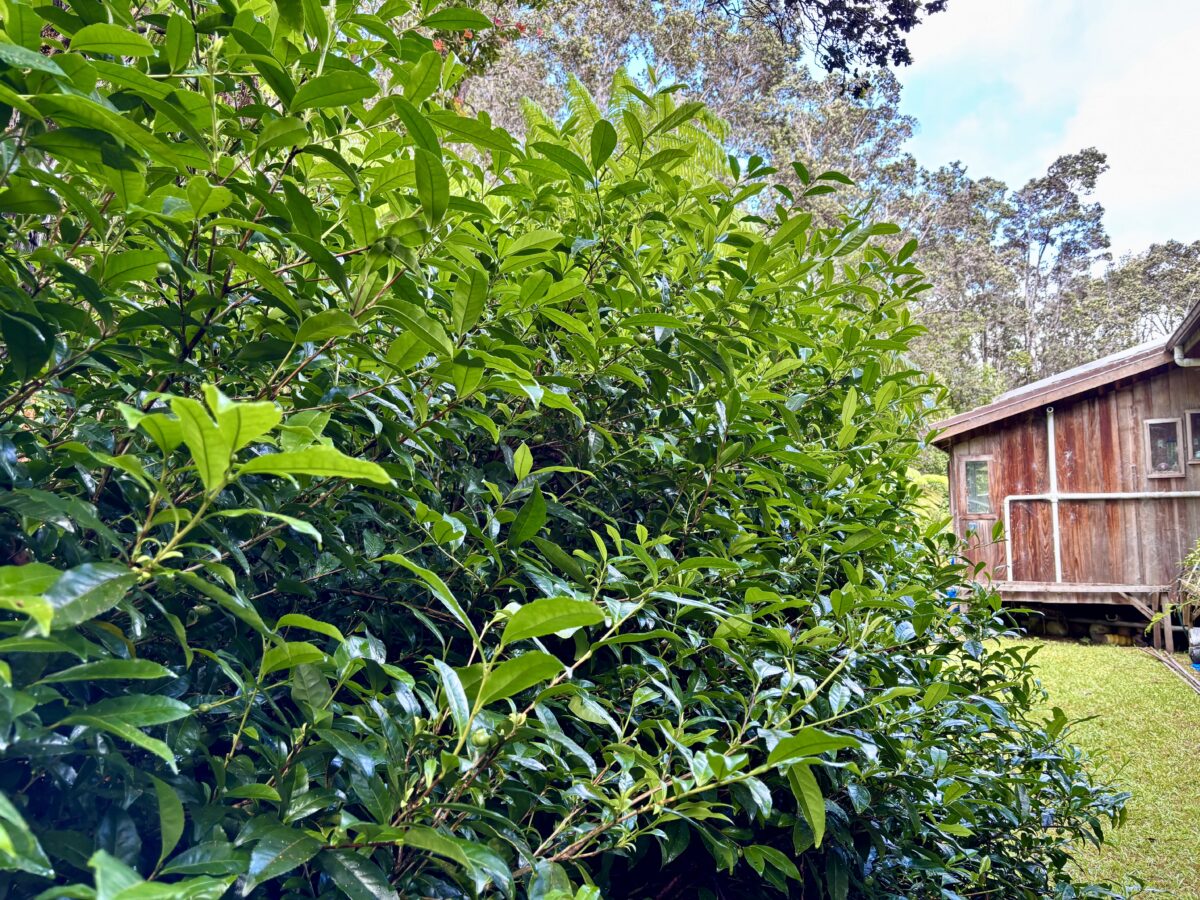
At Tea Hawaii, sustainability is a practice rooted in respect for the land. Located 3.5 miles (5.5 km) from Kīlauea Volcano, their 5-acre property is rich in volcanic soil. “We worked with and not against the land,” Lee said. “We removed the invasive kahili ginger while preserving native ʻōhiʻa lehua and koa trees, as well as hāpuʻu ferns, rather than bulldozing everything.”
“In Hawaii, there is a love of the land, Aloha ʻĀina,” added Leong, referring to the Hawaiian expression reflecting the deep cultural significance of respecting and protecting the land. “We designed the farm so the forest and tea would support each other.” This symbiosis embodies the Hawaiian concept of proper stewardship of the environment.
Earthquakes often precede nearby Kīlauea’s eruptions. “Volcanoes bring destruction and life,” Lee said. “The tremors can shift the soil, opening new spaces for roots to grow. We’ve noticed that after these tremors, our harvests have been better, perhaps because of subtle changes underground that benefit the plants.”
They planted cuttings from six cultivars of Camellia sinensis, including the sinensis and assamica varieties, among the indigenous trees. “Hawaii is vulnerable to invasive plants,” Lee said. “Tea grown from cuttings is less likely to become invasive than tea grown from seed, since cuttings are clones and tend not to adapt outside the farm environment.”
Today, Tea Hawaii has about 3,500 tea bushes. “Our farm has stayed just as we planted it,” Lee said, “in various shaded and semi-shaded configurations meandering among the native trees. And with about 70 inches of rain a year, we’ve never needed an irrigation system. Nothing has been compromised.”
It Takes a Village
Lee knew that building the tea industry in Hawaii would take a community effort. “We needed many farms working together to create the market,” she said. A rising tide lifts all boats, she believes, and she has supported many farmers in growing their teas. “No task is too big when done together,” she added, quoting a beloved Hawaiian proverb.
They also founded the non-profit Hawaii Tea Society in 2005 to support and expand tea farming through workshops and advocacy. “The tea society really brought us together,” Lee said. “Having fulfilled its mission, it has since come to a natural close, but we continue to work collaboratively. There is plenty for everybody, and we welcome new farmers as well.”
Varieties of Tea in Hawaii
Hawaiian teas have a diverse range of smooth and nuanced flavors. Lee said, “We produce white, green, oolong, and black teas, and we plan to start producing matcha and innovate our packaging methods. Other tea farmers are experimenting with tea-infused desserts and blends with local fruits and herbs. The potential for growth in Hawaii tea is boundless.”
Volcano Winery, located on the other side of Kīlauea, has its own tea field. Manager Alex Wood said, “Eva was instrumental in helping us plant tea. Her guidance opened the door for us to explore creative new uses for it. For example, our Infusion Tea Wine, made from macadamia nut honey wine infused with our black tea, has become very popular.”
Kris Bruland, a tea grower in Pepeekeo, outside of Hilo, said, “As a software architect, I came to farming through my son Noah’s passion for tea. Eva mentored our son and was extraordinarily generous in helping us get started. Just as I find joy in supporting my family, Eva’s dream is to build community and help others realize their own tea farming dreams.”
All along, Lee has been inspired by the spirit of the hulaʻo. Hulaʻo are Hawaiian cultural gatherings that transmit traditional knowledge and education, such as hula dancing. Leong added, “But we created a hui, a broader Hawaiian collective of like-minded people, who come together to advance our common cause or respectful, sustainable tea farming.”
Deep Roots, Global Recognition
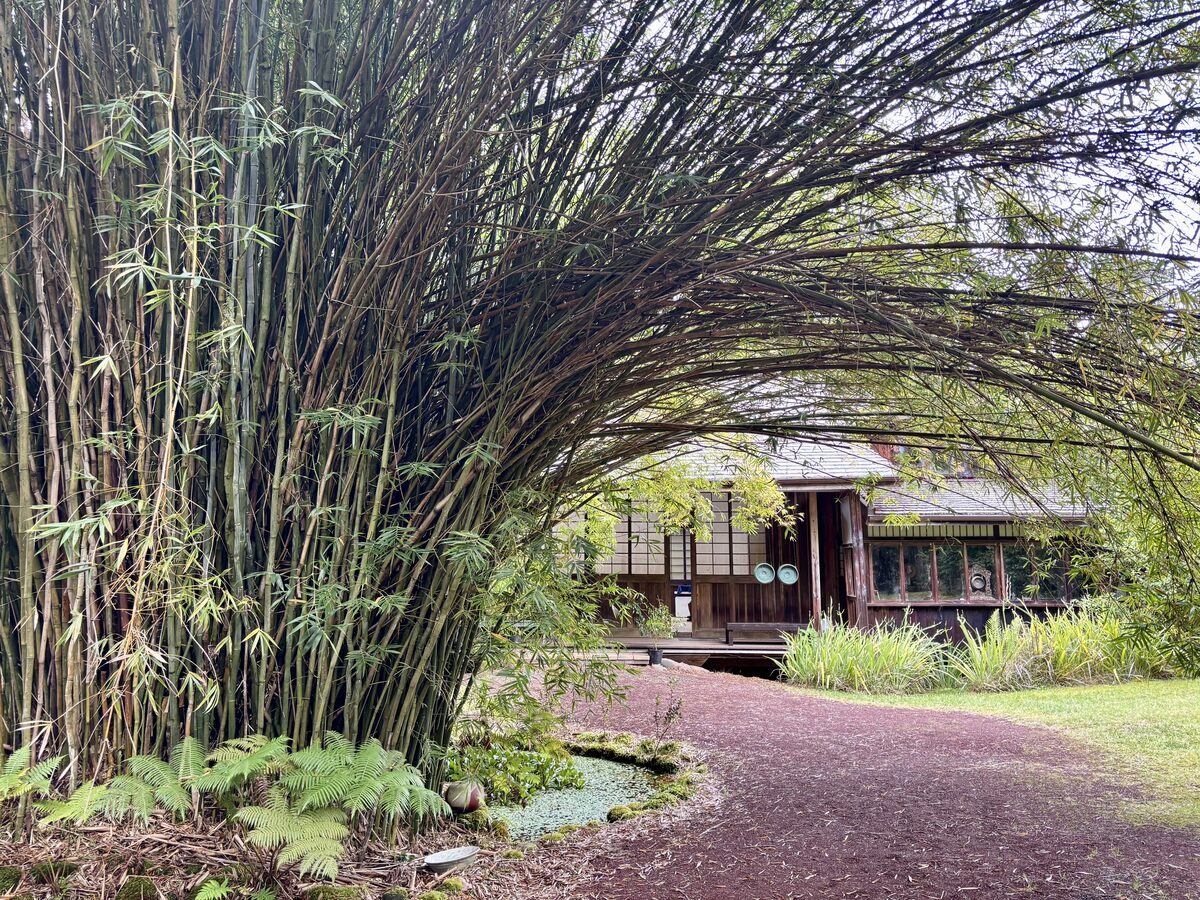
The original trees on their property carry profound cultural significance. Native Hawaiian guide Christian Phillips explained that the sacred koa tree holds a spiritual power called mana. “Its hard wood was used for tools and weapons, symbolizing leadership and strength.” The hāpuʻu fern, he said, sheds its undergrowth to fertilize the soil, providing shade while nurturing new growth and renewal.
The ʻōhiʻa lehua tree is also steeped in meaning. “In Hawaiian legend, ʻŌhiʻa and Lehua were a couple, deeply in love,” said Phillips. “But the jealous volcano goddess Pele wanted ʻŌhiʻa for herself. She turned ʻŌhiʻa into a tree after he rejected her, and Lehua was changed into a flower. Other gods took pity and let Lehua remain on the tree as its blossom. Today, the ʻōhiʻa lehua tree symbolizes love, transformation, and the strength to overcome hardship.”
Tea Hawaii’s work embodies this Hawaiian spirit of overcoming obstacles through community uplift and resilience. Lee’s efforts have also been recognized internationally. In 2022, she won the UK Tea Academy’s Gaia Award for advancing tea culture, sustainability, and education, as well as a high commendation for her Volcano Black Tea.
“Everything about Hawaii tea is unique,” Lee said. “Our tea is rooted in the natural rainforest. So, each cup offers our customers a way to return to nature themselves by restoring the spirit and renewing the soul.” By honoring Hawaiian customs and the land, Tea Hawaii’s teas embody the spirit of Aloha, bringing harmony, love, and peace to us all.
To discover more about Tea Hawaii and Company, visit: https://teahawaii.com
See Related
Tea in Brazil: Innovations in Wellness, Flavor, and Culture | John Smagula
Tea in Ecuador: From the Amazon Rainforest to the World | John Smagula
Selling Tea in Italy: Forgetting the Noise of the World | John Smagula