


How Two Zen Monks Carried Powdered Tea from China to Japan
The story of how powdered tea traveled from China to Japan is often simplified into a single name: Myoan Eisai (明菴栄西). In Japan, he is widely celebrated as the monk who introduced matcha. The reality is more nuanced. The transmission of powdered tea culture occurred through several generations of Zen monks traveling between Song-dynasty China and Japan. Among them, Eisai and Enni Ben’en played especially important roles, becoming tea emissaries of sorts.
Enni Ben’en
Enni Ben’en (1202–1280) offers a more direct link to Jingshan Temple, the Chan monastery near Hangzhou. Here, powdered tea rituals were practiced during the Song dynasty. Enni traveled to China in 1235. He studied under the Chan master Wuzhun Shifan at Jingshan. There, he observed the temple’s formal tea banquet ceremonies. He noticed the monks prepared Mo Cha (末茶), a powdered tea whisked into a pale foam in black-glazed bowls.
When Enni returned to Japan in 1241, he carried with him Zen teachings, monastic regulations, and knowledge of the tea practices he had observed. He later founded Tōfuku-ji in Kyoto, one of Japan’s major Zen temples. He helped spread tea cultivation in his native Suruga Province, today a center of Japanese tea production.
Myoan Eisai
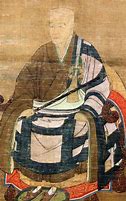 Myoan Eisai (1141–1215) belongs to an earlier generation but played a different role in the transmission of tea. Eisai traveled twice to China, returning in 1191 with tea seeds and Zen teachings that he promoted in Japan. While he did not study at Jingshan itself, Eisai still encountered the Chinese monastic tea culture. He advocated the health and spiritual benefits of tea in his influential treatise Kissa Yōjōki (喫茶養生記), “Drinking Tea for Health,” written in 1211.
Eisai’s work helped legitimize tea drinking within Japanese religious and aristocratic circles. He promoted powdered and whisked tea, an early form that later evolved into matcha.
Together, these monks and tea emissaries illustrate how tea culture traveled not through a single moment of invention but through a network of pilgrimage, scholarship, and cultural exchange. Eisai established the habit of powdered tea in Japan, while Enni Ben’en transmitted specific monastic practices from temples such as Jingshan, where monks intertwined tea preparation with Chan meditation and ritual.
Centuries later, these traditions would develop into the Japanese tea ceremony (chanoyu) – a practice rooted in Song-dynasty tea culture but refined within Japan’s own Zen aesthetic.
See Related
The Global Matcha Revolution: From Zen Temples to a Powerhouse | Bhavi Patel