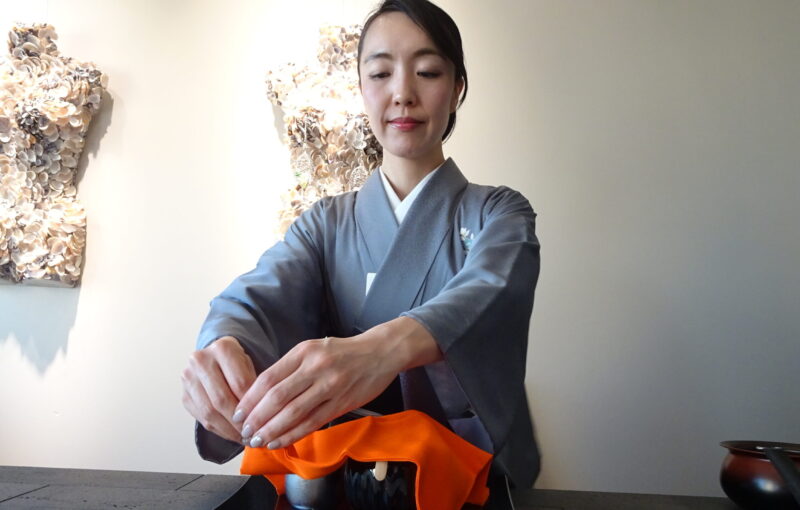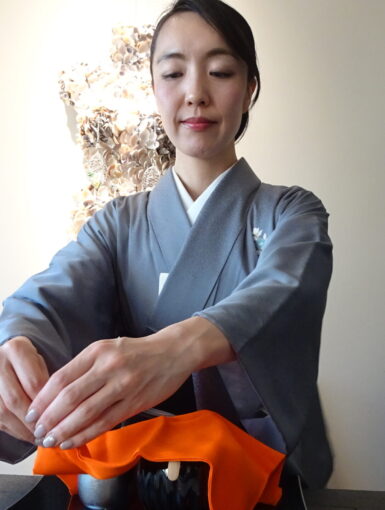

Ancient symbolism and practices are essential aspects of Chanoyu the Japanese tea ceremony, although much of the experience is about enjoying the present moment. Many Japanese consider chanoyu the quintessential artistic expression of Japanese hospitality.
Read MoreAsia
Any Time is Tea Time in Chaozhou
Experience authentic Chaozhou tea culture through traditional gongfu brewing, exploring ancient teahouses, dancong oolong production, and the meditative ritual that connects communities over small cups.
Read MoreArmenia – The Home of Herbal Teas
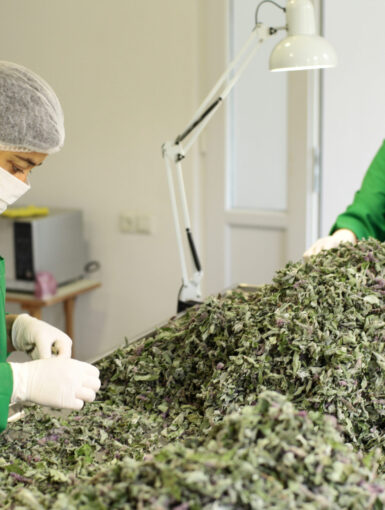
Armenia’s herbal teas have ancient roots, with shepherds collecting wild herbs from mountains and valleys. Today, brands like Nazan and MounTea continue this tradition, creating natural remedies.
Read MorePear-shaped Pottery: Teapot-maker Carries Chaozhou Traditions into a New Era
Chaozhou is the epicentre of Phoenix Dan Cong (Fenghuang Shan), a diversely aromatic oolong. Discover how Yujian Cai, with his family history in pottery, is shaping the future of Chaozhou tea traditions and culture, taking them forward into the new era.
Read MoreBeyond the Kulhad: India’s Cold Tea Revolution
Explore the fascinating juxtaposition of India’s hot chai culture with the burgeoning trend of iced teas and cold brews, and delve into how traditional Indian tea consumption is adapting to modern preferences for cold beverages, especially among the younger generation.
Read MoreTaster’s Profile: Niraj de Mel
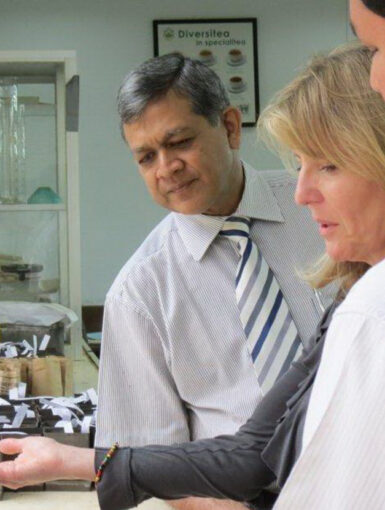
You need to taste and taste because there are many similarities. When you keep on tasting, you will begin to identify the differences, and that’s how you broaden your horizons.
Read MoreWhen In Colombo… Make Time For Tea
Colombo’s quiet residential neighborhoods are a world apart from its crowded main streets, full of honking tuk-tuks and spicy street food hawkers. Enchanting areas like Cinnamon Gardens feature picturesque tree-lined avenues and colonial architecture, housing boutique tea shops and hidden garden cafes serving specialty teas from the country’s finest producers. […]
Read MoreUzbekistan – A Country of Green Tea
When you visit an Uzbek family, don’t be surprised to see them pour very little tea into your bowl. Tea is poured into the bowl little by little, literally for 1-2 sips. This is a sign of special respect for the guest. The more often the host pours tea into the guest’s cup, the more precious the guest is to him.
Read MorePioneering Organic Tea in the Phoenix Mountains
In the Phoenix Mountains in China, the Dancong Oolong reigns. We meet 33 year old Huang Huan who chose to return home to take over his family tea farm. He has made it his mission to produce only organic oolong from his 10,000 trees.
Read MoreResplendent and Indulgent Ceylon: Q&A with Malik Fernando
Malik Fernando, of Resplendent Ceylon, and a legacy in tea, speaks about what drew him to hospitality and why tea lovers must visit Sri Lanka.
Read MoreSinna Dorais Bungalows Balance Comfort and Old World Charm
If you drive 250 kilometers west of Bangalore, India, you reach Sakleshpur, where the coffee country begins. And sitting here amongst the coffee estates is a tea garden called Kadamane. And that itself seemed reason enough to book a stay.
Read MoreKyrgyzstan – A Country Of Mixed Tea Culture
If you decide to visit a Kyrgyz teahouse, first of all you should take off your shoes, then lie down on the carpet near the dastarkhwan (traditional table cloth), on which there is a bowl and a teapot with aromatic hot tea. You can spend the whole day in a teahouse, because time flies unnoticed over a cup of good tea and friendly conversations.
Read MoreTeahouse Treks: Of Himalayan Hospitality and Tranquility
Taking a steaming cup of tea in my hands, I stepped out onto the Palmo’s teahouse porch. And there it was, a rainbow stretching across the vast expanse of the Langtang mountain range. The vibrant colors contrasted against the backdrop of the rugged terrain. I stood there, in awe but […]
Read MoreOn A Chai Trail: Laal Saah in Assam
“Right from the tea workers who pluck the bud at the crack of dawn to the manager of the tea estates who still live in a time-warp in their colonial bungalows, laal saah rules the roost from morning to sunset. But don’t be fooled by its outwardly egalitarian existence, it is only a ruse. If one is inclined to look hard, then the differences unravel themselves…”
Read MoreKumaon Adds New Chapter To An Old Tea Story
Kumaon was where a lot of British tea experiments took place. It’s land-locked location led to its losing out on what Darjeeling or even Kangra saw. In the last decade there has been a revival taking place led by Raj Vable in the US and Desmond Birkbeck in Kumaon.
Read MoreSelling Tea In Shanghai
John Smagula stopped for tea at the Nan Yuan tea store in Shanghai. He chatted with Zhou Yin and learned about the changing dynamics for tea sellers.
Read MoreWhen Tea Became Chai
If you imagined that Chai was part of the traditional Indian kitchens and comes with a long history, you’ll be surprised to know that chai is very much a 20th-century creation. This week, India celebrates Independence Day, and seeing how many celebrations feature Chai as a cultural motif, I thought it was a good time to talk about chai and how tea became Chai.
Read MoreTea Discovery: Lumbini Tea Valley White Tea
In the lower elevation gardens of the Lumbini tea estate, bordering the pristine Sinharaja Forest, a decade-long pursuit has led to a special white tea range, produced in small batches for discerning tea seekers.
Read MoreWithering Enhances Florals in Japanese Tea
Ichō or ichoucha is withered tea. The first process in producing Japanese green tea is steaming the leaves as soon as they are picked to stop oxidation and keep their strong green color. However, by withering them first, the leaves undergo a slight oxidation between harvest and steaming, bringing out the floral notes.
Read MoreJourneying on the Darjeeling Train
In 1881 when it was completed, the Darjeeling Himalayan Railway was the only option to commute. Anyone who missed the train boarded a bullock cart on a much longer journey. There was no concept of a “Toy Train” back then. In the decades since it was constructed the commuter railway with its 55 miles of zig-zags and loops has established itself as a tourist attraction. It was a welcome change for those who prefer a closer look at the Hills instead of just check-boxing! Among those who came were authors, filmmakers, poets, scholars, and artists. When the Buddhist monks traveled on regular passenger trains, they also had opportunities to interact with residents, which brought them closer to the realities of daily life at the hills.
Read MoreHien Minh and the Evolution of Vietnamese Tea
“There are nights when the full moon is clear, and the golden light radiates like a warm forest. The ancient tea trees lit up magically, their warm, sweet fragrance mixed with a little bit of night incense… We would love to capture that magical moment through the tea which holds in it a feeling of mystery, something shrouded in the darkness.” – Nguyen Viet Hung
Read MoreAraksa Tea Room
With every delicious sip and satisfying bite, the Araksa Tea Room in Bangkok is revolutionizing Thai tea culture. Araksa means “to preserve” and both the tea garden and restaurant promote Thai traditions while simultaneously elevating the way tea and food are produced and consumed.
Read MoreOn a Chai Trail: The Bengali and their Cha
That the Bengali love tea is now legendary. And in Kolkata, the capital of West Bengal, tea is part of the social and cultural fabric. Our Chai Trail series takes readers up close and personal to the tea culture across India, and this story is a peek into the Bengali homes and the place that tea has in their lives.
Read MoreWho’s Cooking Badaga Food?
Badaga food from the tea-growing Nilgiri mountains is distinctive from all other Indian tea-inspired cuisines. Tourists drawn to South India are fascinated by the stories of this indigenous tribe that has lived in the Blue Mountains for centuries.
Read MoreAnything for Tea: Budget Backpacking in Nilgiris
Buddies Cafe in Ooty. This cafe is the largest tea room in India, which features over 220 varieties of tea: artisanal and hand-crafted single-origin teas, orthodox blends, tisanes, and CTC dust. When I first entered the cafe, Nirmal Raj stood next to a wall of transparent glass tea canisters and opened them enthusiastically to allow customers to inhale as he spoke animatedly about each tea. After leaving my non-heated hostel, I chanced upon the cafe, searching for a warmer place to write from. As a shoestring budget backpacker, I had traveled to the Nilgiris tea-growing region on an overnight bus from Bengaluru, India, and soon found myself returning daily to Buddies Cafe.
Read MoreTaster Profile: Chandra Bhushan Subba
“My decision to embark on the path of professional tea-making and tasting was deeply rooted in my upbringing. Surrounded by the intricate dance of tea artisans and the fragrance of freshly plucked leaves, my fascination with tea began at a tender age. I’ve been living with tea for over three decades now.”
Read MoreBeyond the Brew: Immersive Tea Tours
Immersive tours are a remarkable equalizer, bridging the gap between seasoned tea connoisseurs and novices. Through shared experiences of plucking tea leaves alongside local farmers, crafting their blends, and witnessing the alchemy of leaf to cup, they forge bonds that go beyond language and cultural barriers.
Read MoreTea Discovery: Indian Chai
Masala chai is like a mini meal, as it not only includes the well-documented health benefits of tea but also has protein and calcium from milk, anti-inflammatory properties from ginger, and superfood benefits from spices.
Read MoreCocooned in Darjeeling: The Mayfair Manor, Jungpana
Stay in a restored bungalow originally built in 1910 and once the residence of the Nepali royal family. It offers 12 exquisitely decorated and spacious suites, each named for an historical figure attached to the estate.
Read MoreDrinking Tea History in Nara, Japan
The Butsuryu-ji Temple grounds are a treasure trove of historic tea memorabilia that includes statues of the famous Japanese Buddhist monk Kukai and his disciple Kenne and artifacts so significant to Japanese heritage that the national and local governments registered them as cultural properties.
Read MoreArtisanal Tea Maker Utilizes Rare Roseate Cultivar
Rose reserve tea is not just a mark of the enchanting flavors fostered by Nepal’s unique high-altitude micro-climates and terroir but also an embodiment of the keen talent of a new generation of tea-makers.
Read MoreMai Tea Estate Breathes Life Into Nepal Community
Mai Tea Estate Breathes Life Into Nepal Community | Ritu Rajbanshi | The Mai Tea factory, located in Mai Pokhari wetlands near Ilam, Nepal, has been a boon to the 180 local farmers who earn a stable income from producing high-quality teas. Tea maker Thribikram Subba honed his tea-making skills for nearly two decades, slowly gaining opportunities to work with experts from India who came to the factory as consultants. Over the last two years, he has started making his own tea without supervision. “I feel like I have finally mastered the language of tea,” he says.
Read MoreReinventing Darjeeling Tea
Planter Rishi Saria is reinventing tea production in the fabled Darjeeling hills. “It has been over a hundred fifty years since the British brought Chinese tea to Darjeeling and over three-quarters of a century since they left,” he says, “yet we Indians continue to process tea the same way the British did rather than learning from our fellow Asians.”
Read MoreHand Processing Tea in Yamazoe, Japan
Farmers and other locals run the five-hour tea-making workshop near Japan’s Yamazoe Village. Tea Journey contributor Greg Goodmacher attended to learn from teacher Kenichi Ikawa Sensei how to select, pan-fire, and hand roll freshly picked raw leaves transforming them into sencha tea using centuries-old techniques.
Read MoreA Tale of Two Kathmandu Tea Shops
Bhairab Risal, a veteran journalist with a sharp memory at 94, speaks with ease and zeal of his memories of the early days of Kathmandu’s tea culture. In 1948, at the age of 20, he recalled his first cup of tea at Tilauri Mailako Pasal, one of Kathmandu’s earliest and best-known tea shops. In this article, Kathmandu journalist Prawash Gautam shares tales of two storied tea houses.
Read MoreKazakh Culture is Centered on Tea
Tea plays an essential role in Kazakh culture, as no celebration or family feast is held without drinking tea. Sharing tea is a ritual of unity. When someone visits a Kazakh family, tea is served first. The custom, called syi-ayak, begins with the washing of hands. The tea is ladled into a ceramic drinking bowl called a Piyala (Piala).
Read MoreHengzhou is Jasmine’s Promised Land
Spring begins a romance as jasmine flowers meet the newly plucked tea. Spring green tea and summer jasmine flowers are mixed at a strictly-calculated ratio. Hundreds of processes exist to make the miracle tea. The bitterness of tea and the sweetness of flowers are a perfect compliment. Jasmine grown in Hengzhou meets the high expectations of famous brands at home and abroad.
Read MoreAzerbaijan Growers are Restoring its Tea Legacy
Depending on the variety and quality, the price of local tea in the domestic market ranges from $4.70 to $29 (8-50 manats) per kilogram. Recently, farmers say, the demand for higher quality has increased markedly. People have discovered that local products are of better quality, and therefore they are willing to buy Azerbaijan tea, despite the apparent high cost.
Read MoreMeitan County’s Tribute to Tea
Meitan Cuiya is an early spring green tea oxidized for a few hours in the shade before processing. It is made from high-quality fresh and tender tea leaves and undergoes 20 complex processes, including spreading, fixing, shaping, and drying. The leaves appear straight and flat. The aroma is long-lasting above a bright green liquor. The tea has a fresh taste with abundant amino acids, polyphenols, and vitamins.
Read MoreNepal’s Specialty Tea Evolution
The Barbote tea farm is nestled in the steep hills of Ilam, Nepal, planted by his grandfather and tended by his father but grower Narendra Kumar Gurung spent most of his working years with the Japan International Cooperation Agency. Like most of Nepal’s new-generation farmers, specialty tea is a new endeavor built on a century-old foundation of commodity production.
Read MoreA Remarkable Quest Reveals Untold Chapter in Tea History
From Hwuy-Chow Foo, a tea-growing district in Anhui, China to Pauri, India, the Nilgiris, Munnar, and Chennai … the Ajoo family story traverses an untold chapter in the history of Indian tea, a road James Ajoo is trying to retrace, “to say I landed my feet where my ancestor had walked.”
Read MoreAnhua’s Dark Allure
Growers in Anhua county invented the dark tea processing technology before 1524, which led to the rise of dark tea production and marketing. The compact and easily transported tea was very popular locally and in 1595, Anhua dark tea was formally designated as the “Official Tea” of the Ming dynasty government making it a regulated form of currency.
Read MoreMusic Video: Railgadi Jhumur
“The indentured migrant laborer community of the tea plantations in Assam and North Bengal in India, has always intrigued,” writes Dr. Sunayana Sarkar. “Their history has also appalled, at times,” adds Sarkar, a professor of structural geology and geotechnics and a gifted musician. Sarkar, the daughter of a tea researcher […]
Read MoreA Heritage Tea for Modern Times
Tanyang Gongfu tea is experiencing notoriety as well as increased demand that dates to the 1980s when local growers collectively raised their production standard, earning a reputation for quality hongcha (red tea). The tea is grown in Fu’an which takes its name from a poem in which a Song dynasty emperor bestowed five blessings: “Lucky Heaven, Lucky Earth, Lucky Mountain, Lucky Water, and Lucky Tea.”
Read MoreJapan’s Cultural Tea Bridge to Europe
The currents of Japanese tea culture are flowing outward to Europe. In the past 50 years, Europeans have been diving and delving into the green waters. What is it about Japanese tea that attracts Europeans, and how is it pouring into European culture?
Read MoreRoy Fong: A Chinese-American Journey
At age 6, on his way to school, Roy Fong would linger at a Hong Kong food stand where day laborers were making gongfu cha. Sometimes someone would offer him a cup, and he never forgot the wonderful aroma and taste.
Read MoreHow Chinese Describe the Aftertastes of Oolongs
What would rhyme have to do with a tea’s aftertaste? To understand the many layers of this play on words, it is important to know that Chinese singing and by extension Chinese poetry have a Yang (masculine) and Yin (feminine) rhyme system.
Read MoreAmazing Lessons on Japanese Tea at Cafe Seisui-an
Tea farmer, seller, event coordinator, gourmet, and nationally certified tea appraiser, Yasuhiko Kiya radiates love for his tea-growing neighborhood, Japanese tea, and his son, who will become the fourth generation to run the family business.
Read MoreContrasts of Japan / Stories from the Land of the Rising Sun
Far far away, behind the word mountains, far from the countries Vokalia and Consonantia, there live the blind texts. Separated they live in Bookmarksgrove right at the coast of the Semantics, a large language ocean. A small river named Duden flows by their place and supplies it with the necessary […]
Read MoreThe Faces of Indian Traditions
Far far away, behind the word mountains, far from the countries Vokalia and Consonantia, there live the blind texts. Separated they live in Bookmarksgrove right at the coast of the Semantics, a large language ocean. A small river named Duden flows by their place and supplies it with the necessary […]
Read More