
Asia

Barefoot Garden Patio

When In Colombo… Make Time For Tea

Colombo’s quiet residential neighborhoods are a world apart from its crowded main streets, full of honking tuk-tuks and spicy street food hawkers. Enchanting areas like Cinnamon Gardens feature picturesque tree-lined avenues and colonial architecture, housing boutique tea shops and hidden garden cafes serving specialty teas from the country’s finest producers. […]

Read More

On A Chai Trail: Laal Saah in Assam

“Right from the tea workers who pluck the bud at the crack of dawn to the manager of the tea estates who still live in a time-warp in their colonial bungalows, laal saah rules the roost from morning to sunset. But don’t be fooled by its outwardly egalitarian existence, it is only a ruse. If one is inclined to look hard, then the differences unravel themselves…”

Read More
Darjeeling Himalayan Railway

Journeying on the Darjeeling Train

In 1881 when it was completed, the Darjeeling Himalayan Railway was the only option to commute. Anyone who missed the train boarded a bullock cart on a much longer journey. There was no concept of a “Toy Train” back then. In the decades since it was constructed the commuter railway with its 55 miles of zig-zags and loops has established itself as a tourist attraction. It was a welcome change for those who prefer a closer look at the Hills instead of just check-boxing! Among those who came were authors, filmmakers, poets, scholars, and artists. When the Buddhist monks traveled on regular passenger trains, they also had opportunities to interact with residents, which brought them closer to the realities of daily life at the hills.

Read More
Vietnamese tea ceremony

Hien Minh and the Evolution of Vietnamese Tea

“There are nights when the full moon is clear, and the golden light radiates like a warm forest. The ancient tea trees lit up magically, their warm, sweet fragrance mixed with a little bit of night incense… We would love to capture that magical moment through the tea which holds in it a feeling of mystery, something shrouded in the darkness.” – Nguyen Viet Hung

Read More
Arkasa Tea Room

Araksa Tea Room

With every delicious sip and satisfying bite, the Araksa Tea Room in Bangkok is revolutionizing Thai tea culture. Araksa means “to preserve” and both the tea garden and restaurant promote Thai traditions while simultaneously elevating the way tea and food are produced and consumed.

Read More

Anything for Tea: Budget Backpacking in Nilgiris

Buddies Cafe in Ooty. This cafe is the largest tea room in India, which features over 220 varieties of tea: artisanal and hand-crafted single-origin teas, orthodox blends, tisanes, and CTC dust. When I first entered the cafe, Nirmal Raj stood next to a wall of transparent glass tea canisters and opened them enthusiastically to allow customers to inhale as he spoke animatedly about each tea. After leaving my non-heated hostel, I chanced upon the cafe, searching for a warmer place to write from. As a shoestring budget backpacker, I had traveled to the Nilgiris tea-growing region on an overnight bus from Bengaluru, India, and soon found myself returning daily to Buddies Cafe.

Read More
Parsi Choi

On a Chai Trail – The Parsi Choi

Parsis call tea choi, not chai, cha, or tea, but choi. Choi was never, ever consumed on its own. There were always Bhakras, the soft cookies made with dough fermented using palm toddy, or chaapat, a flat, mildly sweet pancake. For special occasions, ghaari – thick dough discs filled with a mixture of bananas cooked in ghee, dates cooked till gooey, or a sweet dal paste were served.

Read More
Mai Tea Estate Breathes Life Into Nepal Community

Mai Tea Estate Breathes Life Into Nepal Community | Ritu Rajbanshi | The Mai Tea factory, located in Mai Pokhari wetlands near Ilam, Nepal, has been a boon to the 180 local farmers who earn a stable income from producing high-quality teas. Tea maker Thribikram Subba honed his tea-making skills for nearly two decades, slowly gaining opportunities to work with experts from India who came to the factory as consultants. Over the last two years, he has started making his own tea without supervision. “I feel like I have finally mastered the language of tea,” he says.

Read More
Rishi Saria

Reinventing Darjeeling Tea

Planter Rishi Saria is reinventing tea production in the fabled Darjeeling hills. “It has been over a hundred fifty years since the British brought Chinese tea to Darjeeling and over three-quarters of a century since they left,” he says, “yet we Indians continue to process tea the same way the British did rather than learning from our fellow Asians.”

Read More

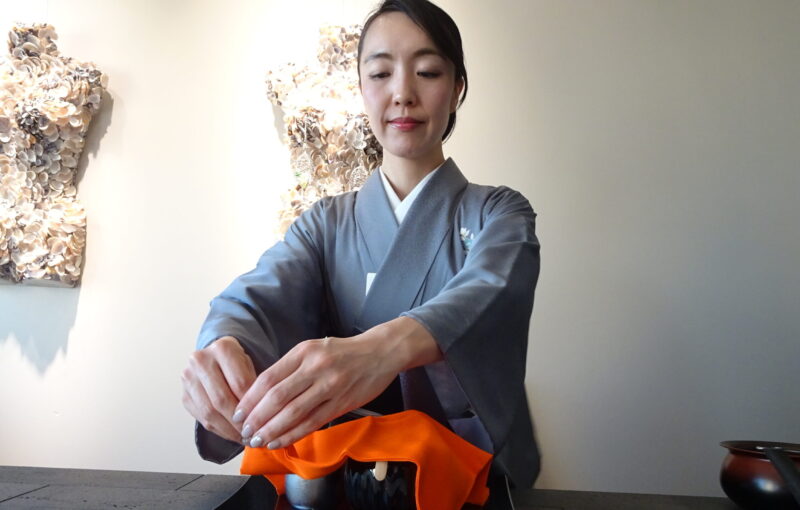
Misako Lelong-Nohsoh, a Tea Ambassador’s Journey

Misako Lelong-Nohsoh shows us that Japanese green tea is nothing to fear. She takes away the formality of the Japanese tea ceremony and introduces us to Japanese green tea as she wants us to experience it: as a beverage like wine, coffee, or black tea that is woven into the everyday fabric of our lives. This is the delightful story of her journey from Japan to France and from violist to Japanese Green Tea Ambassador.

Read More
Kathmandu, Nepal

A Tale of Two Kathmandu Tea Shops

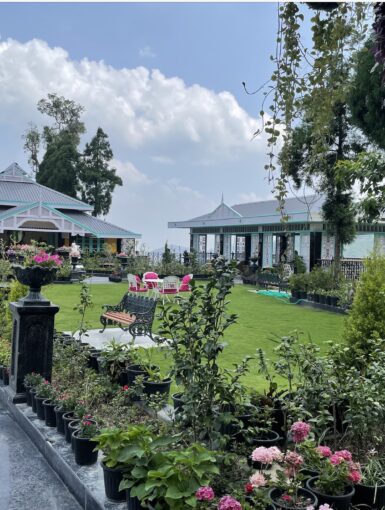
Bhairab Risal, a veteran journalist with a sharp memory at 94, speaks with ease and zeal of his memories of the early days of Kathmandu’s tea culture. In 1948, at the age of 20, he recalled his first cup of tea at Tilauri Mailako Pasal, one of Kathmandu’s earliest and best-known tea shops. In this article, Kathmandu journalist Prawash Gautam shares tales of two storied tea houses.

Read More
Kazakhstan tea feast

Kazakh Culture is Centered on Tea

Tea plays an essential role in Kazakh culture, as no celebration or family feast is held without drinking tea. Sharing tea is a ritual of unity. When someone visits a Kazakh family, tea is served first. The custom, called syi-ayak, begins with the washing of hands. The tea is ladled into a ceramic drinking bowl called a Piyala (Piala).

Read More

Hengzhou is Jasmine’s Promised Land

Spring begins a romance as jasmine flowers meet the newly plucked tea. Spring green tea and summer jasmine flowers are mixed at a strictly-calculated ratio.  Hundreds of processes exist to make the miracle tea. The bitterness of tea and the sweetness of flowers are a perfect compliment. Jasmine grown in Hengzhou meets the high expectations of famous brands at home and abroad.

Read More

China’s Gou Gu Nao “Dog’s Head” Mountain Tea

Mountainous Suichuan county in Jiangxi Province offers an incomparable microclimate for local cultivars, producing an exceptionally tender leaf. Gou Gu Nao Green Tea is highly prized. The processing method is quite complicated. It is refined through eight processes. The shape of Gou Gu Nao Tea is tight and rolled to a slight curl. The color is bright green, the aroma is fresh and elegant, and the taste is fresh and thick with a sweet and long aftertaste. 

Read More

Meitan County’s Tribute to Tea

Meitan Cuiya is an early spring green tea oxidized for a few hours in the shade before processing. It is made from high-quality fresh and tender tea leaves and undergoes 20 complex processes, including spreading, fixing, shaping, and drying. The leaves appear straight and flat. The aroma is long-lasting above a bright green liquor. The tea has a fresh taste with abundant amino acids, polyphenols, and vitamins.

Read More

Nepal’s Specialty Tea Evolution

The Barbote tea farm is nestled in the steep hills of Ilam, Nepal, planted by his grandfather and tended by his father but grower Narendra Kumar Gurung spent most of his working years with the Japan International Cooperation Agency. Like most of Nepal’s new-generation farmers, specialty tea is a new endeavor built on a century-old foundation of commodity production.

Read More
Greeting pines

Tea from the Clouded Mist of Huangshan

For centuries, in southwest Anhui, Huangshan Mountain has endeared itself to scenic seekers, poets, and tea lovers. During the Five Dynasties, Shezhou Dafang tea was a tribute tea favored by the imperial family. In the Song Dynasty, at the onset of commercial trade, the acreage under tea expanded continuously and a variety of famous teas emerged.

Read More
Bolivian Tea Garden

Anhua’s Dark Allure

Growers in Anhua county invented the dark tea processing technology before 1524, which led to the rise of dark tea production and marketing. The compact and easily transported tea was very popular locally and in 1595,  Anhua dark tea was formally designated as the “Official Tea” of the Ming dynasty government making it a regulated form of currency.

Read More

Music Video: Railgadi Jhumur

“The indentured migrant laborer community of the tea plantations in Assam and North Bengal in India, has always intrigued,” writes Dr. Sunayana Sarkar.  “Their history has also appalled, at times,” adds Sarkar, a professor of structural geology and geotechnics and a gifted musician. Sarkar, the daughter of a tea researcher […]

Read More