

It starts in the stomach. That feeling of tightness and queasiness. It spreads to the heart, pounding. And then to the lungs, with faster, shallow breathing. Down to the hands, cold and clammy. Up to the mind, racing thoughts. What if? What if? Dizziness sets in. The cycle escalates, with each symptom exacerbating the other.
Then…the meltdown.
Panic. Anxiety. Overwhelm. Or all of the above. The Japanese refer to worry as shinpai,
or literally, the scattering of the heart. The antidote is to put the heart back together.
Over hundreds of years, the Japanese have been doing this with a cup of tea.
Breathe
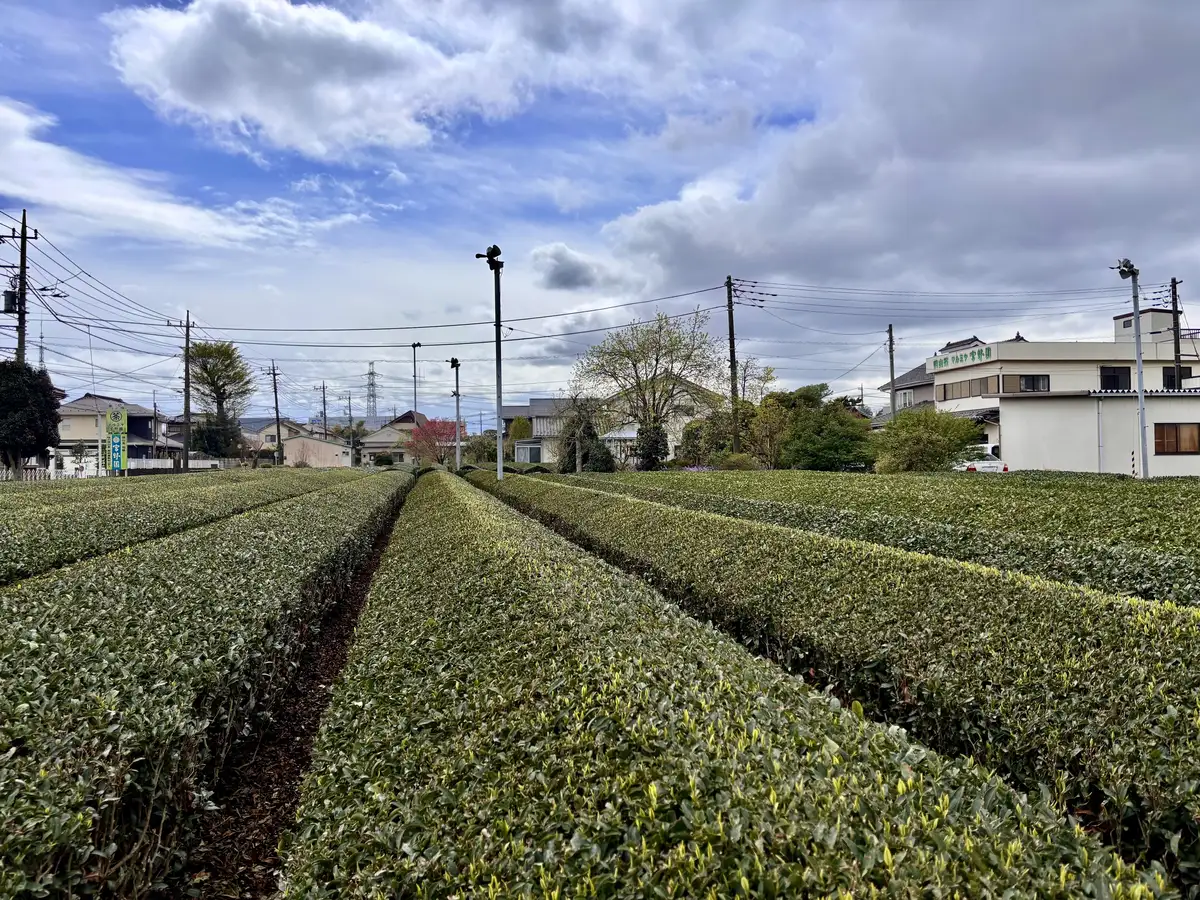
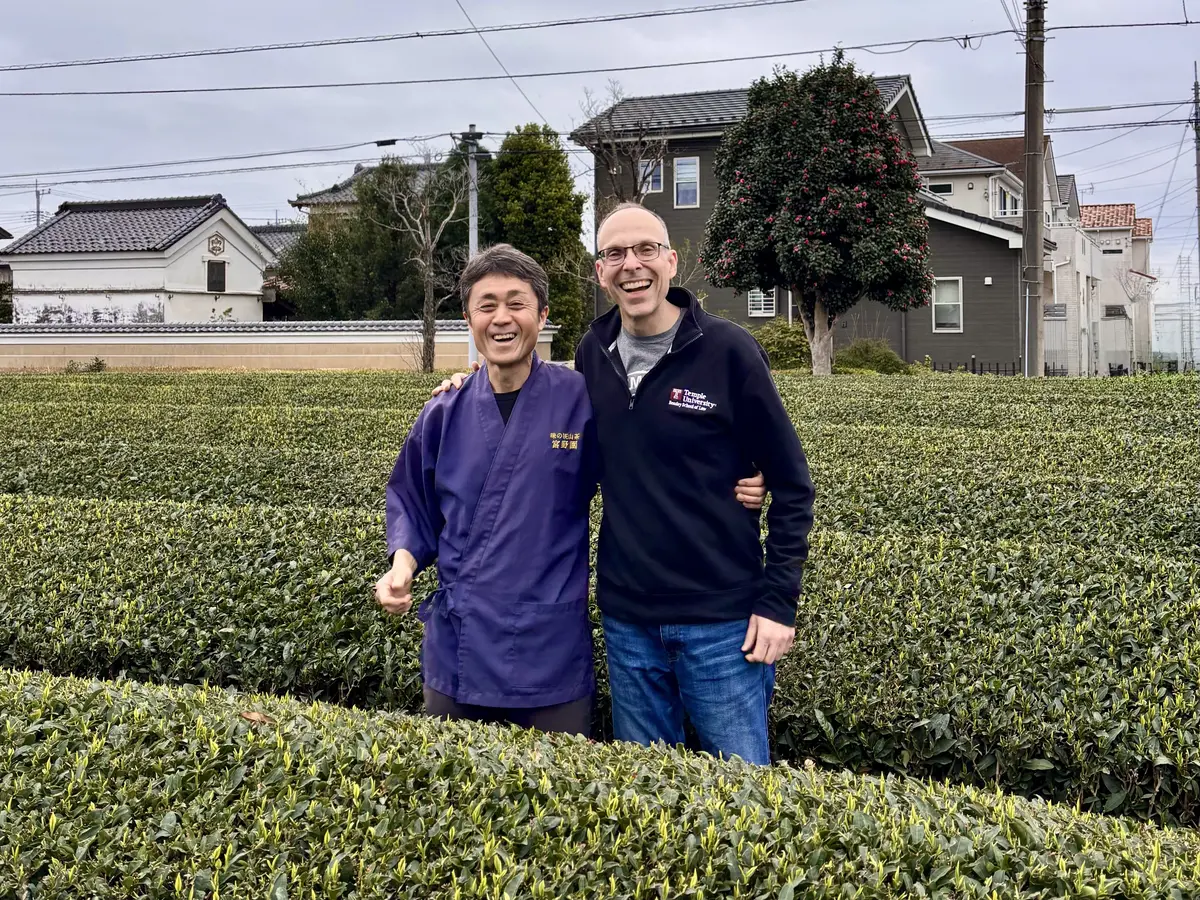
I recently visited Keiji Miyano, a fifth-generation tea farmer in Sayama, Japan, who grew up steeped in Japanese tea culture. Located 50 kilometers (31 miles) northwest of downtown Tokyo, his Miyano-en tea farm has been producing tea since 1869. “My family was among the earliest specialty tea retailers in Tokyo,” Keiji said. “Wellness is a key part of our work.”

Together, Keiji and I prepare matcha. “The Japanese tea ceremony begins with its most vital step: breathe,” he said. “Before I prepare matcha, I sit down, place my hands softly on the table, and breathe for as long as I need. The first step to calming the body and redirecting our thoughts is to pause and breathe.”
And so we breathe, eyes closed. In the silence, the ambient burbling from the nearby bamboo fountain emerged. The clear, cool water soothes the life of the mind. Did we breathe for one minute? Or five? I don’t remember, but that’s the point. Shifting from silent to moving meditation, he said, “Now we can prepare our tea.”
The tea ceremony ritual, the chanoyu, varies according to each of the Japanese classical tea schools. “In the end, the process is highly customizable, and you can make it your own,” he said. “I believe that if a culture is too rigid, it will disappear.”
Wabi-sabi: do not let perfection be the enemy of the good
With this permission to be imperfect, we perform the steps he adapted from the Urasenke tea school. He gently places a bowl, scoop, sieve, whisk, and matcha caddy on his tray. He raises and observes the varicolored bowl with both hands, slowly rotating clockwise. “I feel the unevenness of the bowl and enjoy the beauty in its flaws, the wabi-sabi.”
Wabi-sabi teaches us that the flaws of nature, including within ourselves, are more profound than artificial perfection. “Many avoid the tea ceremony because they fear doing it wrong,” he said. “Yet when you step beyond perfectionism and find your own way, the tea ceremony becomes your own calming retreat.”
The Magic of the Matcha Whisk
Keiji places two scoops of matcha, 1.5-2 grams, on the sieve balanced over the bowl. Slowly, he sifts the ceremonial grade matcha, observing the fine green powder drift to the base of the bowl. “In this step, I imagine snow, drizzle, or even the delicate fluttering of cherry blossoms as they descend to the earth,” he said.
He then boils the water to 80°C (175°F) and carefully pours around 60-70 milliliters over the freshly fallen powder. The celadon green particles surrender to the hot water, transforming into a bright jade nectar. He then grasps the whisk with two fingers in the front and thumb in the back, and prepares to bring the tea to life.
Whisk with Intention
“I whisk with intention,” he said. “First in an ‘M’ pattern to blend the matcha, then rapidly back and forth to create the froth. And then I make a final light curly-cue motion to settle the tea.” The soft, rhythmic sound from the whisking, known in Japanese as the shaka shaka, is itself therapeutic.
As we each whisk our brews, the intense grassy freshness of the matcha arises.
“Whisking releases the flavor,” Keiji said, “and the most complex flavors inhabit the froth. Yet before we drink, again, breathe. Enjoy the springlike aroma of the tea. Spring is a symbol of rebirth and renewal. We regenerate ourselves with each cup.”
From there he lifts the bowl with his right hand, places it on his left palm, and turns it clockwise twice. Feeling the warmth of the bowl and softness of the froth, he then drinks slowly. “Smell, slurp, and have fun with it,” Keiji said, “as the tea ceremony need not be strict and intense. The point is to relax and savor the moment,” he said.
We finish our tea. The classic grassy flavor gives way to a buttery sweetness that lingers on the tongue, like a delightful musical tune that plays over in the mind. Relaxed by the tea and L-theanine, we then do a mental check-in. “We have entered a space of calm alertness,” he said. “We can now put our worries into a new perspective.”
Ichigo Ichie: the “One Time, One Meeting” Philosophy
Keiji said the essence of the tea ceremony is ichigo ichie, or “one time, one meeting.”
Based on Japanese philosophy, he said, “Take each moment as a precious thing. Our meeting today only happens once. Each encounter over tea, with others or even alone with ourselves, will never happen again. Treasure what is irreplaceable.”
This reverence is universal. Ralph Waldo Emerson observed, “No one suspects the days to be gods,” noting that we do not recognize the divine in each moment. Similarly, Keiji said, “In realizing the preciousness of each moment, we also consider ourselves precious. As we cherish ourselves, we bring out our own beauty, elevating the sacred within ourselves.”
Using Matcha for Anxiety and Mindfulness
Like mindfulness, “one time, one meeting” grounds us in the present. “By focusing on the matcha before us, we shift our thoughts from future to present,” he said. “We now have a clearer head to confront the issues that trouble us.”
When facing anxiety, the first step is to stop and breathe. The Japanese tea ceremony, however enacted, provides a personalized ritual of support. “By honoring the moment, respecting your flaws, and taking care of yourself with a healthy cup of tea,” he said, “you give yourself a fresh start to put your heart back together.”
See Related
Tea Emissaries: Eisai and Enni Ben’en | Dan Bolton
The Global Matcha Revolution: From Zen Temples to a Powerhouse | Bhavi Patel
Matcha Production around the World: Growing Beyond Japan | Emily Joy Meneses