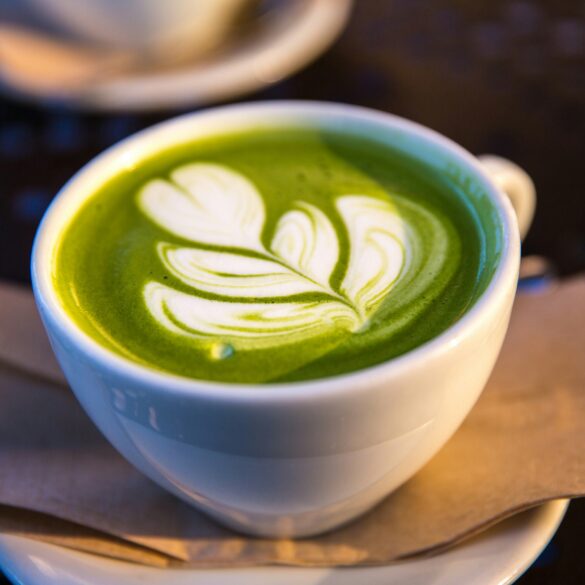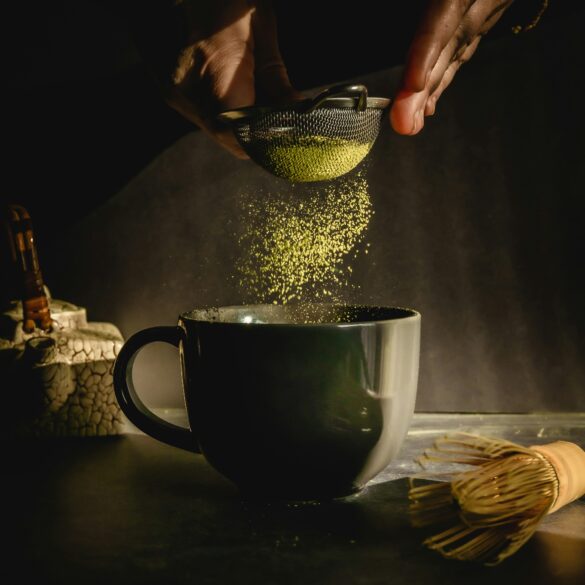


The earliest matcha consumption can be traced back to the Tang and Song Dynasties of China, during the 7th-13th centuries. Back then, matcha was a lot different from how we know it in the contemporary world. It was whisked simply with hot water and consumed as a meditative beverage.
Eventually, the vibrant green powder would make its way to Japan, the country it’s most commonly associated with today. Here, it would become an integral part of Japanese tea ceremonies: highly choreographed rituals meant to bring participants into states of mindfulness, centeredness, and peace.
Fast-forward to today, and matcha is one of the most in-demand ingredients across the global food and beverage industry. The Japan Times reports that, in 2025, Japan’s green tea exports rose 42% in volume to 13,125 metric tons—with matcha making up about 70% of total export volume.
Around the world, matcha lattes laden with fruit-flavored syrups, bright green baked goods, and even matcha skincare products are making up the “matcha craze” dominating social media and cafe menus alike. But as global demand for matcha expands at dizzying speed, tea farmers and retailers are finding it difficult to meet consumer expectations without paying a steep price.
Depending on where you are in the world, you may have caught wind of an ongoing matcha shortage: a lack of supply shaped by explosive international demand, climate challenges, and a tea industry in Japan facing structural challenges.
As supplies of matcha become increasingly scarce, consumers may notice the price of their daily matcha latte slowly creep up day by day. Nio Teas reports that the price of tencha, the shaded tea leaves used to make matcha, spiked by 220% in 2025.
But while the uptick in prices is certainly cause for concern, the matcha shortage is reflective of an even bigger issue: a shift in consumer behavior toward overconsumption, where food-related trends deplete natural resources and put global agriculture under pressure.
Growing matcha – a feat easier said than done
What makes matcha such a rarity, even more so than most other types of tea, is that its production is highly specialized and limited. Matcha begins as shade-grown tea leaves known as tencha, which are carefully processed and stone-ground into powder. The process is labor-intensive and dependent on specific growing conditions, shaped by a region’s soil, topography, and climate.
In parts of Japan like Uji, matcha farmers have spent hundreds of years mastering the process of matcha production. And these “tea masters” know what many consumers who covet matcha don’t: Tea plants take years to mature, and high-quality matcha can only be harvested during narrow seasonal windows. As a result, producers can’t magically increase supply anytime that demand spikes.
In addition to a surge in global demand, climate challenges have also threatened global matcha supply, with rising temperatures and low rainfall causing damage to Japan’s major tea-growing regions. “Besides high consumer demand, climate-related challenges have severely impacted matcha production, further aggravating supply issues,” wrote Charlie King for Sustainability Magazine. “Japan (is enduring) soaring temperatures, putting additional pressure on production.”
Matcha as a lifestyle symbol + a race for producers
So what’s behind the surge in matcha demand? Social media platforms like TikTok and Instagram have played a large role in transforming certain ingredients into “lifestyle symbols”. Matcha-based products fit into younger consumers’ idea of a health-conscious lifestyle. In addition, Western consumers have grown increasingly interested in Eastern culture in recent years. They are avidly adopting Asian beauty techniques, wellness philosophies, and disciplines like yoga and tai chi.
But turning cultural elements into trends doesn’t come without consequence. This has been made abundantly clear with the matcha shortage. The rapid expansion of matcha demand around the globe has strained Japanese producers. Many major tea companies have been pushed to impose purchase restrictions to prevent demand from outpacing available supply. Cafés around the world have also begun alerting customers of the shortage. They are often raising their prices or even temporarily halting matcha offerings altogether.
As the shortage drags on, independent cafés are feeling the greatest pressure. Large chains often possess extensive supplier networks and purchasing power. They allow cafes to secure inventory more effectively; though smaller businesses may struggle to maintain consistent supply.
Working around the shortage + the rise of faux matcha
In light of the shortage, teahouses and cafés are scrambling to meet demand by making the switch to lower-grade matcha or sourcing from different growing regions. However, the shortage is bringing authenticity into question.
As supply tightens and prices rise, incentives increase for lower-quality or mislabeled products to enter the market. Industry observers have expressed concerns about counterfeit or misleading matcha products appearing as demand exceeds available premium supply.
“Matcha labelling is almost completely unregulated. Some Japanese producers are worried that unscrupulous producers are exploiting the growing demand. They are offloading inferior tea products mislabelled as Japanese matcha,” reports ABC News Australia.
A critical look at consumer behavior
While the matcha shortage is alarming, it doesn’t exist in a vacuum. It’s just one aspect of a broader pattern of ingredient scarcity that has emerged alongside social media–driven food trends.
For example, similar concerns have surfaced around ube: the purple yam native to the Philippines. Ube experienced dramatic increases in global demand as brightly colored desserts and beverages gained traction online. In both cases, products once rooted in specific cultural and regional traditions became rapidly transformed into mass-consumed lifestyle commodities.
Shortages are often framed as simple supply-chain problems, but they reveal deeper questions about consumer behavior. Trend-driven platforms encourage cycles of novelty, urgency, and abundance. They push people to try, document, and consume products at increasingly accelerated rates.
Scarcity itself can intensify these habits; fear of “missing out” often fuels stockpiling and overconsumption. The issue is not that people are enjoying matcha or ube. It is that social and economic systems increasingly reward consumption without much consideration for agricultural limits, labor conditions, or sustainability.
The recurring shortages of culturally significant ingredients suggest a need to look more critically at a culture of consumption. This culture endlessly scales, replicates, and consumes every emerging food trend on demand.
Calling for more mindful consumption
Whether the current matcha shortage will ease soon remains uncertain. Expanding production takes years, not months, and demand shows few signs of slowing.
But what is clear is that what began as a social media trend has evolved into a looming challenge for producers and businesses alike. Matcha may remain a fixture of café culture, but the era of abundant and inexpensive supply may be ending. It may be time for us to embrace the mindfulness that matcha was a symbol of in the first place, and apply it to our consumption habits.