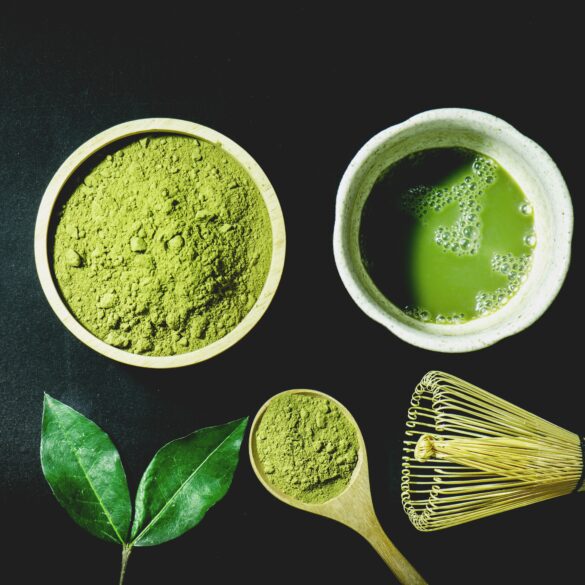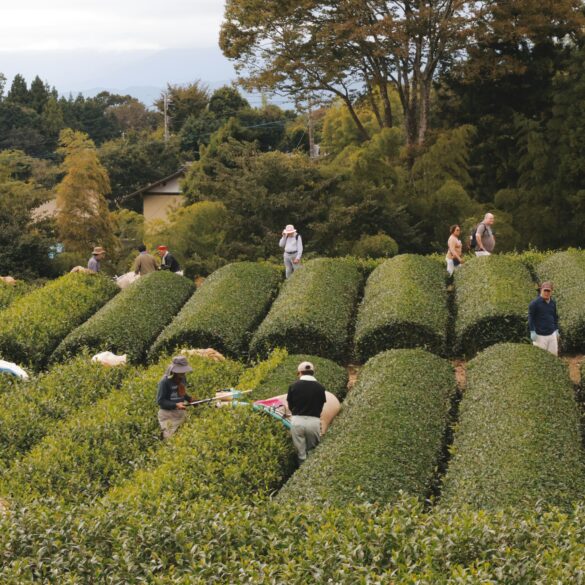


Coffee shops are not turning into tea houses. They are becoming broader beverage platforms.
That helps explain why matcha has moved so quickly through café culture. Most loose-leaf teas ask something of the customer: time, attention, steeping knowledge, and often a taste for subtlety. Matcha asks less at the point of entry. You can whisk it, shake it, pour it over ice, layer it with milk, sweeten it, flavor it, photograph it, and sell it through the same system already built for lattes, cold brew, refreshers, and seasonal drinks.
Brand24’s hashtag data show the overlap. #matchalatte and #coffee ranked among the leading adjacent hashtags in the matcha conversation. Matcha is not circulating only among tea drinkers. It is showing up inside coffee habits: morning routines, café visits, energy management, and premium customized drinks.
World Coffee Portal’s Matcha Report 2026 describes the shift from the coffee side. It reports that at Blank Street Coffee, 50% of customers now choose matcha over coffee, and that in some UK stores during summer 2024, matcha outsold coffee. Those figures are specific to the reported café context. Still, they show what happens when matcha enters a chain already designed for fast-moving, customizable drinks.
The coffee trade has noticed. The Wall Street Journal reported that Nestlé’s coffee leadership is exploring matcha expansion as the company looks to diversify coffee offerings and reach younger consumers. Nestlé’s interest is a signal that major coffee companies increasingly see matcha as part of the premium beverage field, not as a small tea-side add-on.
Ian Chun of Yunomi.life explains the fit well. Matcha has “a contemporary, youthful image that contrasts with and complements coffee,” he writes, adding that “the existing coffee industry infrastructure is simply adopting matcha into the fold.”
For tea suppliers, that brings both upside and pressure.
The upside is scale. Cafés already have milk systems, barista workflow, morning traffic, ice, syrups, menu boards, mobile ordering, loyalty programs, and customers used to paying premium prices for customized drinks. Matcha can plug into that structure more easily than most traditional teas.
The pressure comes from how cafés buy and serve it. If matcha is treated mainly as a green powder for sweetened milk drinks, buyers will focus on cost, color, solubility, and availability. A supplier that talks only about tradition may lose to one that solves the operator’s daily problems: speed, consistency, margin, and customer appeal.
The best suppliers will do both. They will help cafés serve drinks that look good, move quickly, and protect margin. They will also teach staff and buyers why better matcha tastes different, behaves differently, and deserves a higher price.
The café crossover is not the end of tea culture. It is a new route into it. But the trade has to use that opening carefully.
See Related
The Global Matcha Revolution: From Zen Temples to a Powerhouse | Bhavi Patel
Matcha Shortage Exposes Global Consumption Challenges | Emily Joy Meneses
Matcha Production Around The World: Growing Beyond Japan | Emily Joy Meneses