


Episode 205
Taiwan is a significant tea-consuming and tea-growing nation that processes 14,000 metric tons annually from 12,000 hectares of tea farms. The country of 23 million produces enough tea to supply a third of domestic demand, but growers often get better prices exporting their prized oolongs to the United States, China, and Japan. Taiwan ranked 9th in export value globally in 2023, exporting 12,400 metric tons. Valued at $100 million, Taiwan accounted for 1.4% of global tea exports. That same year, Taiwan imported about 14,500 metric tons of mainly green tea from Vietnam. Tea consumption per capita has increased fivefold since 1980 to an average of 1.88 kilos per person per year.
Spotlight

Listen to his story
Developing the Complex Aroma and Flavors of Oolong
By Dan Bolton
Sean Hsu Hao Sheng is the CEO of Trilliant Tea Industry, a Taiwan-based tea production and export company that supplies branded companies worldwide. Sean seeks to demystify and help tea drinkers fully appreciate the complexities of well-made oolong tea.
Sean is an expert in oolong production. He co-founded FuNing Trading Company in China in 2012, after a career in IT and sales, including 6 years as general manager of a Poland-based computer company. He attended Chung Yuan Christian University, where he studied business administration and graduated from the International Trade Institute (ITI).
See: The geography of Taiwan
View: A dendrogram of Taiwan oolongs
“The value of understanding history lies in recognizing the essence of its differences, which enables a deeper articulation of current developments.”
Trilliant Tea
Sean: Dan, thank you very much for inviting me here. I am glad to have this chance to share information about Taiwan’s oolong. You see, related information is not widely available, and I hope this interview can help people learn more.
Dan: Taiwan oolongs are among the world’s most highly regarded teas. Why is that the case?
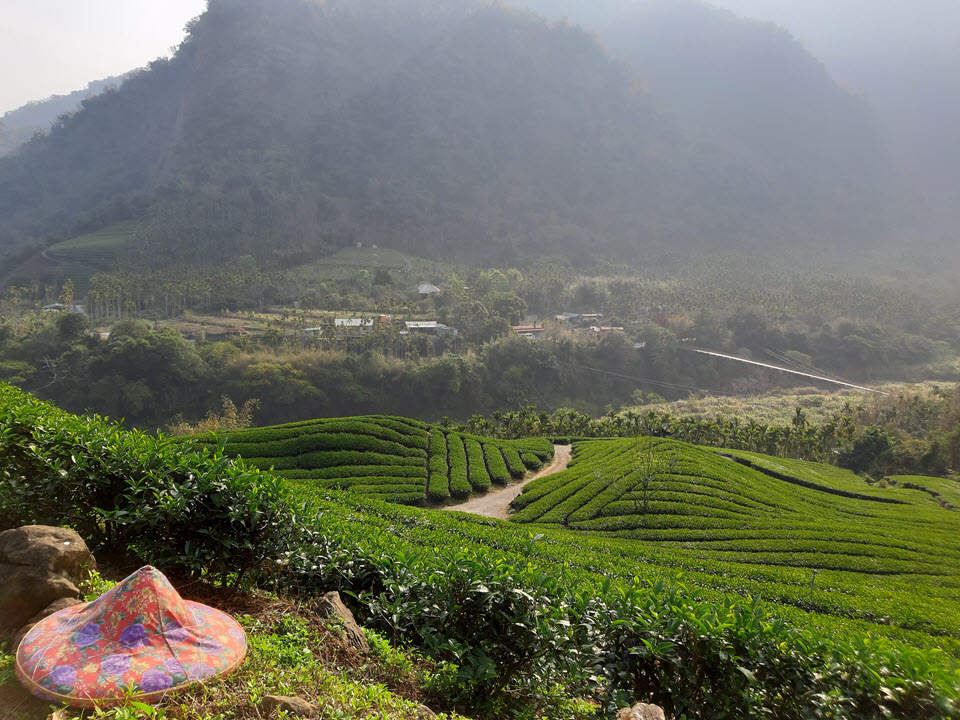
Sean: Outstanding quality comes from a favorable environment and continuous evolution of tea-making skills. Firstly, as an island, Taiwan is surrounded by oceanic currents; in the summertime, the Pacific current generates a warm monsoon, while the cold current brings big temperature drops in winter. Besides, two-thirds of Taiwan is covered by steep mountains and river valleys. So, we have fertile soil, lush forests, and diverse species. Taiwan is very famous for its fruits and flowers, and it exports many of them. Additionally, we have many outstanding cultivars suitable for producing various types of tea.
Next, let’s discuss tea production techniques. We inherited traditional handling processes from China in the 1860s and then developed methods to adapt to the environment and cultivars, presenting the best flavors. For example, the famous Oriental Beauty combines a few elements: cultivars, insects called “green leafhopper Paoli” in summer, and a special withering to bring out the unique honey tones. People might not know that Taiwan is the 1st country in the world to launch the high mountain oolong in the 1980s. It’s far more complicated than just bringing tea to the mountains; it takes new cultivational methods and oxidation procedures to shape the unique, vivid, refreshing notes and lingering aftertastes.

Dan: Taiwan has been an innovator in tea production, and its oolongs are distinctively different from all others. What is the history and trajectory of the Taiwanese tea industry?
Sean: This is a very good question! To answer this, we need to know what oolong tea is and its history. There wasn’t any oolong tea before the 1850s; back then, it was only some different way of handling fresh leaves in the experimental stage alongside the traditional black tea and white tea; the former needed flipping but no fixation, while the latter needed fixation but no flipping.
The initial prototype of oolong tea began progressively taking shape after the 1860s. In simple terms, it’s the tea with both flipping and fixation. At that time, the skills could create mild tea flavors but few floral notes; thus, people blended teas with flowers to enhance the aromas. In the 1920s, Taiwanese tea makers found ways to produce intense floral flavors by controlling the timing and intensity of the flip; they named the tea “BaoZhong.” It was a remarkable era in which Taiwanese tea makers started to upstage Chinese tea makers with their skills.
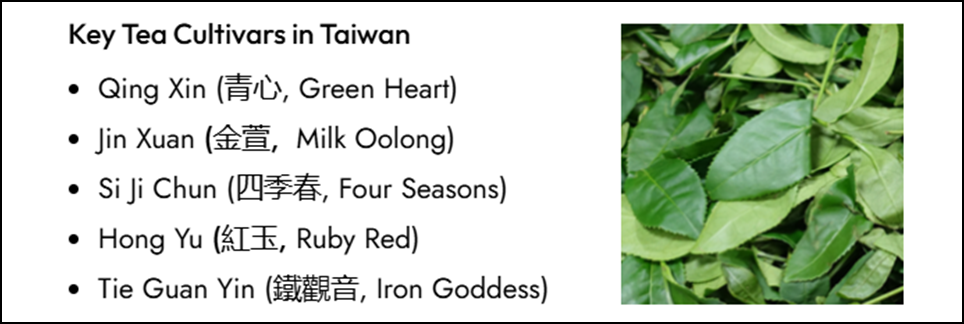
Taiwan has a native tea tree species that can be used for cultivation. The seeds of different cultivars taken from China were mixed with the local ones, plus the other South Asian cultivars, like Assam, which the Japanese brought during the colonial period. And they all live happily together in this agricultural paradise. As a result, we have more than 400 cultivars, and we choose the most suitable ones to make oolong, black tea, white tea, and so on, individually.
See: History of Taiwan tea industry.
Learn more: Taiwan tea terroir, and cultivars

Dan: Several misconceptions and false information by marketers lead to consumer misunderstandings. Will you address these and set the record straight?
Sean: The first appearance of Oolong tea was during the turbulent era of chaos and wars in the Far East, and the complete concept of Oolong making was shaped in an even worse time, which stopped people from knowing it correctly. Oolong is way much more complicated than its literal definition of “tea party oxidated,” which can imply that tea has more oxidation than green teas and less than black teas.
Modern oolong tea has three flavors: the original flavors of Camellia sinensis, the flavors transformed from Camellia sinensis, and the flavors from roasting. Three of them can coexist but not necessarily appear at the same time without correct handling methods; the second flavor is built on the first one, and the third flavor is based on both 1 and 2, which is why Taiwanese teas have rich and consistent flavors.
“Oo liông” means black dragon in the Hokkien dialect, a nickname that recalls the long, curly, twisted, black leaves of semi-oxidized tea. Scottish trader John Dodd in the 1860s pronounced and wrote the name as Formosa Oolong on shipments to the US. Trilliant Tea
The most outstanding part is that the quality of Taiwan oolong teas is not determined by altitude or the use of junior fresh leaves, but by the tea makers and how they handle everything over 33 non-stop working hours, literally through five shifts in seven phases. Except for rich flavors, stable quality can also be obtained via process adjustments. For example, for the whole year round, we produce around four to five times for a dozen batches, and the results of flavors are quite similar despite different seasons, weather conditions, and leaf status. And we know that the market potential is huge, not only for the tea but also for the ways we make the tea, as long as the information barrier can be broken.
Learn more: Evaluating Taiwan oolong.
Discerning oolong buyers consider these four qualities.
Dan: You developed a different tea-making approach when you founded Trilliant Tea. Will you describe the advantages of your innovations?
Sean: Growing up in tea gardens and bushes, I never thought I would pursue tea production as a career despite my family’s roots. After 10 years in the IT industry and seven years living abroad, I started to think about what I wanted: to make my living and do something beneficial for my country, and tea was a good choice.
Although Taiwan has exported a lot of teas to China for more than 2 decades and won many awards globally in the past decade, people around the world still don’t know much about Taiwan teas. An interesting but sad example is that other countries make many so-called Taiwan oolong or Formosa teas. Except for historical and geopolitical reasons, the high complexity of tea-making skills and layers of rich flavors are also tricky to understand. To solve this problem, we first tried to find an intuitive method to describe how the tea is made and how the responding flavors are crafted; then, we realized that we had created a quadrant, a tool that makes flavors very predictable.
In the charts, people can have a wholistic picture of a certain tea at first glimpse; for example, if it has grassy, floral, or fruity notes, whether the mouthfeel is vivid and fresh or mild and smooth, high astringency or not, is it roasted or not, how is the roasting level, can it be immersed for a long time or not, and even the proper brewing temperature and brewing time can be predictable. We are very happy about it; with just two charts, the tea is telling its unique stories: how it looks and smells, how it tastes, what can be expected, how it should be brewed, and so on. Teas interact with readers directly and deeply without a word said by people.
See: Flavor profile of oolong tea.
Learn More: Economy of Taiwan:

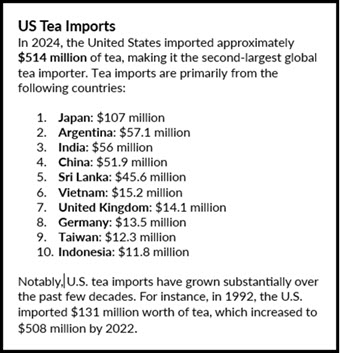
Dan: US consumers have imported Taiwanese oolongs for decades. The US is Taiwan’s top tea trading partner, spending $28 million in 2023. Which other tea markets show interest and growth, and why?
Sean: We do see the demand for specialty teas growing rapidly in Europe. Quantity-wise, it’s still lower than in the US; however, the growth is significant. What also deserves to be mentioned is that many buyers look for something more profound than tea, such as sustainability and collaborative relations. They started to search for the meaning of craftsmanship by asking detailed questions, which greatly favored Taiwanese teas.
As a developed country where the market economy mechanism has worked perfectly well for a long time, Taiwan has a significantly higher wage level, as well as a national health insurance system that provides comprehensive coverage for all workers. Take tea pluckers, for example; their daily pay is around $80~ $120 US dollars, depending on the harvest volume. Besides, Taiwan’s oolong-making heavily relies on a healthy environment based on the ancient philosophy of harmonious relations with the earth and heaven. Thus, our pruning and the fallow system allow sustainability.
As to our craftsmanship, it is very attractive and impressive to them. Seeing what we do in each phase and what it can bring up is amazing. All processes are so full of stories because those stories are either from old wisdom or from our innovations to solve challenges imposed by weather, labor shortages, etc. Simply put, Taiwan teas can provide them with products and fulfill expectations of exotic cultures.


Sign up to receive Tea Biz weekly in your inbox.
- Photos courtesy Trilliant Tea Industry unless otherwise noted.